 Log into your account
 Register



Denim is known for its toughness and resilience, crafted to withstand the rigors of everyday wear. However, jeans maintenance can be a bit of a challenge if you want to preserve their vibrant color and perfect fit over time. We’ve all encountered problems like indigo bleeding, shrinkage, and changes in shape, but with a few simple precautions, you can safeguard the quality of your favorite pair and ensure it stands the test of time. Let’s explore some tips that will help you maintain your denim’s original charm!
How often should you wash your jeans?
This is a common inquiry, and we understand that the answer may be unsatisfactory for many denim enthusiasts. We recommend washing your jeans as infrequently as possible.
Denim is a unique fabric that actually improves with age, enhancing its beauty and value over time. As you wear your jeans, they naturally fade in a way that reflects your personal habits, creating distinctive faded areas that tell a story. However, frequent washing can disrupt this natural aging process by causing uniform fading and stripping away the indigo dye, particularly in raw denim—denim that hasn’t undergone industrial washing to achieve vintage effects. We suggest wearing your jeans for at least six months before the first wash to maintain their authentic aesthetic.
Moreover, it’s important to consider the environmental impact of frequent domestic machine washing. According to the Levi Strauss & Co Life Cycle Assessment 2015, jeans are typically washed every 2.5 wears in Europe. Over their lifespan, this adds up to approximately 659 liters of water, 61.2 kilowatt-hours of energy, and 11.17 kg of CO2 emissions for home washing. According to Levi’s®, if you wait to wash your jeans until after wearing them ten times—unless they are visibly dirty or have an odor—you could significantly lessen their environmental footprint, potentially reducing the impact of domestic washes by up to 75%.
Eco-friendly washing methods
Proper washing methods for jeans are more eco-friendly than conventional washing techniques that use machines and dryers. We know that it’s convenient to toss your garments into a washing machine, but this can cause your jeans—especially raw denim—to lose color, shrink, and miss out on a gentler cleaning experience. Here are some tips for washing your jeans effectively:
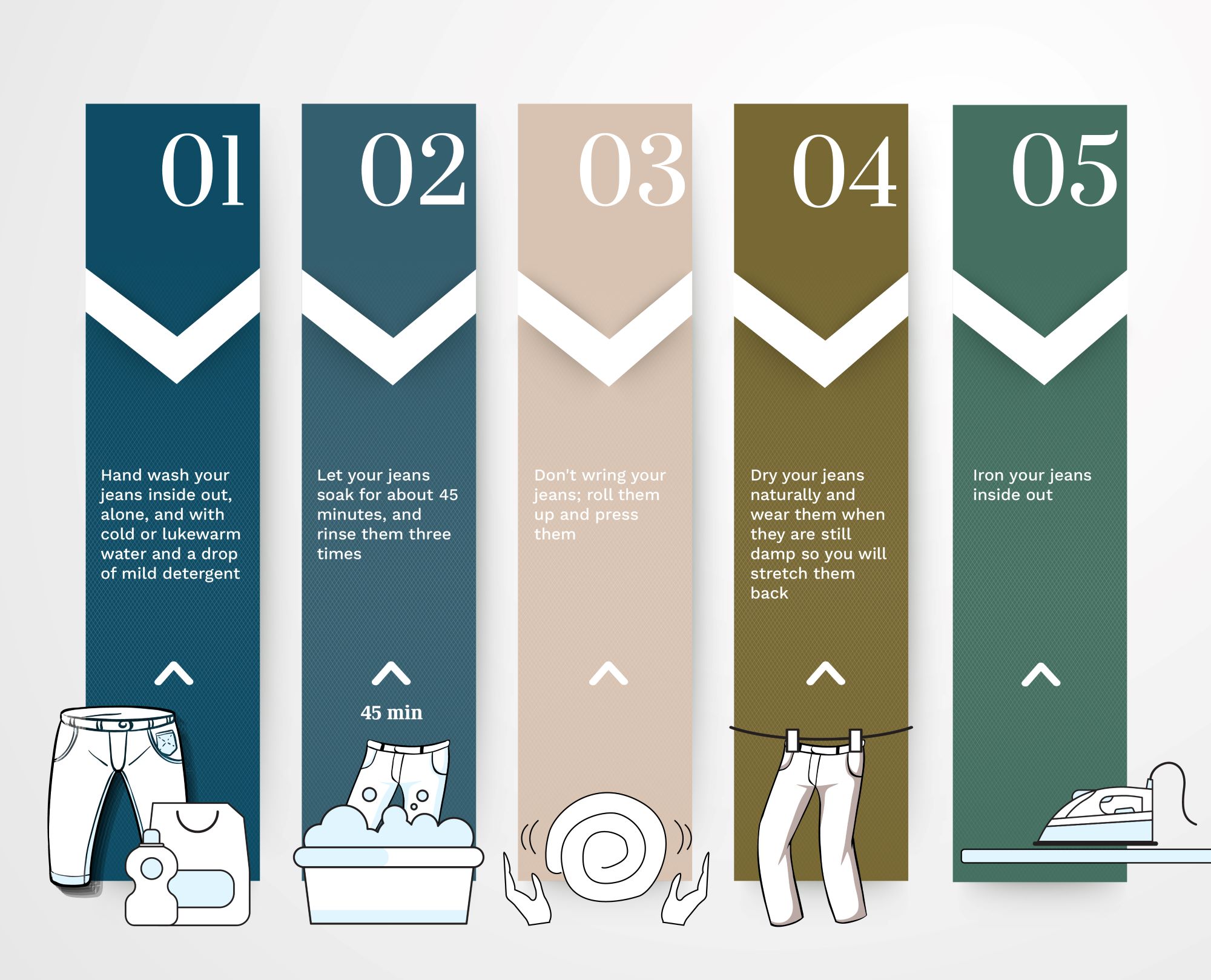
- Fill a clean basin with cold or lukewarm water to hand wash your jeans. Turn your jeans inside out to minimize color bleeding, particularly during their first wash
- Let your jeans soak for about 45-60 minutes with a small amount of detergent or, alternatively, vinegar with a drop of fabric softener. You can also use a soft brush to gently remove any dead skin or dirt. Rinse your jeans two or three times with clean water to ensure all detergent is removed
- Instead of wringing out your jeans, roll them up and gently press to remove excess water. This will help maintain their shape. Then, air-dry your jeans, making sure to keep them out of direct sunlight to prevent fading
- If possible, wear your jeans while they are still slightly damp. This allows them to stretch back to their original fit. Remember that rigid denim may shrink a bit after the first wash, so be mindful of how you plan to wear it
- When it’s time to iron your jeans, do so inside out to protect the fabric. For 100% cotton denim, use a high heat setting with steam. For stretch denim, switch to a cooler setting. Cover your jeans with a cloth while ironing to prevent direct heat exposure
Washing tips vary depending on the type of denim. Raw denim should always be hand-washed, while pre-washed denim can be machine-washed with some precautions. To protect the color, turn your jeans inside out, and make sure to close all zippers and buttons to maintain their shape. Use a mild detergent and cold water, selecting the gentlest cycle on your washing machine.
Denim can also be cleaned using ozone, a method that prevents indigo from fading while also conserving water. At our Candiani Custom micro-factory in Milan, we utilize ozone to clean jeans. If you’re in the area, feel free to stop by, and we’ll take care of your denim for you.
What’s raw denim?
Raw denim represents the most traditional and authentic form of this fabric. It is untreated and comes directly from the loom to your closet, reflecting its origins as durable workwear before it became a fashionable item. One of the benefits of raw denim is the natural fading that occurs over time, showcasing the wear and character developed through months or even years of use. Since the indigo dye isn’t removed through industrial washing, these fades are genuine and individual to each pair.
As denim gained popularity across different demographics, some people found raw denim to be less comfortable due to its rough texture. In contrast, washed jeans offer greater softness, but it’s important to note that ineffective washing methods can compromise the fibers, making them more vulnerable to tearing and ripping. Therefore, it’s essential to prioritize high-quality materials and thoughtful processes that retain the unique qualities of denim.
How to store jeans to preserve their quality
How you store your clothes can greatly enhance their longevity. Proper storage techniques are essential for maintaining the quality of your garments, so you may wonder what to do with jeans.
Jeans are sturdy and durable, making them suitable for storage either by hanging or folding, depending on your preference. While hanging can occasionally cause some misshaping in certain cotton fabrics, it is generally more forgiving than it is for delicate materials. For optimal results, consider folding your jeans along the seams; this helps maintain a crisp and fresh appearance when you wear them. However, because the fabric is thick, folding is unlikely to create any unwanted creases. If you prefer to hang your jeans, simply fold them over a hanger for an effective storage method.
To maximize the lifespan of your jeans, start by investing in high-quality denim. Premium fabrics are designed to be long-lasting and maintain their shape over time. Additionally, high-quality jeans can easily be repaired, reused, upcycled, and recycled, while low-quality yarns are usually too weak and tend to break down or warp. These responsible practices not only extend the lifecycle of your jeans but also reduce waste and lessen the demand for new textiles. With these practices, you can ensure your jeans remain in excellent condition for years to come.