Log into your account
 Register




Black jeans have emerged as a favored choice for countless individuals, becoming the primary alternative to classic indigo jeans. While many attribute their rise to fame to Elvis Presley’s film “Jailhouse Rock,” the real origin dates back much further, to Levi Strauss & Co., which introduced them over 50 years earlier. Let’s see when black jeans came into existence.
Did you know that black jeans appeared in 1903?
When Jacob Davis and Levi Strauss & Co. launched production of their patented copper-riveted overalls in 1873, they introduced what we now recognize as blue jeans. At that time, you could actually choose between indigo-dyed blue denim or brown duck twill. These work pants quickly gained popularity among miners, farmers, and other manual laborers. By 1889, Levi Strauss & Co. expanded its offerings with a more tailored line of riveted pants designed for jobs that were a bit less labor-intensive, such as managers or store owners, available in blue or grey denim.
Between the 19th and the 20th centuries, the company began offering some of these products in black as well. Their 1903 catalog included black denim riveted pants, considered the first line of black jeans. They may have been available even earlier, but unfortunately, some company information was lost due to the 1906 San Francisco earthquake and fire. While the color changed, the signature features remained the same as those of the blue denim popular during the Gold Rush.
Black jeans, much like indigo denim, gained popularity in workwear because they blended style with practicality. They were perfect for jobs where a polished look is important. The darker color did a great job of hiding any wear and tear from tough use, making them ideal for everything from the rugged settings of railroad workers and mechanics to the smoky, dimly lit spots where jazz and blues musicians frequently performed.
The role of Elvis in black denim’s success
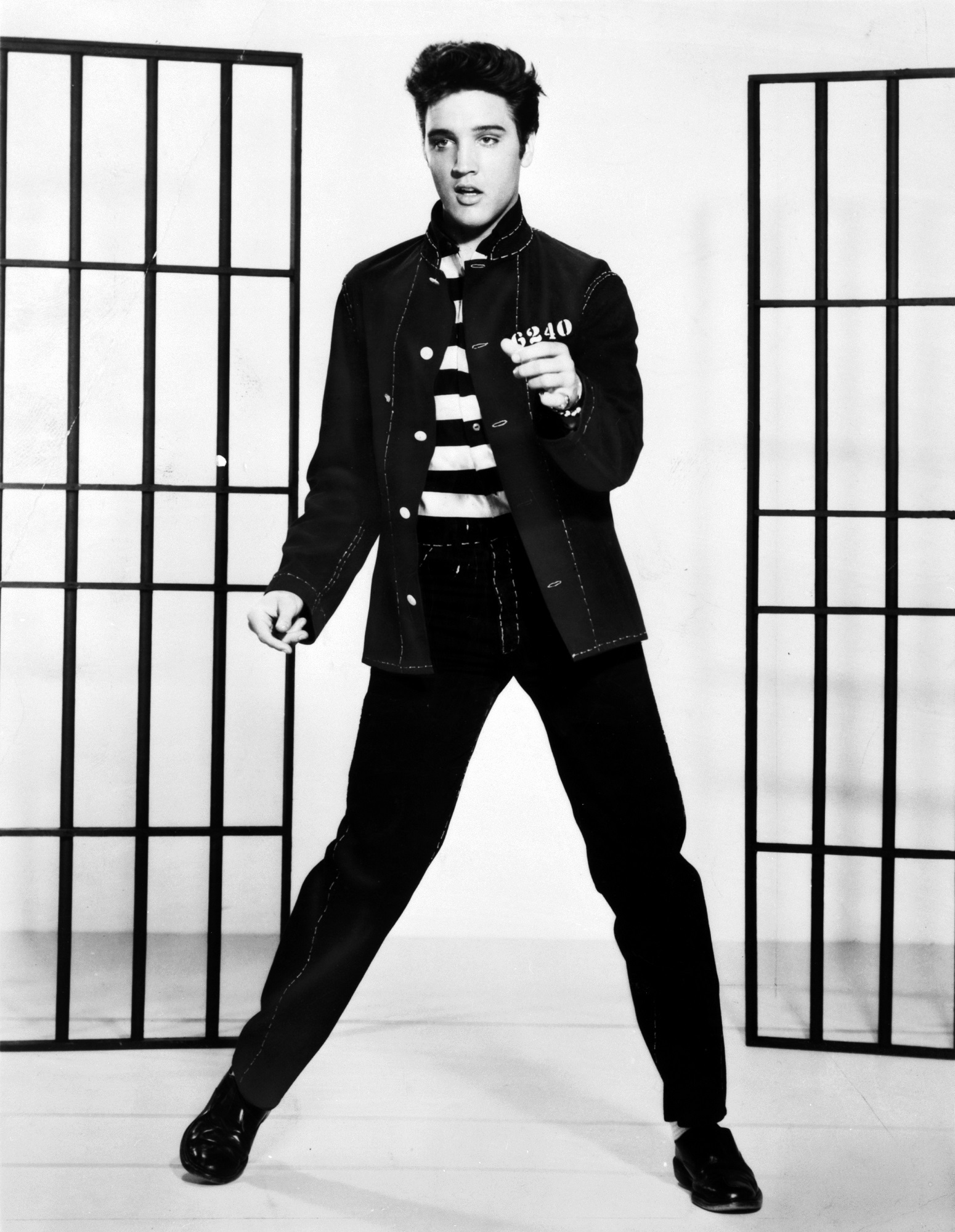
However, it’s true that Elvis Presley really made black denim a fashion statement. In 1957, he sported a pair of Levi’s® black jeans while promoting his movie “Jailhouse Rock.” The famous video showed him rocking out in those black regular-fit jeans paired with a matching denim jacket. We know that, back then, movie and music stars played a huge role in making jeans a must-have for the younger crowd, and Elvis’s look certainly helped make black denim a favorite in the rock’n’roll scene.
Levi Strauss & Co. picked Elvis because he embodied the perfect endorsement for their image. It was a clever combination of an established product and a fresh character in a time when a new audience began to embrace denim as a way to connect with the rebellious urban and suburban trends of the postwar era. Interestingly, Elvis himself wasn’t a fan of denim; he only wore it when it was necessary for a role. By the 1950s, jeans had become a widely recognized symbol of rebellion, but Elvis still viewed them as work attire that brought back memories of his challenging childhood in Tupelo.
As blue jeans transitioned from practical workwear to mainstream fashion, black jeans began to hold significant meaning within subcultures that rejected traditional fashion conventions. Movements such as punk, new wave, heavy metal, grunge, alternative rock, indie, hip-hop, and rap played a crucial role in establishing black jeans as emblems of non-conformity and counter-cultural sentiment. This influence contributed to their sustained popularity and acceptance in the fashion landscape in the following decades.
Why was indigo preferred to black?
Denim has its roots in old European fustian, which gained popularity in the 14th century, though its use dates back even earlier. However, we can say that modern denim took shape in 1873 when Davis and Strauss secured their patent. Blue dyes for textiles have been around for a long time, too; in fact, the oldest indigo-dyed fabric ever found is over 6,000 years old! Indigo works exceptionally well with cotton, the primary material for denim, and its deep color hides dirt well, making it an ideal choice for manual workers.
On the flip side, creating black dye for cotton textiles has always been trickier, requiring specific techniques and a blend of dyes. In the early days, denim was mainly workwear, so it makes sense that the focus was more on practical production methods rather than experimenting with color options.
While synthetic sulfur vat dyes were developed in the early 1900s, they only really came into their own in the mid-20th century—when black denim began to be marketed effectively. The dyeing process for these sulfur dyes was similar to that of indigo, since both are vat dyes, a similarity that likely helped them gain traction in the industry. After World War II, as the economy surged and technology advanced alongside mass production, jeans brands saw an opportunity to diversify. Black denim emerged as a fitting response to this rapidly evolving landscape.
Why should you choose black denim?
Today, black denim is often seen as a neater, more polished alternative to traditional indigo jeans. It comes in various fits, weights, and fabric qualities, allowing for a lot of choices. You can find black denim with the classic white weft for a bit of contrast, or in a deeper black shade for a more intense look. Plus, it offers a full range of washes and finishes, similar to indigo denim.
What’s great about black denim is its versatility. It can be dressed up for a smarter outing or dressed down for a casual street style. Much like indigo, black denim can develop character over time; as the fabric ages, it can reveal a personal touch that reflects your individual story. When the upper layers of dye are not industrially removed, it can indeed fade with wear.
So, if you’re trying to decide between indigo and black jeans, think about your style. Black denim might be the way to go if you’re looking for something elegant and sophisticated, especially in a darker shade and a fit that’s just right—not too baggy or tight. On the other hand, if you prefer a more punk-inspired vintage look, opting for slimmer models could be your best bet. Ultimately, it’s all about what suits your taste!
Candiani’s black jeans
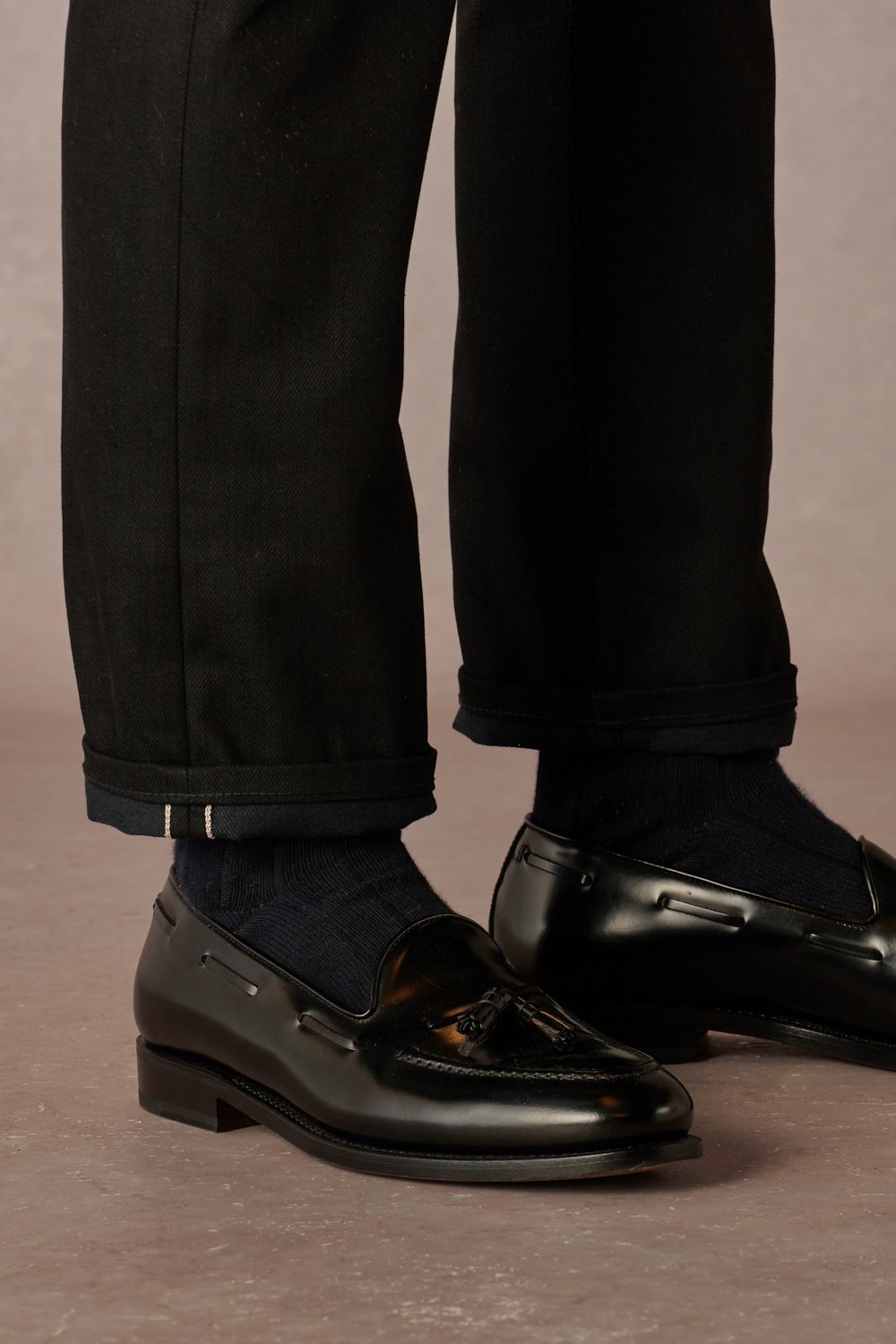
On our website, you’ll find our black Primo Jean available in two options: a regular-fit version made with full-width fabric and another crafted from selvedge fabric. Black is one of the most appreciated and recognized colors at Candiani; we have distinguished ourselves for years in manufacturing richly colored fabrics. You can customize the full-width jeans in a wash that suits your style—whether you prefer a classic rinse or a more vintage look. On the other hand, the selvedge black jeans are offered in their raw, unwashed state, featuring a distinct white border with red stitching.
Selvedge denim is the most authentic choice, woven on shuttle looms that were standard until the 1960s when newer, more efficient looms took over. Nowadays, only a handful of mills keep this tradition alive, and we’re proud to be among them. Selvedge denim has consequently become quite rare, yet it’s treasured by those who love the craftsmanship that goes into it.
By offering the fabric in its raw form, we let the natural beauty stand out. As you wear your selvedge jeans, they’ll develop a unique look through fading, revealing the fabric’s character. Additionally, you’ll see the selvedge along the inseam, so we suggest rolling up the cuffs to show it off. We understand, though, that this initial feel might not suit everyone—especially if you lean towards softer fabrics that feel comfortable from the get-go. It’s all about your personal choice: pick the black jeans that resonate with you and enjoy the journey of wearing them your own way!