 Log into your account
 Register



The history of indigo dye is a fascinating world tour through time. It spans cultures and regions, from Peru to India, from Africa to China, and from the Mediterranean to the United States. From Ancient Egypt and Andean civilizations to the California Gold Rush, through the Middle Ages and European colonization, indigo has consistently served as a valuable symbol that influences culture, trade, and craftsmanship. Central to this narrative is the Indigofera genus, a group of plants with unique, significant botanical, cultural, and economic importance.
What’s the Indigofera genus?
The name of the Indigofera genus was officially established in 1753 by Carl Linnaeus in his work “Species Plantarum.” However, these plants have been known for thousands of years and have been utilized by various civilizations around the world for dyeing textiles, creating artworks, and even treating illnesses.
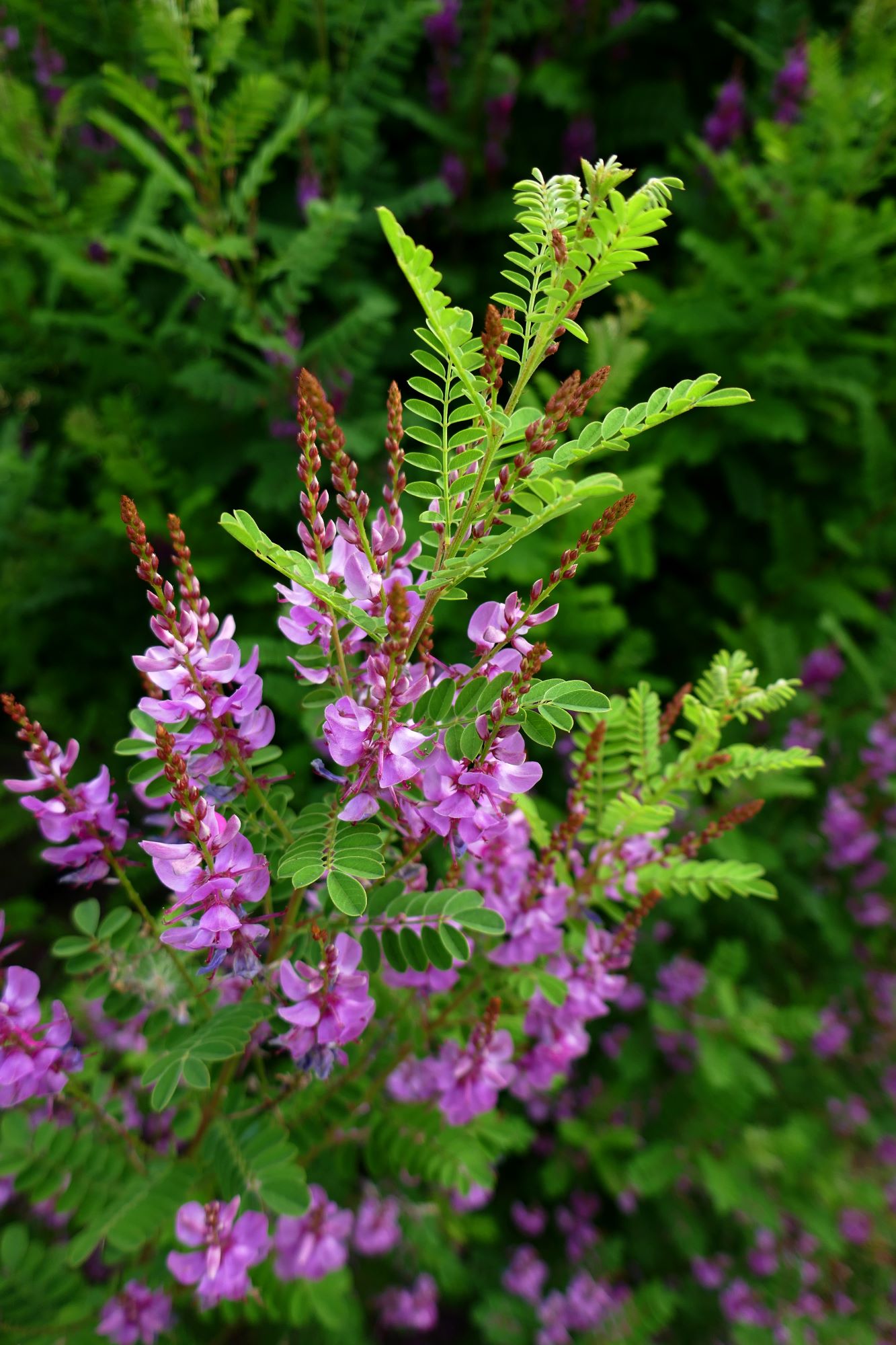
Indigofera plants belong to the legume family and consist of over 750 species. They can grow taller than 1.80 meters and have oval leaves that resemble feathers. Indigofera thrives in tropical climates. Indigofera tinctoria—commonly known as true indigo—is particularly widespread in the Indian subcontinent, while Indigofera suffruticosa is prevalent in Central and South America. In the southern United States, Amorpha fruticosa, also known as false or bastard indigo, is a close relative of the Indigofera plants and was cultivated in the British colonies.
From fermented leaves to synthetic indigo
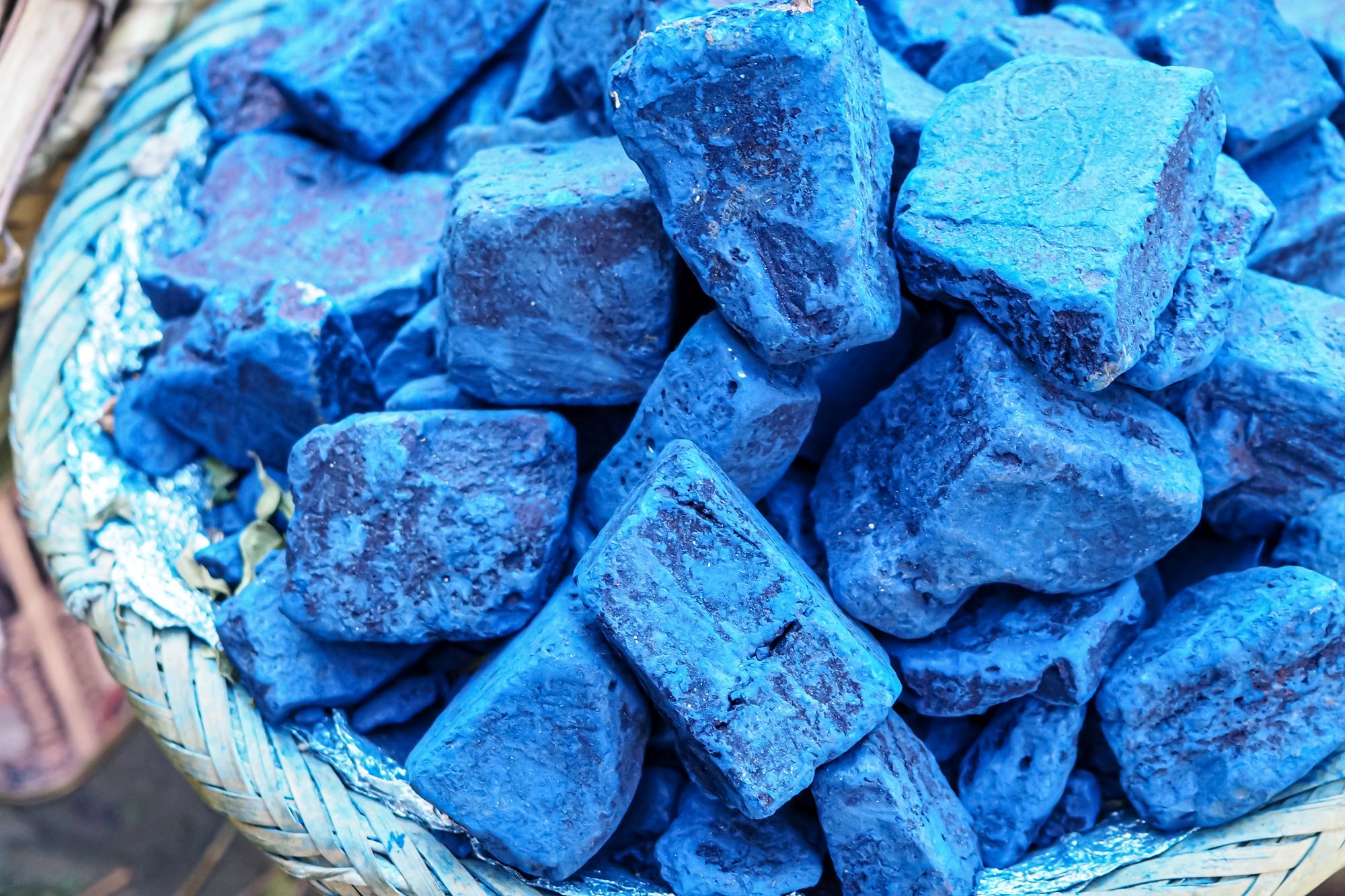
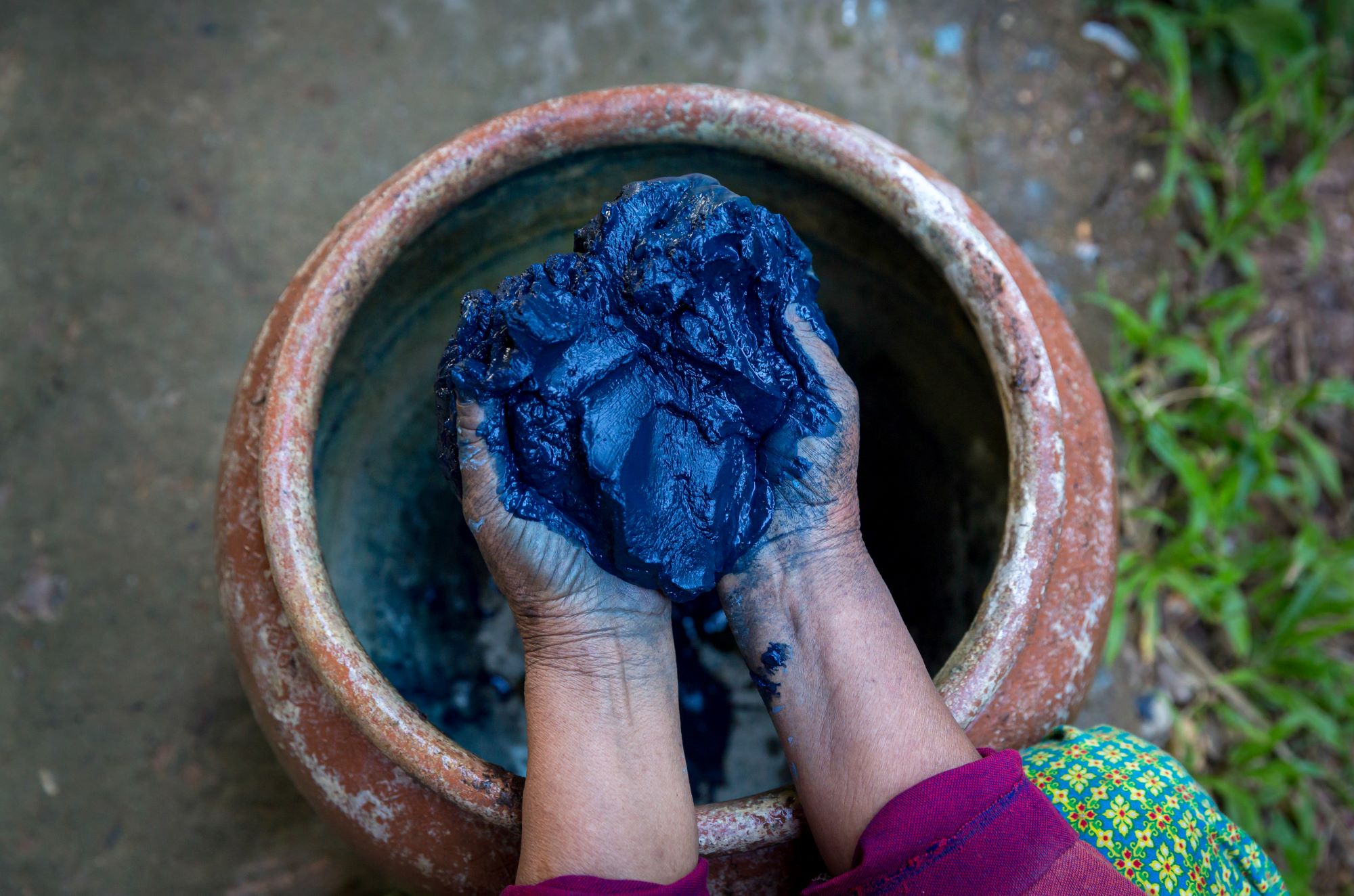
To obtain indigo dye from Indigofera plants, their leaves are fermented. This process yields a yellowish liquid that turns deep violet-blue when oxidized in open vats. After oxidation, the water evaporates, and the settling sediment is collected. It is then sold as solid indigo.
The process of extracting indigo from Indigofera leaves is quite complex and labor-intensive. That’s why synthetic indigo, developed by Adolf von Baeyer in the late 19th century, revolutionized the industry. Its invention made the dye more accessible and contributed to a significant decline in Indigofera plantations worldwide.
The early history of indigo dye, from India to Peru, passing through China
The oldest known indigo-dyed textile was discovered at Huaca Prieta in Peru and dates back over 6,000 years. However, many scholars believe that indigo was first used in the Middle East, where Indigofera plants were probably cultivated in the Indus Valley, which is now part of Pakistan and northeastern India. The Latin term “indicum” means “from India,” and Pliny the Elder, who lived in the 1st century CE, specifically mentioned indigo as a product from India in his writings.
In China, indigo was also well known, with records indicating its use as early as 3000 BCE. Meanwhile, in Central and South America, the Inca, Maya, and Aztec civilizations used indigo to dye textiles, pottery, and even bodies. The Maya created a special dye called “Maya Blue” by mixing clay with fermented Indigofera leaves, which was used to embellish walls, sculptures, and ceramics. Additionally, the famous Aztec emperor’s cloak was dyed indigo.
How indigo conquered Europe
Indigo has been known in the Mediterranean basin for millennia, beginning in Egypt, where indigo-dyed bands dating to around 4400 BCE were discovered. We have seen that documentation also indicates that indigo was used by the ancient Greeks and Romans, who obtained it from Arab traders. Marco Polo described the use of indigo in India in the 13th century. However, the Indigofera plants are not native to Europe, making indigo expensive and difficult to import until the end of the Middle Ages.
As a result, in Europe, the blue dye was traditionally produced from the local woad plant, Isatis tinctoria, until Vasco da Gama opened a new sea route to India in 1498, making it easier to import Indian products without relying on Arab intermediaries. Indigo soon began to replace woad, as it was better suited for dyeing fibers like cotton and flax. However, its spread across the continent was slow due to resistance from powerful woad producers, who referred to indigo as “the devil’s dye” and threatened death to anyone who used it between the 16th and 17th centuries.
Despite indigo’s superior properties, English dyers were hence hesitant to abandon woad. In France, indigo was even banned to protect the local woad industry. However, this ban was often disregarded, as aristocrats were obsessed with bright blue clothing. Ultimately, the ban was lifted in 1737. In the following decades, France even gained a sort of monopoly over indigo, which was also used to dye Napoleon’s army uniforms.
The blue gold of the European colonies
The French monopoly on indigo was enhanced by the spread of Indigofera cultivation in their colonies, as after the discovery of America, the indigo trade became significantly influenced by European colonial interests. The Spanish soon realized that large-scale indigo production could be a lucrative way to compete with the Portuguese, who had been importing indigo from Goa to Europe since the early 16th century. Consequently, indigo began to be imported from what is now Guatemala, and by the 18th century, extensive Indigofera plantations were established in Venezuela and Mexico.
During the same period, the French and British also recognized the potential for indigo cultivation and introduced it to the Caribbean, particularly in Haiti and Jamaica. These plantations became highly profitable for European colonists, largely due to the traditional knowledge of enslaved Indigenous peoples and Africans.
Amorpha fruticosa was introduced into the southern U.S. in the 18th century. This was when rice, the most important crop in South Carolina at the time, experienced a temporary decline in its production. Indigo quickly became more profitable than cotton and sugar, with U.S. exports to Europe increasing sixfold between the second decade and the end of the century. However, we now know that the British colonies in North America had a limited future. After the War of Independence, European powers turned to India for raw materials and cheap labor, where the traditional knowledge of indigo cultivation was well established and, from their perspective, ripe for exploitation for colonial profit.
The British East India Company and the Dutch East India Company were the two major commercial organizations of the time, and they made indigo one of their most lucrative products. However, tensions were rising in India, leading to the Indigo Revolt in 1859, in which Bengali farmers revolted against British exploitation. This movement consisted mainly of nonviolent protests and petitions aimed at improving working conditions on local plantations. The Indigo Revolt was one of the early events that ultimately contributed to India’s independence nearly a century later, marking the end of the British colonial empire.
Why is indigo the color of jeans?
Once upon a time, fustian was particularly popular in medieval Europe due to its durability, resistance, and affordability. Each city had its own techniques and raw materials for producing fustian, which often bore the name of its place of origin. Cotton fabrics were also widely used because they catered to a broader audience, unlike precious, costly fibers such as silk.
Italy emerged as a key hub for Eastern imports, with Genoa playing a prominent role due to its busy and progressive port. This intensive traffic facilitated the import of both cotton and indigo, enabling Genoa to produce its own fustian. This fabric was used by sailors and port workers for sails, to cover shiploads, and eventually to manufacture long-lasting workwear. The indigo dye was also dark enough to conceal the frequent stains and dirt from manual labor. Consequently, we acknowledge that Genoese fustian is the true predecessor of modern denim, as it was made from cotton and featured indigo-dyed warp yarns. These characteristics set it apart from other fabrics available in the 16th century.
Genoese fustian was valued for its average quality and affordability in comparison to other European varieties. Initially, these traits were perceived as signs of decline in local manufacturing. Still, they ultimately contributed to the long-term success of Genoese fustian, first in England, which imported significant quantities of fustian since the 13th century, and later in the U.S. The terms “jean” and “jeans,” a mangled version of the Ligurian city name, began to refer to any cloth with qualities similar to those of Genoese fustian. By the end of the 19th century, one such fabric was sold by Levi Strauss to Jacob Davis, who used it to create new pants reinforced with rivets for a lumberjack, thus giving life to the enduring legend of blue jeans.