
 Log into your account
 Register

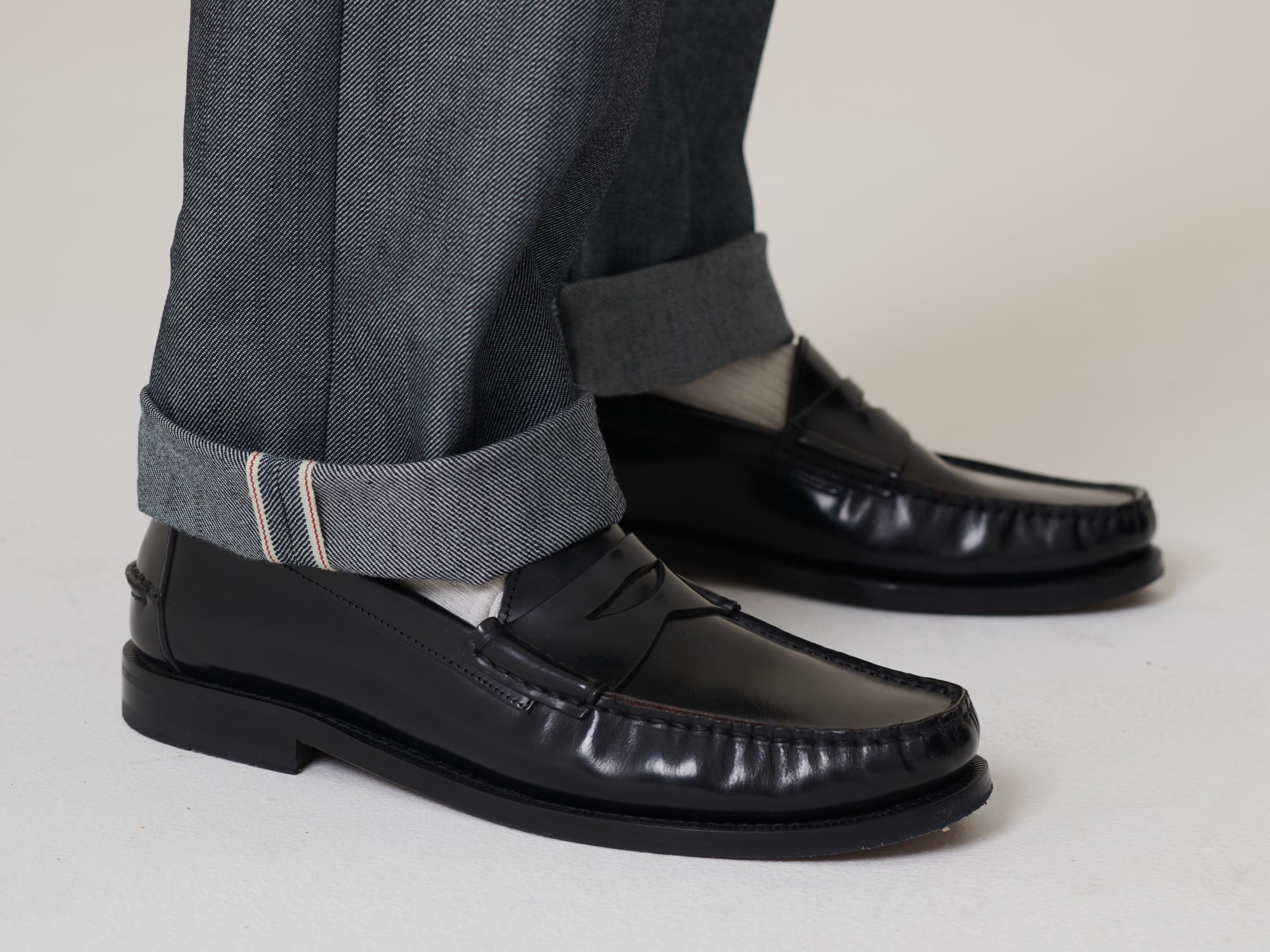


Selvedge denim is often recognized for its unique weaving technique, a sartorial approach to denim production that sets it apart in the industry. This method is now rarely used because it doesn’t lend itself to mass production. However, many denim enthusiasts view selvedge denim as a hallmark of authenticity, quality, and tradition, making it a staple in their wardrobes. Curious to learn more about why it’s so valued? Let’s explore!
How selvedge is made and why it matters
The term “selvedge” comes from “self-edge,” which was used in the United States to describe denim when it first arrived in the New World. Traditionally, selvedge denim features a border of a different color, usually crossed by contrasting stitching. This unique edge was originally designed to prevent the fabric from fraying.
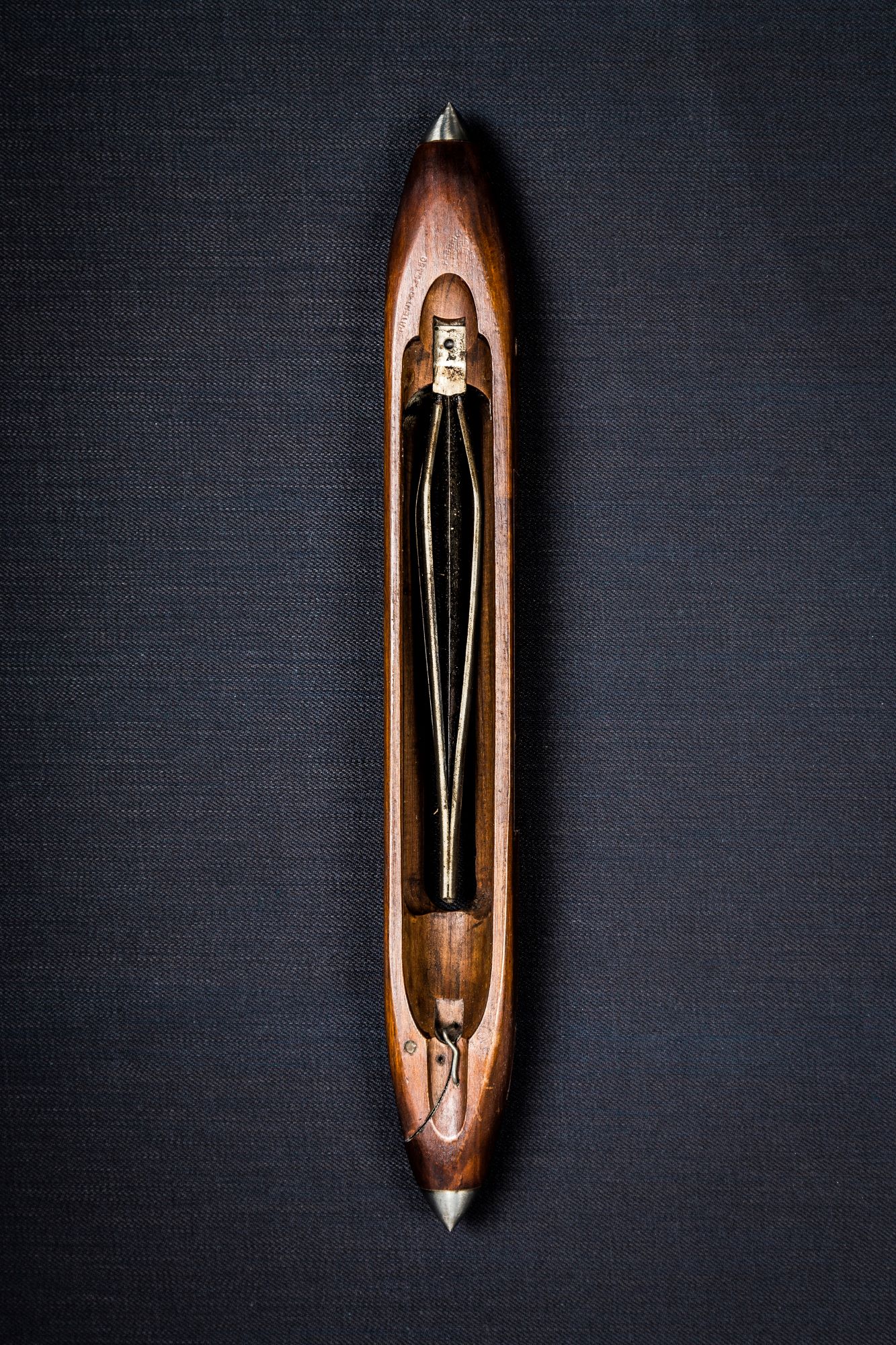
Selvedge denim is produced using shuttle looms, which were the industry standard until mass production took over after World War II. The demand for more efficient machinery led to the development of new full-width looms that operated faster and produced larger, more uniform fabrics. This made them ideal for manufacturing vast quantities of standardized clothing, and as a result, shuttle looms were largely replaced. Today, these traditional machines are no longer produced.
While shuttle looms are slower, have less precise combs, and use a more relaxed yarn tension, they are capable of creating the irregular surface and distinctive edge that many denim enthusiasts regard as markers of authenticity and tradition. We take pride in being one of the few producers that uphold the legacy of shuttle looms by utilizing original vintage machines.
Shuttle looms were invented by… Leonardo!
Did you know that the concept of shuttle looms was first envisioned by Leonardo da Vinci during his first Milanese period? However, it wasn’t until the 18th century that similar machines were actually invented. While serving Duke Ludovico Sforza of Milan from 1479 to 1499, Leonardo sketched a mechanical weaving loom, theorizing a shuttle that would operate automatically instead of by hand. This drawing, dating back to 1495, can now be found on page 985 of the “Codex Atlanticus.”
More than 200 years after Leonardo’s death, in 1733, English inventor John Kay patented the flying shuttle, which was propelled automatically by a paddle. This innovation accelerated the weaving process and enabled the production of larger fabrics, making it a symbol of the Industrial Revolution.
In shuttle looms, the warp yarns (the vertical threads) are set in place, while the shuttle carries the weft yarn (the horizontal thread) across the loom. The weft yarn is then beaten together with the warp yarns to create the fabric. The shuttle moves back and forth multiple times with the same weft yarn, helping form the fabric’s finished edges.
Why is selvedge denim associated with Japan?
Today, selvedge jeans are often mistakenly associated solely with Japan. This misunderstanding arises because Japanese artisans revived traditional U.S. denim production after brands began mass-producing in the 1960s. Let’s break it down step by step.
How was selvedge denim born?
Denim is derived from 16th-century Genoese fustian, a fabric known for its indigo-dyed warp and cotton yarns. It was a durable material used by sailors and port workers in Genoa for various purposes, including sails, cargo covers, and sturdy workwear. Several factors contributed to the long-lasting success of this fabric: the bustling, progressive port of Genoa, which imported and exported goods from around the world, and the good quality of Genoese fustian offered at an accessible price.
England played a vital role in the fustian trade, with a significant quantity of the Genoese type being exported to London. In records from that time, fabrics were often listed with the name of their city of origin, which was frequently mispronounced. As a result, Genoese fustian became known as “geanes,” then “jeanes,” and ultimately “jeans.” Its popularity led to similar terms being applied to any fabrics resembling Genoese fustian.
From England, these fabrics made their way to the United States, where entrepreneur Levi Strauss sold them to tailor Jacob Davis, who used them to create a pair of work pants for a logger. Davis’s idea to reinforce these garments with rivets at key stress points resulted in immense popularity among workers seeking fortune during the Gold Rush. Strauss and Davis established production in San Francisco and patented their pants in 1873. These are now regarded as the first official pair of modern blue jeans, made from selvedge fabric, as shuttle looms were the textile machines used at that time. The selvedge denim used by Levi’s® originally featured a white edge with red stitching, which, interestingly, remains the most common construction method for selvedge denim.
How denim conquered Japan
During World Wars I and II, the U.S. military issued denim workwear to soldiers, particularly those in non-combat roles such as mechanics, engineers, and Navy personnel. This was done to ensure their comfort and the durability of the clothing. After the wars ended, surplus military garments, including denim, were either sold or repurposed. This influx of denim into the U.S. clothing market significantly contributed to its rising popularity.
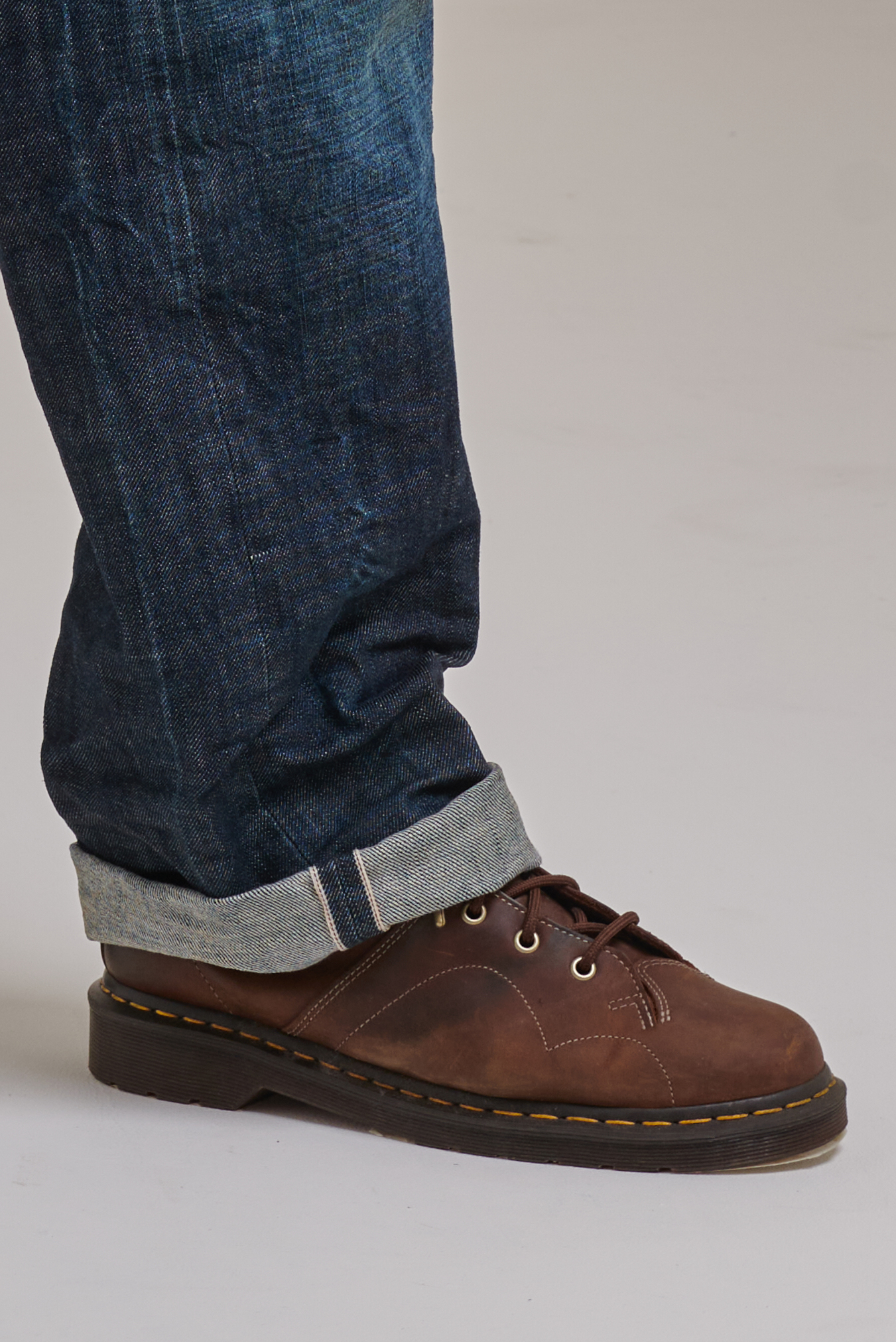
Moreover, U.S. soldiers stationed in Europe and the Pacific during World War II played a crucial role in making denim popular worldwide. Their clothing, actions, and lifestyle became symbols of freedom and progress in those regions. In Japan, U.S. culture was embraced more than anywhere else. When U.S. denim producers replaced their shuttle looms with full-width looms, and mass production led to a general decline in quality and attention to detail, skilled artisans in Japan preserved the heritage of traditional U.S. blue jeans and premium selvedge by creating accurate replicas.
As a result, selvedge denim is often associated with Japan. However, it’s important to note that traditional and vintage denim is inherently selvedge, as it was exclusively produced on shuttle looms. Therefore, selvedge denim should be regarded as a representation of denim heritage, culture, and tradition, regardless of whether it is Italian, U.S., Japanese, or produced elsewhere.