Candiani Custom

Why made-to-measure jeans?

We developed Candiani Custom from a fundamental question: how can we apply our innovative approach to fabric production in the production of jeans? Candiani Custom aims to address some of the most significant challenges in the fashion industry. This initiative was made possible with the support of ten esteemed Italian partners who provided the technologies and accessories necessary to transform our denim fabrics into high-quality garments: Manifattura Italiana Cucirini, Tonello, Nearchimica, FK Group, Cervotessile, Riri Group, Okinawa Operations, Rotondi Group, Cadica Group, and SIP Italy Sewing.

Environmental impact

The European Parliament reports that the textile industry accounts for approximately 2% to 8% of global greenhouse gas emissions, exceeding the combined emissions from international flights and maritime shipping. Additionally, it contributes to 20% of global water pollution. To minimize our carbon footprint, we utilize materials and machinery sourced from Italy, all within a radius of just 238 km.

Overproduction

Every year, approximately 25 billion garments that are never worn or sold are discarded or incinerated, adding to the 92 million tonnes of waste generated by the fashion industry (UNEP). We do not have any deadstock because we produce solely on demand. This strategy is designed to align supply with actual demand

End-of-life

At the end of their life cycle, garments are often discarded in landfills or even abandoned areas. Additionally, more than two-thirds of the clothing produced contains synthetic fibers (Changing Markets Foundation), which release microplastics into the environment. That’s why we prioritize the end-of-life process for our garments by recycling old jeans and using biodegradable and compostable materials that have no negative impact on the environment.

Workers’ rights

Many fashion companies have relocated their operations to countries with lower production costs and more lenient regulations, where employees’ human rights are often violated and the working conditions can be unhealthy. In contrast, we produce our garments in Italy, right at home, with a strong commitment to respecting people and upholding social responsibility.

Lack of traceability and transparency

The fashion industry often suffers from a significant lack of traceability and transparency. Many companies have thousands of suppliers, each with numerous additional suppliers, making it nearly impossible to trace the entire supply chain. So, how are our jeans made? Our approach addresses this complexity by vertically integrating the process, which includes fabric production, cutting, sewing, and washing. This ensures immediate and complete traceability. Additionally, we maintain transparency by allowing everyone to observe the operations in our micro-factory through a large window.

The experience

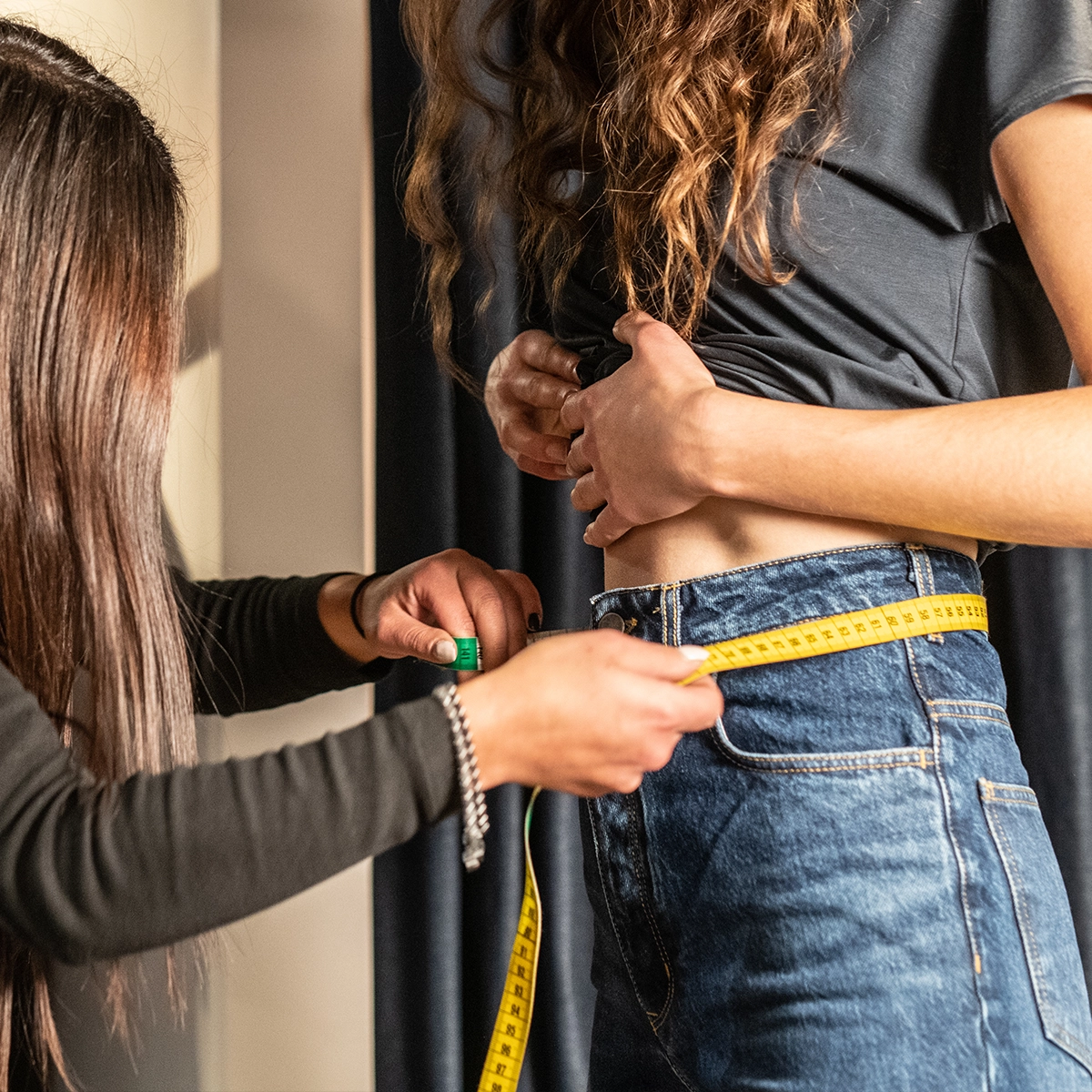
In our micro-factory, you take on the role of designer while we are your makers. You begin by selecting your preferred fit and then customizing every detail, including fabric, color, wash, buttons, threads, rivets, personalized back patches, and embroidery of your initials. Your jeans will be one-of-a-kind, made exclusively for you.

It might also interest you