
 Log into your account
 Register



You have bought a fantastic pair of jeans. You have worn them multiple times, and now that they have started to fade and mold on your body, you think it’s time to wash them. However, you have heard that they need special care to avoid damaging their aesthetic. So, what should you do? Let’s explore our guide to washing denim.
How often should jeans be washed?
These days, most of us toss our clothes in the washing machine pretty often, right? While we definitely don’t want to smell bad, washing our clothes too frequently has its downsides. First off, it uses up a lot of water and energy, which isn’t great for the environment. Plus, many clothes are made from synthetic fibers that release microplastics into our water when washed. And let’s not forget that some laundry detergents contain chemical pollutants.
Denim is a bit trickier because this fabric actually gets better with age, especially raw denim that fades over time in a way that shows off your personal style, creating unique faded spots that tell your story. If you wash it too much, though, the natural aging process gets messed up, and jeans end up fading evenly all over.
According to a 2015 study by Levi Strauss & Co., people in Europe usually wash their jeans every 2.5 wears. Over the lifespan of a pair of jeans, that means about 659 liters of water, 61.2 kilowatt-hours of energy, and 11.17 kg of CO2 emissions from home washing. If you can hold off on washing them until they’re visibly dirty or start to smell, like after ten wears, you can really cut their environmental impact by up to 75%.
What’s raw denim?
Raw denim, or dry denim, is the fabric that comes almost straight from the loom. It’s the real deal, the kind of stuff cowboys were rocking back in the late 1800s. That’s why we say jeans can leave indigo marks and shrink when washed. This untreated denim does that, which is why laundry treatments were introduced in the denim game.
Those laundry treatments happen after the jeans are sewn up to get the look and feel just right. This is what makes denim special compared to other fabrics. So, denim is always cut and sewn in its raw form, and the most popular aesthetics come through when the garment is finished.
Raw jeans are kept untouched and unwashed, giving them that authentic vibe. They change and fade over time as you wear them, but let’s be honest: they can be pretty stiff and uncomfortable for some people. On the other hand, washed denim gives you that faded look from the start, making the jeans soft and easy to wear from day one. Plus, raw denim can shrink the first time you wash it since it has never met water before. That’s why raw denim is pretty rare nowadays and needs a bit of extra care compared to your regular jeans.
Dos and don’ts for preserving the authentic aesthetic of your jeans
The main thing to remember is to wash your jeans as little as possible—regarding raw denim, ideally, wait at least six months after buying and wearing them before giving them their first wash. But when that time comes, there are some simple tips to help keep your jeans looking great. Just know that denim, especially when raw, is supposed to shrink a bit and bleed some indigo during those first washes.
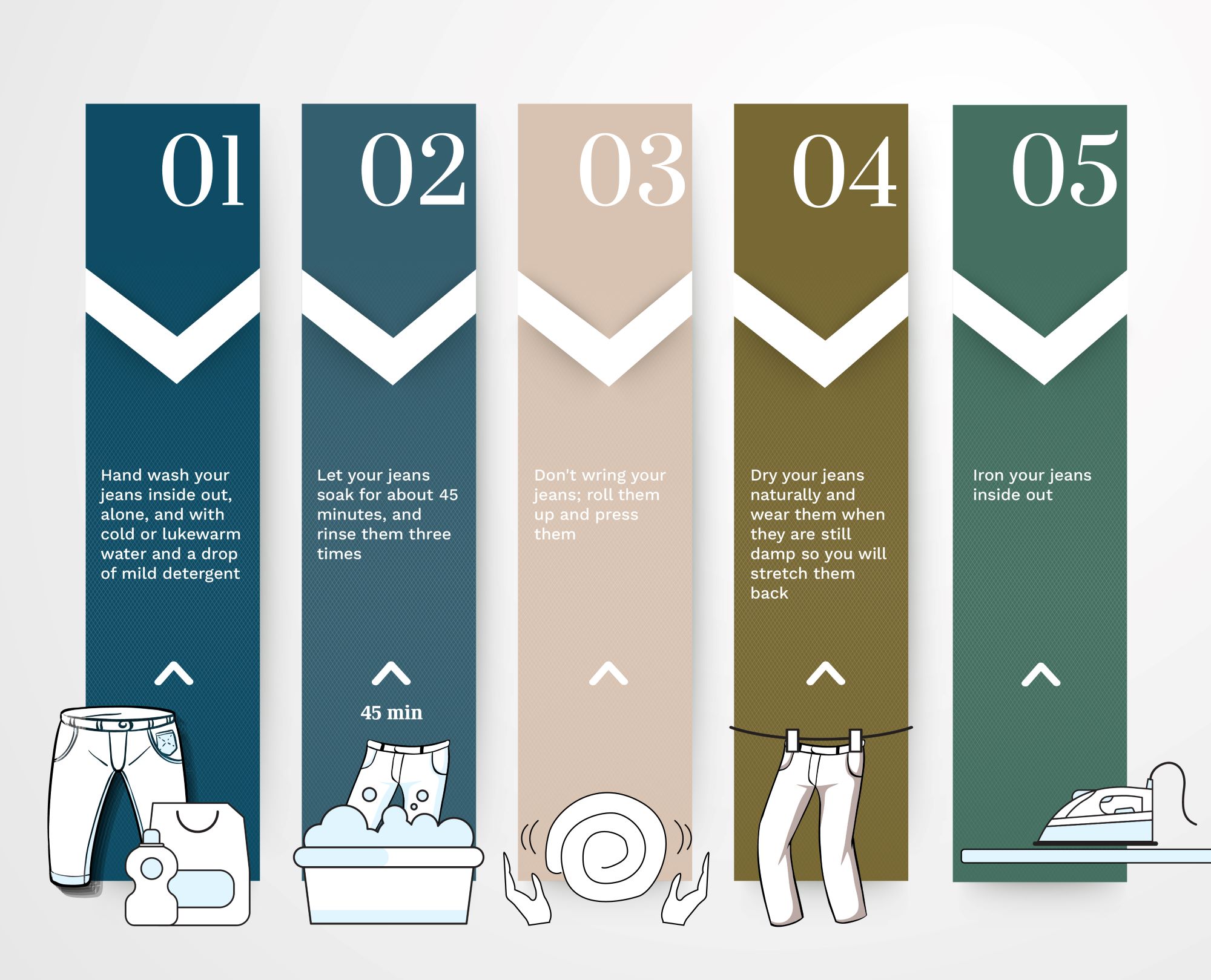
The main rule is to hand-wash your jeans inside out in cold water with a small amount of mild detergent. Then, hang them to air-dry, avoiding direct sunlight, and iron them inside out. However, if you want to become a pro in the denim washing process, you can follow these additional steps.
What to do:
- Hand-wash your jeans inside out.
- Stick to cold or lukewarm water.
- Let them soak for about 45 to 60 minutes.
- Use just a tiny bit of mild detergent (or try vinegar mixed with a drop of fabric softener).
- Give your jeans a good brush to get rid of any dead skin.
- Rinse them two or three times with clean water.
- Roll them up and press to squeeze out excess water.
- Hang them to air-dry in a shady, breezy spot.
- You can wear them while they’re still a bit damp to help them stretch back to their original shape.
- Iron inside out on a high heat setting with steam for 100% cotton denim (go for a cooler setting if it’s stretch denim).
- Put a cloth over your jeans when you’re ironing.
What not to do:
- Skip the washing machine.
- Don’t use hot water.
- Don’t go overboard with detergent.
- Avoid wringing them out.
- Stay away from the dryer.
- Keep them out of direct sunlight.
Why our selvedge jeans are sold in their raw state
Raw denim might take some extra care and can feel a bit tough to wear at first, but it gives you a genuine, authentic look. That’s why our selvedge jeans are only sold in raw denim, bringing together two features that really celebrate denim’s history.
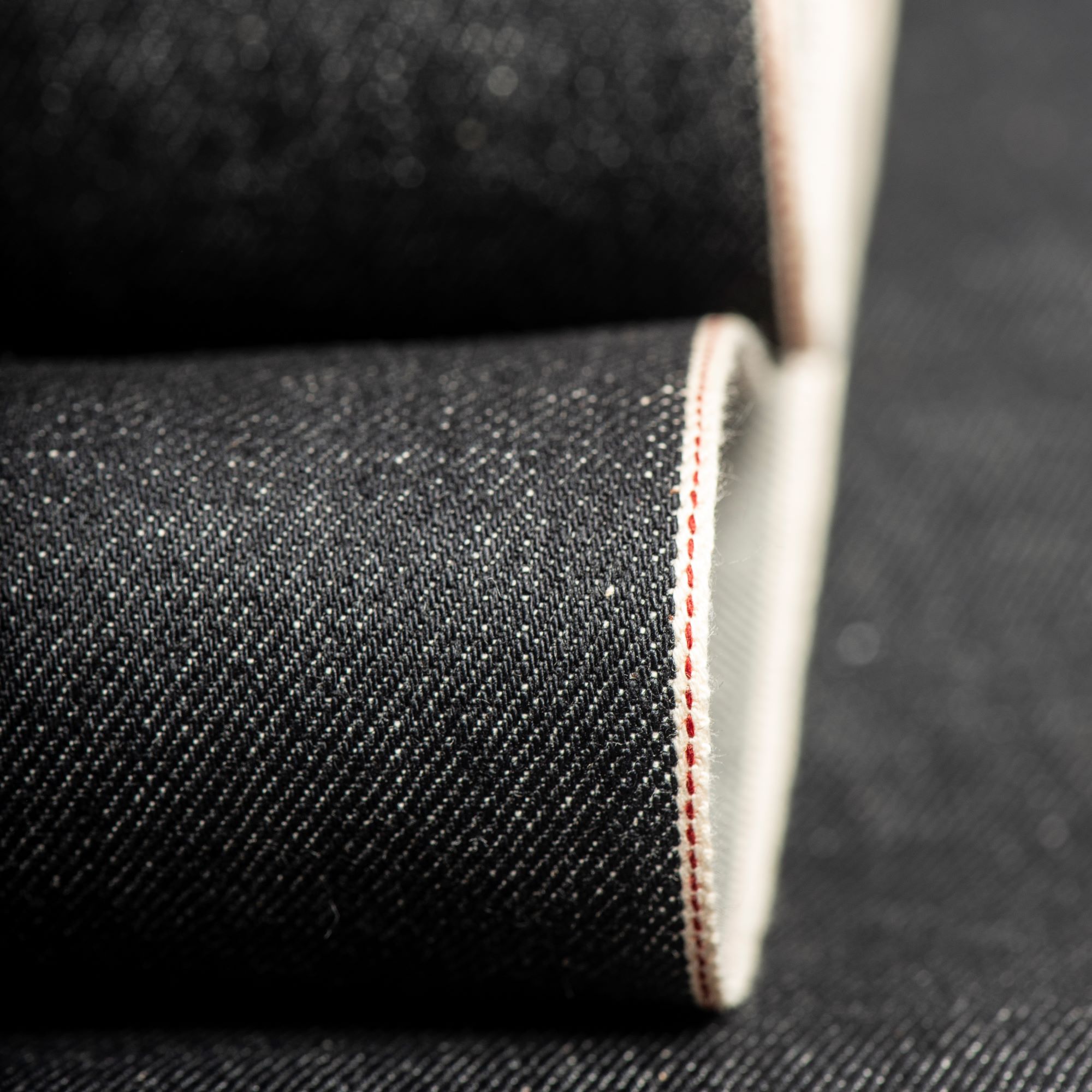
So, what’s selvedge? It’s the edge of the fabric that’s woven on shuttle looms, which keeps it from fraying. This strong edge is made with a thicker warp and is usually a different color from the rest of the fabric. The first blue jeans were made from selvedge denim back in the late 1800s when shuttle looms were the go-to in the industry, right up until the end of World War II. These looms are rare now because they’ve mostly been replaced by faster machines that churn out jeans for mass production. That’s why we’re proud to keep this tradition alive and offer denim in its most authentic form.
Selvedge raw denim appeals to many, but it’s not for everyone. That’s why our website offers a variety of fabrics to help you find the one that best suits your preferences for color and wash. You can choose from dark denim, which still retains the classic look of the original blue jeans while providing a touch of softness, to light-washed denim, designed for maximum comfort from day one.