 Log into your account
 Register

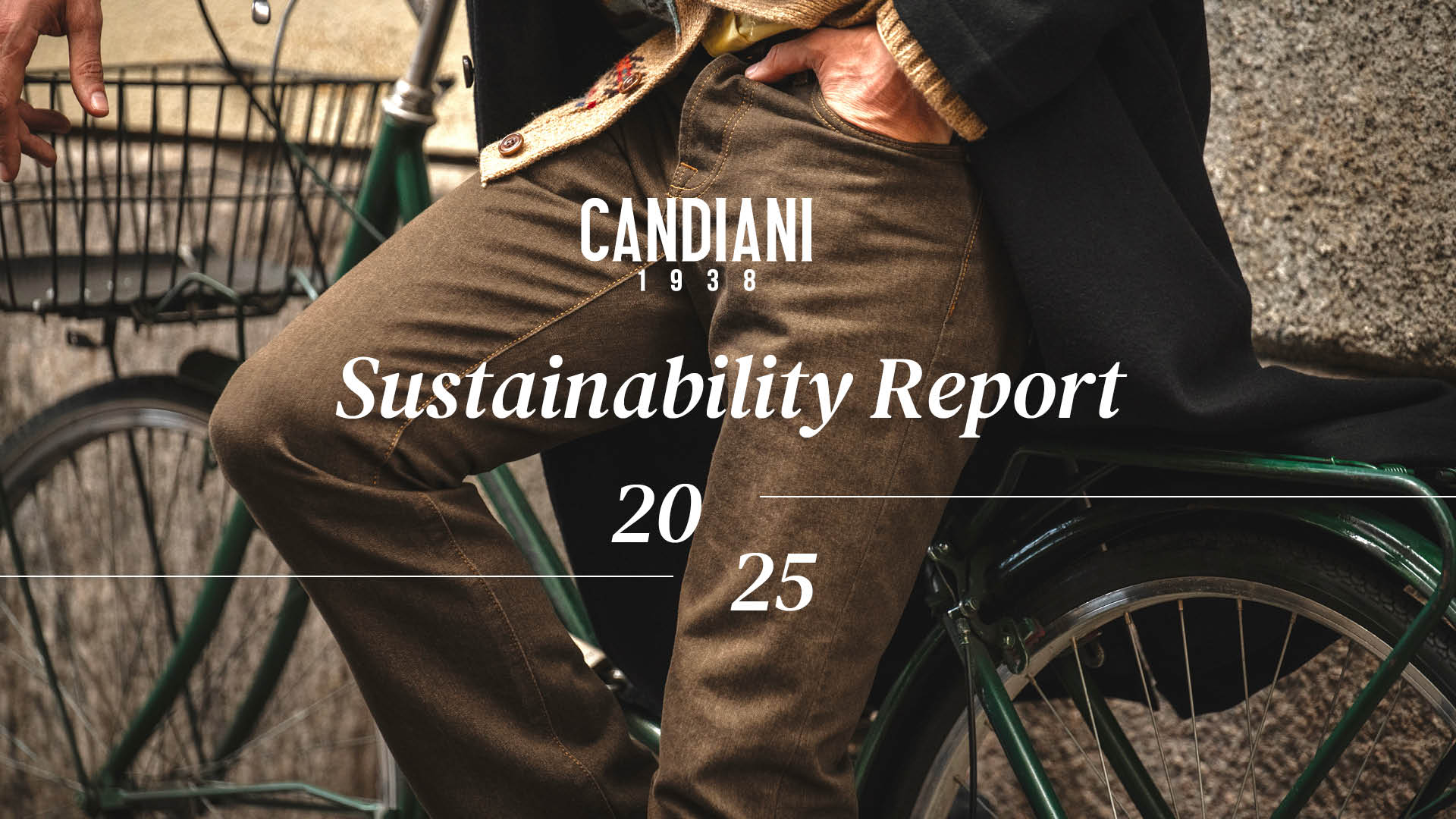


We have published our 2025 Sustainability Report. Despite the challenges currently facing the Italian textile industry, we are committed to evolving and enhancing the aesthetics and performance of our fabrics while also respecting the environment and society. Below is a summary of the key highlights from our 2025 report.
Our research and development activities continue despite challenges in the Italian textile industry
As Alberto Candiani explains in the report’s opening letter, the current challenges hinder the development of the Italian cotton textile industry, particularly its competitiveness. Rising costs, especially for energy, present a significant barrier in the absence of a well-structured national system to protect companies and workers.
To address these challenges, Candiani has expanded its international yarn sourcing. However, we maintain strict control over intellectual property and ensure compliance with fabric quality standards. We also continue to emphasize the origins of our raw materials and their related certifications.
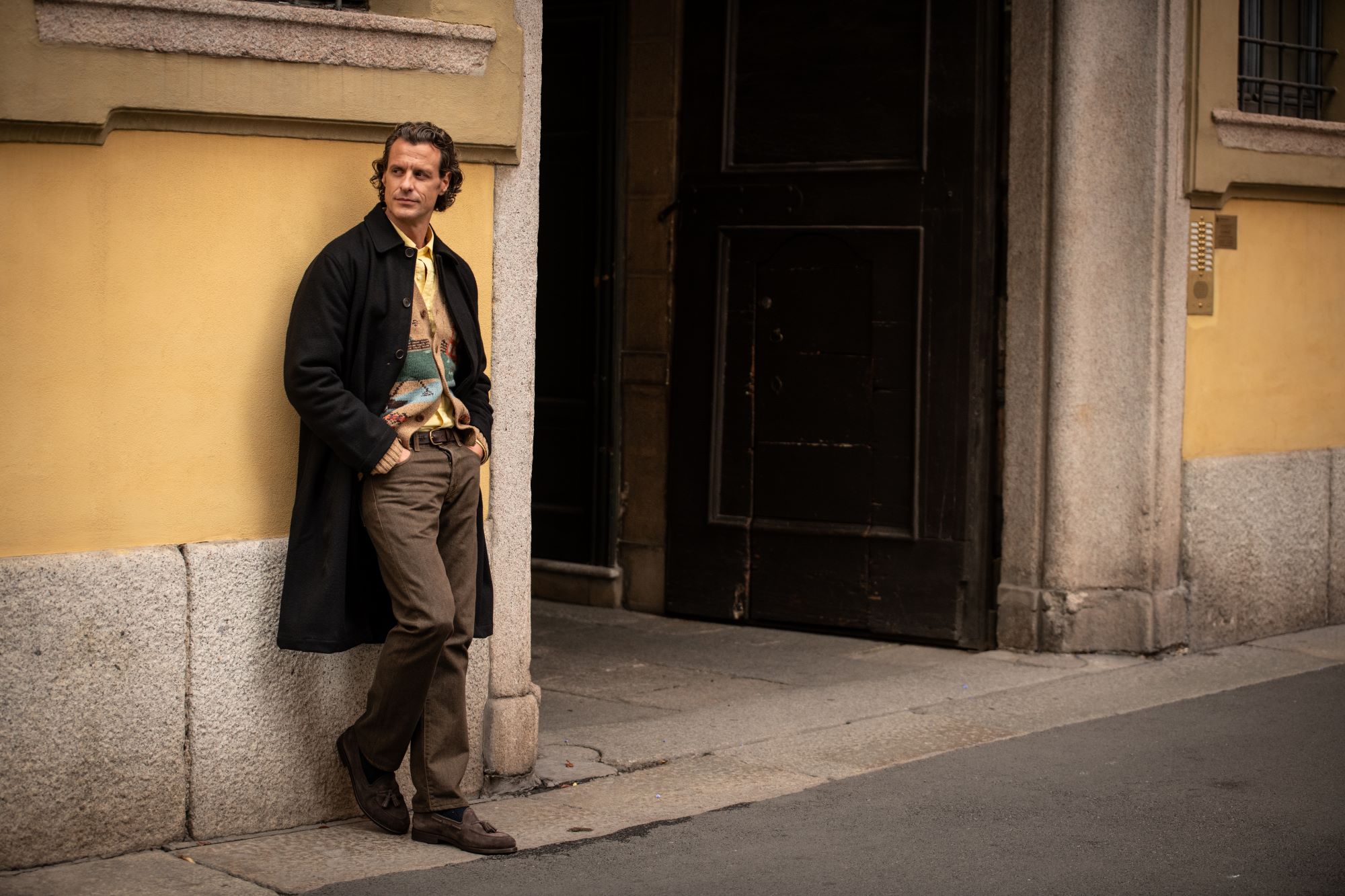
Our commitment to research and development, which has defined us for decades, remains strong. We have expanded our color range to include green and brown hues, offering a broader, more innovative selection in the denim industry. In our pursuit of natural fiber alternatives to cotton, we have focused on producing specialized wefts made from linen, wool, and hemp. Additionally, we have continued our research in industrial and post-consumer recycling and developed a keen interest in the technical and hybrid space, particularly with the discovery of biosynthetic fibers, which could lead to a new category of lightweight, high-performance products.
In this challenging environment, the focus on product quality, research, and attention to detail remains the key strength of Italian manufacturing. To stand out, the industry must invest in unmatched specialization and innovation. This goal can be achieved through a commitment to aesthetic excellence, the selection of more sustainable materials, and the continuous improvement of processes to enhance sustainability, which ultimately returns to industrial efficiency.
The main 2025 events at Candiani
Energy efficiency measures and savings
Over the past 12 years, a series of energy-efficiency initiatives have led to significant savings for our company. Starting in 2027, we will take our efforts in a new direction by developing and certifying a management system aligned with the ISO 50001 standard through an accredited body.
This energy management system will allow us to systematically monitor and improve our energy performance while reducing energy consumption, operational costs, and related emissions. Additionally, it will promote greater process efficiency, help us meet our energy targets, and strengthen our competitiveness through a structured approach to continuous improvement.
“Chiare tracce”
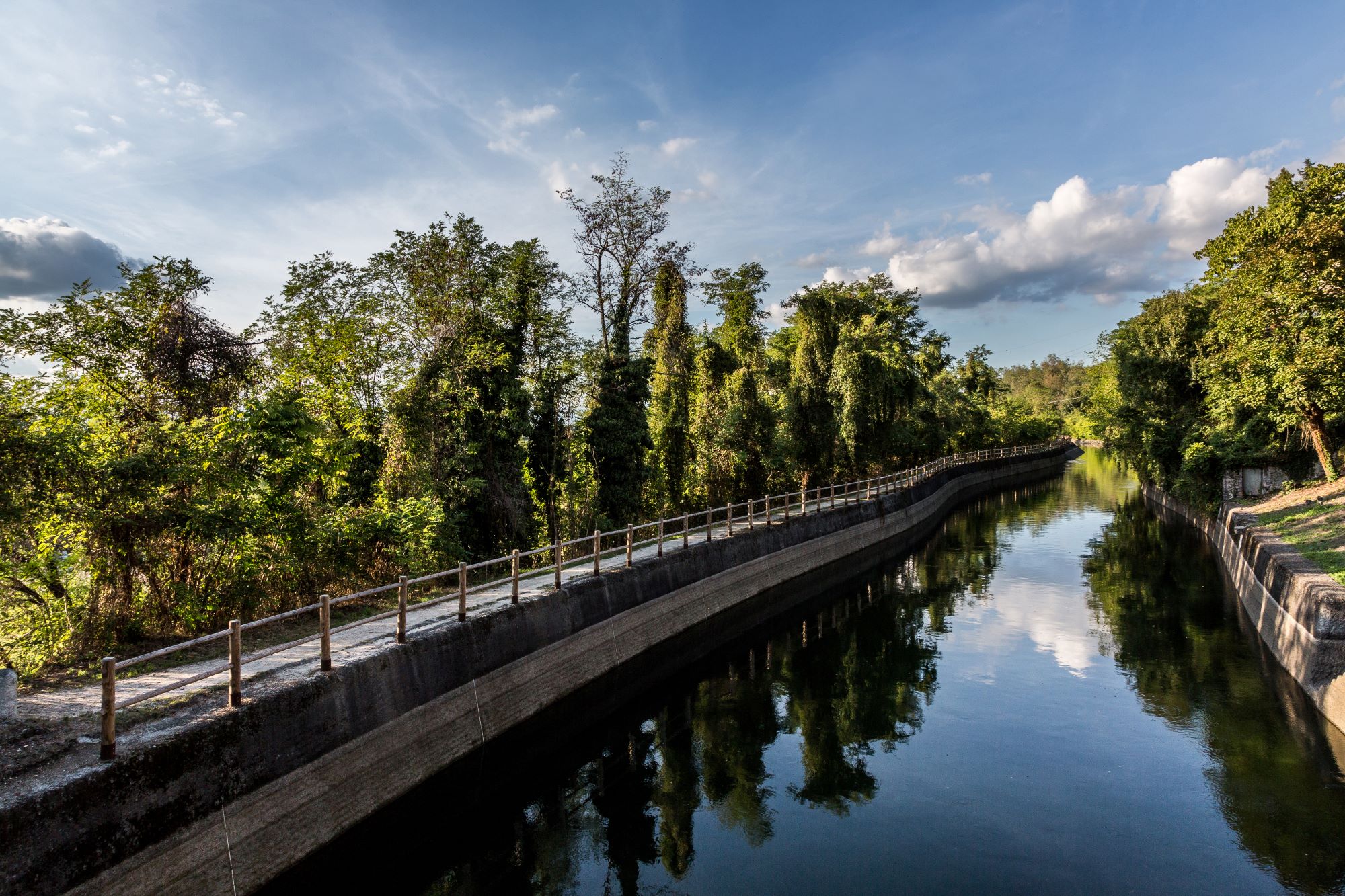
In 2025, we sponsored the historical documentary exhibition “Chiare Tracce,” which celebrated the 50th anniversary of Parco del Ticino. This exhibition featured documents and archival materials provided by Guado Officine Creative dal 1969, aimed at exploring the park’s history and raising awareness of its environmental, historical, and cultural significance. Parco del Ticino serves as an example of how collaboration among institutions, citizens, and businesses can protect natural resources while promoting economic development in harmony with the surrounding environment.
At Candiani, we recognize the important role of our location in a protected area in driving innovation and continuous improvement. The company has transformed environmental requirements into opportunities for sustainable growth, thereby enhancing the competitiveness of Made in Italy.
Our living wage estimation
In 2025, Candiani used the Anker Methodology to estimate the living wage for workers in Lombardy. A living wage is the income level that allows a worker and their family to meet essential needs such as food, housing, education, healthcare, and transportation, while also allowing for some savings to cover unexpected expenses. The Anker Methodology is based on a realistic assessment of the local cost of living, tailored to the socio-economic context of the specific geographical area. It utilizes the most recent data available from institutional sources, including ISTAT and ARERA.
Calculations were performed for both a standard family and an individual worker, based on a 40-hour work week. The results were then compared with the net salaries of Candiani’s employees, who were categorized accordingly. It was determined that all employees earn above the estimated living wage, including those in single-salary families.
We regard the living wage as a crucial component of our ESG strategy. Therefore, we plan to continue monitoring the cost of living, update parameters annually, incorporate this topic into our internal auditing and social due diligence processes, and share results and updates transparently through regular reports.
Candiani’s future objectives
Despite an uncertain, unfavorable context and a difficult-to-predict future, Candiani will continue to prioritize its main strategic sustainability objectives. These objectives include:
- Commercial expansion: expanding into new markets to gain denim market share through partnerships and dedicated product lines in specific countries.
- PrintReleaf project: in collaboration with Utax, this project aims to offset the impact of printed paper consumption by initiating SGS International-certified reforestation efforts. For every 8,333 printed sheets, one tree will be planted.
- Enhanced accessibility of safety data sheets: to improve accessibility for production departments, Candiani will implement tablets and automated scanning systems. This will facilitate the retrieval and reading of safety data sheets during loading and unloading operations.
Read our Sustainability Report.