
 Log into your account
 Register




What does “biodegradable” really mean in the context of fashion? In a time when sustainability is more than just a trend, it’s crucial to understand how materials return to the earth. At Candiani, we believe that innovation should not only perform well but also protect the planet. That’s why we developed COREVA™, the world’s first compostable stretch denim. In this article, we will explore what truly makes a fabric biodegradable, how the denim industry is tackling environmental challenges, and how cutting-edge technologies like COREVA™ are reshaping the future of sustainable luxury.
What does biodegradable really mean?
According to the Cambridge Dictionary, biodegradable “means able to decay naturally and in a way that is not harmful.” “Biodegradable” refers, hence, to a substance that can be naturally broken down by microorganisms such as bacteria and fungi into simpler, non-toxic components like water, carbon dioxide, and biomass.
However, there are some important nuances to consider:
- Timeframe matters: while almost everything is ultimately degradable, truly biodegradable products break down in a reasonable timeframe—often within weeks or months—without leaving harmful residues
- Conditions matter: some materials labeled as “biodegradable” only degrade under specific conditions, such as those found in industrial composting facilities (which have high temperatures, humidity, and oxygen), and may not break down effectively in natural environments like oceans or landfills
- Not the same as compostable: “compostable” means that the material biodegrades into nutrient-rich compost under the right conditions. All compostable materials are biodegradable, but not all biodegradable materials are compostable
New materials and proven tests
In response to environmental concerns, the denim industry is moving toward next-generation materials, including biodegradable and compostable options. While cotton, the main ingredient in denim, is biodegradable, many harmful materials are still used to achieve the desired aesthetics and performance.
Elastane, a synthetic fiber derived from petroleum, presents significant environmental challenges. Although it was introduced to denim in the 1970s to provide elasticity, elastane is not biodegradable and can remain in the environment for centuries. The United Nations Environment Programme (UNEP) notes that around 60% of clothing is made from synthetic materials, with approximately 9% of ocean microplastics originating from synthetic textiles.
At Candiani, we are committed to developing low-impact stretch denim, culminating in our patented COREVA™ technology—the first plastic-free, compostable stretch denim. COREVA™ uses plant-based elastic materials, making it environmentally friendly while maintaining excellent quality, performance, and aesthetics.
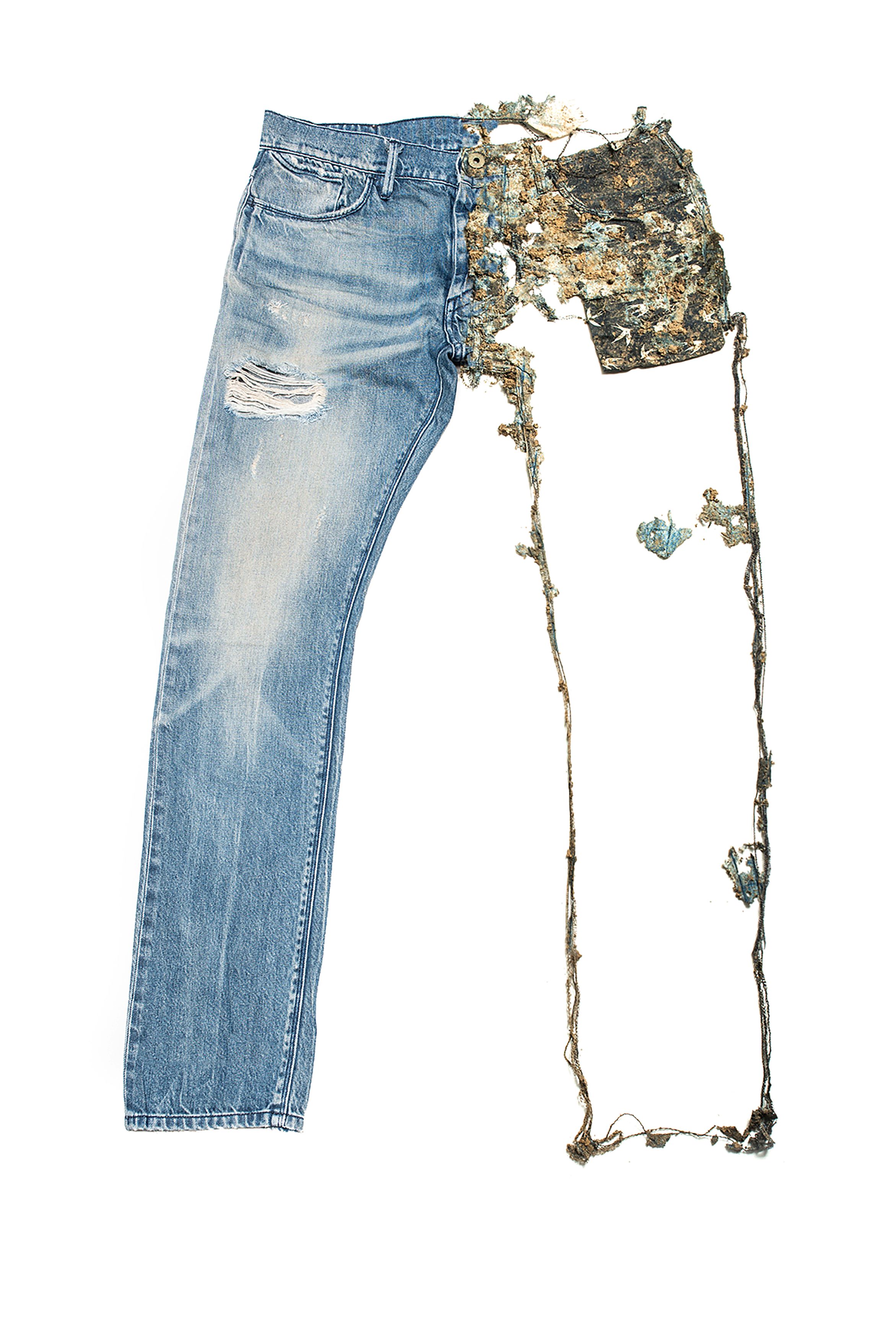
In partnership with Innovhub, COREVA™ samples underwent rigorous testing according to ISO 16929:2019 and EN 13432:2000 Annex E/AC:2005, revealing that 98.1% of the original mass decomposed in 12 weeks. A compost ecotoxicity test found that mung bean and barley seeds grew successfully in COREVA™ compost without negative effects.
To see COREVA™ in action, we collaborated with the Rodale Institute California Organic Center, using COREVA™ scraps to grow our proprietary Blue Seed cotton. A year-long study showed no adverse effects on soil health, with enhanced respiration and consistent moisture levels.
We then partnered with Quintosapore in Umbria to test COREVA™ offcuts in tomato cultivation. Soil tests conducted by Ars Chimica Laboratorio Chimico indicated that COREVA™ did not significantly alter soil composition, and moisture levels remained stable, aligning with our earlier findings.
Limits and potential
The use of biodegradable materials in the denim industry marks a significant advance in sustainable fashion. However, like any innovation with great potential, biodegradable denim comes with some limitations.
Biodegradable fibers can break down in soil without harming the environment, thus eliminating long-term pollution. If these materials are compostable, they can even support plant growth and integrate well into agricultural systems. This characteristic enables circular end-of-life options, allowing the materials to return to nature when they are no longer usable and transforming into new raw materials for future products.
Biodegradable textiles also typically offer natural softness, moisture-wicking properties, and breathability. They do not contain harmful substances, which makes them comfortable and safe for our skin while providing good performance.
However, notable limitations can hinder the research and development of biodegradable fibers. The processes can be complex, as these materials may behave quite differently from traditional options. Consequently, textile production steps such as dyeing and finishing must be adjusted to accommodate the unique characteristics of these new materials. Conventional processes can degrade biodegradable fibers prematurely, ultimately compromising the recovery, resilience, and durability of the finished textiles.
Moreover, the labor-intensive research and development programs, along with the significant investments required to produce these next-generation materials, can result in relatively high costs, limiting their scalability and the positive impact they could have on our planet. As a result, the consumer price point may also become a significant barrier to widespread adoption.
Leading brands and research
As discussed in the previous paragraphs, our COREVA™ technology represents a groundbreaking sustainable fashion innovation by providing compostable, plastic-free stretch denim. We strive to make our innovations in fashion and textiles relatable and accessible, which is why we partner with like-minded brands and designers who share our commitment to transforming the fashion industry into a more ethical and environmentally responsible space.
These collaborations aim to balance ethics and aesthetics, promoting garments made from high-quality, responsibly sourced materials that feature a refined, timeless look. Our key principles include ethical sourcing, sustainable materials such as preferred cotton fibers and plant-based dyes, durable and timeless design, energy-efficient production, and transparent supply chains.
Several key collaborations highlight the versatility of COREVA™:
- Stella McCartney was one of the first brands to adopt COREVA™, reflecting her brand’s commitment to sustainable innovation and raising awareness about responsible fashion within the luxury sector
- Heron Preston incorporated custom COREVA™ denim into his Ex-Ray collection, merging streetwear with eco-conscious design. This exclusive fabric combines natural rubber, GOTS-certified organic cotton, and sustainable hemp, which is known for its low water requirements and pest resistance
- DENHAM the Jeanmaker, led by Jason Denham, was the first to launch COREVA™ compostable jeans in 2019, introducing a limited-edition range as part of the “Life and Movement” collection
- Patine, a French B Corp brand recognized for its retro-inspired basics, utilized COREVA™ fabrics in its Donna collection. The jeans and shirts from this collection are ethically made in Portugal, combining style with comfort and sustainability
- Triarchy, founded by the Taubenfligel siblings, paused production until they could adopt a responsible method, ultimately selecting COREVA™ for their stretch denim. They showcased this work at the 2024 Green Carpet Fashion Awards, where a dress made from COREVA™ denim was worn by Amber Valletta. Notably, tomatoes grown in soil enriched with COREVA™ scraps were featured on the event’s menu, highlighting a comprehensive sustainability story
Through COREVA™, we demonstrate that premium and luxury denim can be both beautiful and environmentally friendly, paving the way for a circular and conscious fashion future.