
 Log into your account
 Register



Stretch denim changed everything. From the first stretch jeans to today’s comfortable fits, elastane has shaped modern fashion—literally. But there’s a catch: traditional elastane is made from plastic, and once discarded, it can persist in the environment for hundreds of years, contributing to pollution. So, how can we enjoy the comfort of stretch denim while minimizing its environmental impact? Let’s explore some options.
What is biodegradable elastane?
Biodegradable elastane is an eco-friendly alternative to conventional petroleum-based elastane. It provides the same elastic performance and flexibility while offering additional environmental benefits, as it breaks down over time without harming the planet.
The European Environment Agency defines “biodegradable” as something that can quickly decompose through the action of microorganisms in natural conditions, whether aerobic (with oxygen) or anaerobic (without oxygen). It’s essential to note that materials labeled as biodegradable must not only break down into natural elements without causing harmful environmental effects, but they must also do so within a relatively short timeframe. According to European regulations, a material must decompose by at least 90% within six months after disposal.
Elastane, also known by the brand names Spandex in North America or Lycra in Europe, is a lightweight synthetic fiber. It is classified as an elastomer because it possesses qualities similar to those of rubber and is made from polymers, the building blocks of plastics, derived from petrochemicals.
Developed in the late 1950s, elastane is widely used in the apparel industry for its elastic properties. Its fibers can stretch up to five times their length and easily return to their original shape. Elastane is usually blended with either natural or synthetic materials to create stretch fabrics.

The issue with traditional stretch denim
The denim industry began using elastane in the late 1970s to create jeans that fit more closely and enhance the body’s shape without feeling too constricting. Stretch jeans became so popular in the 1980s that they were considered a must-have item for women worldwide.
While the manufacturing process of elastane requires significant energy and chemicals, the primary environmental concerns associated with this fiber arise at the end of its life cycle. There are currently no effective large-scale methods for recycling elastane, mainly because it is often blended with other fibers, making it difficult to separate. As a result, elastane accumulates in landfills and even abandoned areas. According to the United Nations Environment Programme (UNEP), 11% of plastic waste comes from clothing and textiles. Furthermore, elastane takes centuries to decompose and can release harmful substances into the environment.
It’s also important to note that synthetic fabrics can shed microplastics not only when they are discarded but also during wear and washing. UNEP reports that approximately 60% of clothing contains synthetic fibers, and about 9% of all microplastics found in the oceans are due to microfibers released by textiles. Each year, 92 million tons of textile waste are generated worldwide. According to a 2015 paper by Luiken and Bouwhuis, 2.16 million metric tons of this waste consists of denim. This enormous volume is largely due to clothing production doubling from 2000 to 2015, driven by the rise of fast fashion and an expanding global middle class with greater disposable income, as reported by the Ellen MacArthur Foundation. As a result, the lifespan of garments has decreased by 36%.

Candiani’s compostable solution
Candiani is renowned worldwide as a specialist in stretch denim, being one of the first producers to invest in this innovative fabric and the most committed to its potential. We were the only mill to develop stretch denim fabrics that combined appealing aesthetics with superior performance, offering a level of elasticity and comfort that was unimaginable for the first century of blue jeans. This innovation helped fuel the premium denim industry in Los Angeles.
Today, we continue to be recognized for our stretch fabrics, as we are dedicated to making them authentic and environmentally responsible without compromising their elastic performance. Our most significant achievement in minimizing the environmental impact of stretch denim is our patented COREVA™ technology, which allows us to produce the world’s first plastic-free and compostable stretch denim.
Launched in 2019 after five years of intensive research and development, COREVA™ is the first plant-based and plastic-free stretch denim, as it contains no traditional elastane. However, denim made with COREVA™ maintains the exceptional quality we’ve come to expect from Candiani. This cutting-edge technology ensures the same level of performance, elasticity, softness, and aesthetic appeal as our other stretch fabrics, while also providing significant environmental benefits.
Real-world implications
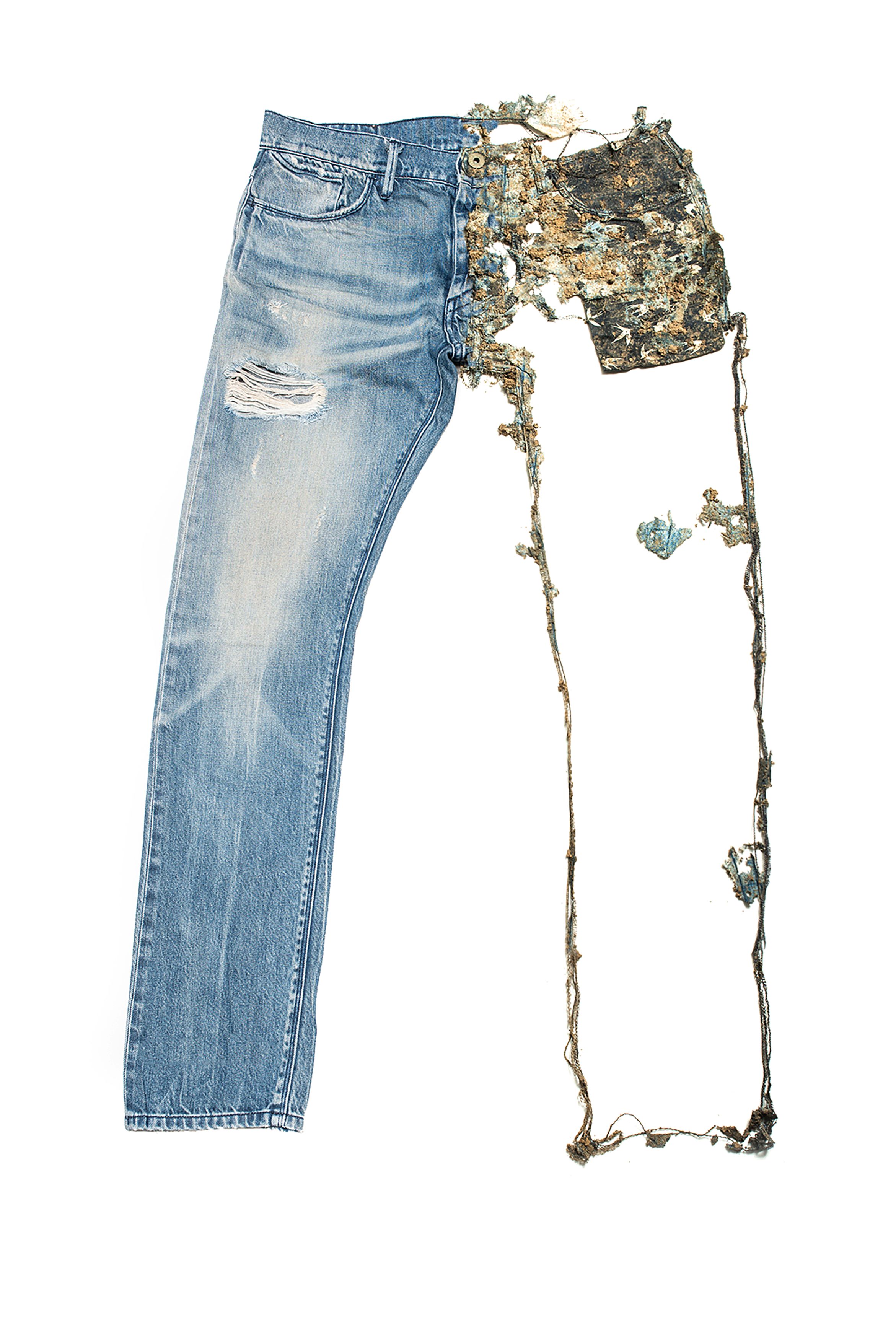
Under the right conditions, COREVA™ fabrics can be composted at the end of their lifecycle. Testing has confirmed that these fabrics disintegrate without leaving harmful residues, enabling plants to thrive in their place.
We began testing COREVA™ in a lab in 2020, in collaboration with Innovhub and following the test methods outlined in ISO 16929:2019 and EN 13432:2000 Annex E/AC:2005. After 12 weeks, 98.1% of the original mass of the COREVA™ sample had decomposed. Additionally, mung bean and barley seeds planted in the COREVA™ compost germinated and grew successfully, showing no adverse effects on the plants.
In 2022, we moved to California to conduct further tests on COREVA™ with the Rodale Institute California Organic Center. We mixed COREVA™ fabric scraps into the soil and observed its impact on soil health and the growth of our proprietary Blue Seed cotton. The year-long study showed no negative effects on the soil and demonstrated enhanced soil respiration along with consistent moisture levels.
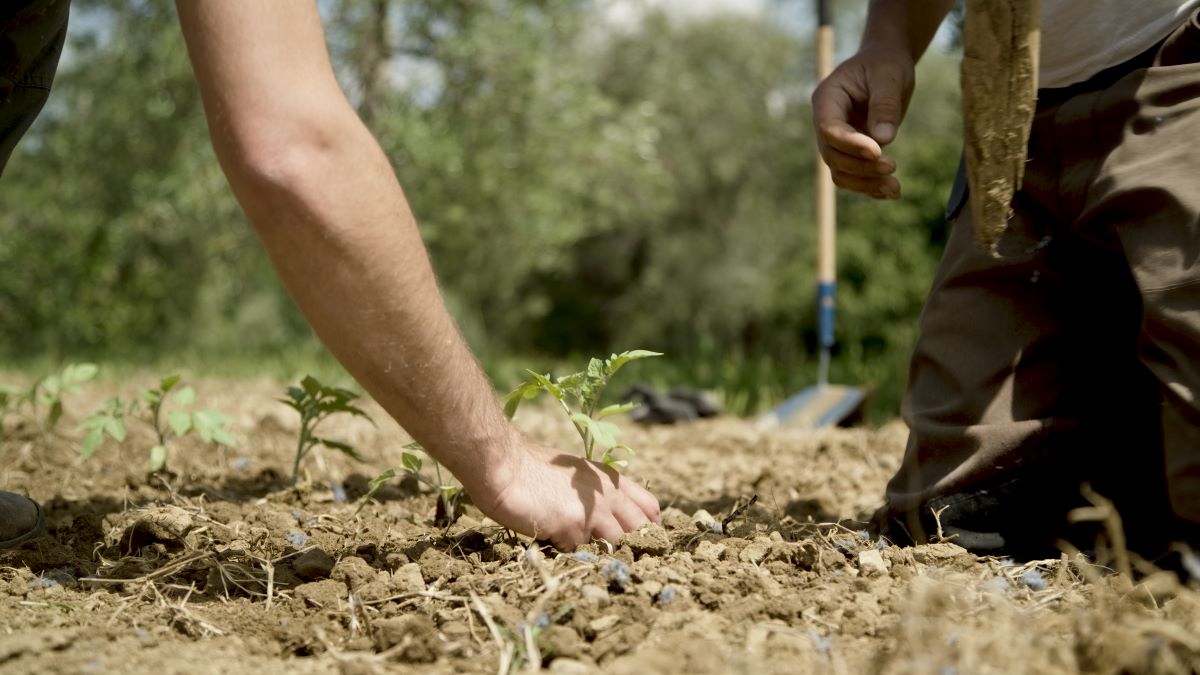
Finally, we returned to Italy to explore the connection between two beloved sectors of our home country: fashion and food. We partnered with Quintosapore to grow tomatoes using regenerative farming practices in soil composted with COREVA™ offcuts. Tests conducted before, during, and after the tomato growth by the Italian chemistry lab Ars Chimica Laboratorio Chimico compared soil with and without COREVA™. They investigated changes in chemicals, heavy metals, colorants, and overall soil health. All parameters were consistent with the initial soil tests, indicating that the addition of COREVA™ did not alter the normal chemical composition of the soil. The farmers at Quintosapore observed similar soil moisture levels as in the previous experiment.