 Log into your account
 Register

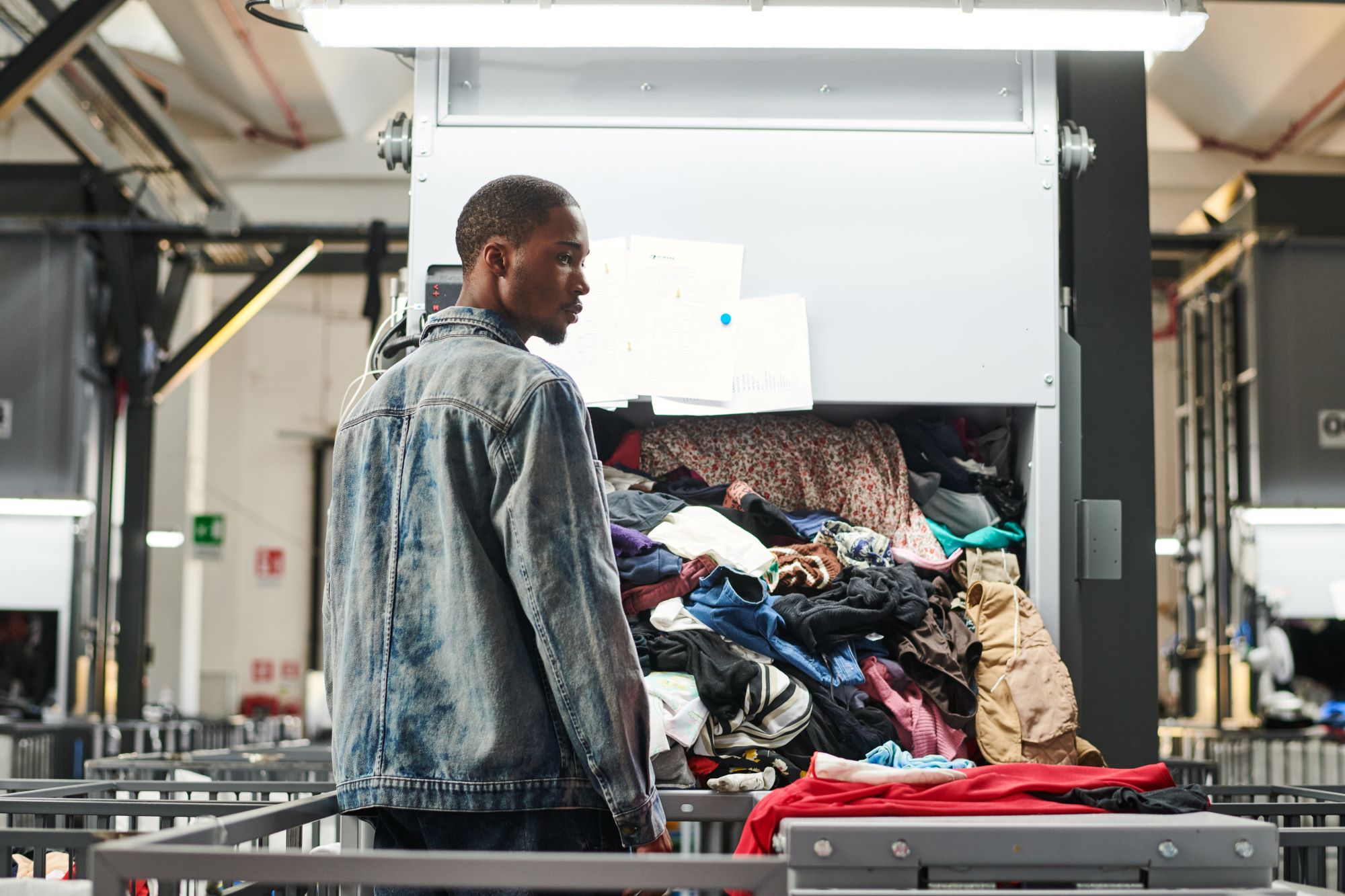


Textile waste poses a significant challenge for our industry, and it’s a problem we can’t afford to ignore. In 2020, the European Environment Agency (EEA) revealed that every EU citizen generated about an average of 16 kg of textile waste! Shockingly, only around 4.4 kg of that was collected for reuse or recycling, while the majority ended up in mixed household waste. This highlights an urgent need for innovative, circular solutions to address discarded textiles. At Candiani, we’re tackling this issue from two different angles: developing compostable materials and enhancing recycling methods.
How circularity works
The circular economy is a model of production and consumption that focuses on using raw materials more efficiently and reducing waste. Unlike traditional linear economic models, which follow a take-make-consume-discard pattern and rely heavily on cheap and easily accessible materials and energy, the circular economy emphasizes extending the life cycle of products. In this approach, products are designed to last longer through practices such as sharing, leasing, reusing, repairing, refurbishing, upcycling, and recycling. This contrasts with planned obsolescence, where products are intentionally designed with a limited lifespan to encourage consumers to purchase new items more frequently.
The benefits of the circular economy
The European Parliament highlighted the main benefits of a circular economy in three broad categories: protecting the environment, reducing dependence on raw materials, and creating job opportunities while saving consumers money.
Extending the lifespan of raw materials within the economy minimizes the use of natural resources, which helps prevent the disruption of landscapes and habitats and protects biodiversity. Additionally, developing more efficient and sustainable products decreases energy and resource consumption, which, in turn, lowers total greenhouse gas emissions. According to the European Parliament, over 80% of a product’s environmental impact occurs during the design phase. Implementing effective circular practices can also help reduce packaging waste, a significant concern, as the European Parliament reports that EU citizens generate, on average, about 190 kg of packaging waste per year.
Reducing dependence on raw materials means that adopting circular practices can help mitigate risks related to supply issues, such as price volatility, availability of critical raw materials, and import reliance. As the global population continues to grow, the demand for raw materials is increasing. However, the supply of essential raw materials is limited. According to the European Parliament, the total value of trade (imports plus exports) of raw materials between the EU and the rest of the world reached €165 billion in 2023. Exports were lower than imports, resulting in a trade deficit of €29 billion. Some EU countries have finite resources and have become dependent on imports. Eurostat estimated that each EU citizen consumed 14.22 tonnes of raw materials in 2022.
Ultimately, transitioning to a circular economy could enhance competitiveness, spur innovation, and drive economic growth. The European Parliament projected that this shift could create up to 700,000 new jobs in the EU by 2030. Additionally, consumers would benefit from access to more durable and high-quality products, improving their quality of life and saving money in the long run.
The impact on agriculture
We are focused on enhancing circularity in the denim industry through two main approaches: developing compostable products that align with regenerative agriculture and implementing recycling programs. Although it can be challenging to connect denim, fashion, agriculture, and food, we have successfully made that link!
Candiani gained worldwide recognition for its stretch denim, which became a signature style of the emerging premium denim industry in Los Angeles during the 1980s. As time passed and our awareness of environmental issues grew, we began to explore ways to reduce the impact of the petroleum-based elastic yarns typically used in conventional stretch denim fabrics.
After developing a stretch denim fabric collection made with recycled elastane called ReLast, and a family of elastic yarns designed for a neutral environmental impact that contain no harmful substances called ReSolve, we created COREVA™—the world’s first plastic-free and compostable stretch denim. This innovative fabric can decompose into compost under the right conditions, enabling it to nourish new plant growth at the end of its life cycle.
We began testing COREVA™ denim in a laboratory, collaborating with Innovhub and following the test methods outlined in ISO 16929:2019 and EN 13432:2000 Annex E/AC:2005. After 12 weeks, we observed that 98.1% of the original mass of the COREVA™ sample had decomposed. In our compost ecotoxicity test, mung bean and barley seeds planted in the COREVA™ compost germinated and grew successfully, demonstrating no inhibiting effects on plant growth.
Next, we aimed to close the loop in the fashion industry by using COREVA™ denim to help grow new cotton. We partnered with the Rodale Institute California Organic Center to incorporate COREVA™ fabric scraps into the soil and assess their impact on soil health and plant growth. This year-long study revealed no adverse effects on the soil; instead, it showed enhanced soil respiration and consistent moisture levels.
Finally, we returned to our home country and partnered with Quintosapore to grow tomatoes using soil composted with COREVA™ denim offcuts. The Italian lab Ars Chimica Laboratorio Chimico conducted tests on the soil before, during, and after growth, finding no changes in chemicals or heavy metals due to COREVA™. The farmers observed water moisture levels similar to those in previous experiments. And guess what? We used the COREVA™ tomatoes to make a delicious tomato sauce for pasta! Can you imagine a future in which you eat what you wear?
Recycling programs
Recycling plays an essential role in the textile industry as a practice rooted in circularity and industrial efficiency. Traditionally, recycling focused on post-industrial materials, which are remnants of the production process. These materials are relatively easy to recycle because they have not been contaminated by other raw materials and have not suffered from wear and tear.
Today, post-consumer recycling is becoming increasingly important due to the high volume of textile waste generated by consumers. According to the EEA, 82% of the total textile waste in the EU came from consumers in 2020. However, recycling post-consumer textiles presents challenges, as the fibers are often weakened from use. Only a portion of a finished product can be transformed back into new yarns.
We are dedicated to enhancing recycling programs at all levels. Two of our standout products are ReGen and PCR (post-consumer recycled) denim. ReGen is the fabric we developed for our 80th anniversary; it contains 50% recycled cotton and 50% TENCEL™ x REFIBRA™ fibers, sourced from leftover materials in the textile sector, such as wood and cotton. This approach avoids the need for virgin raw materials. Additionally, the fabric won the ITMA Sustainable Innovation Award in 2019.
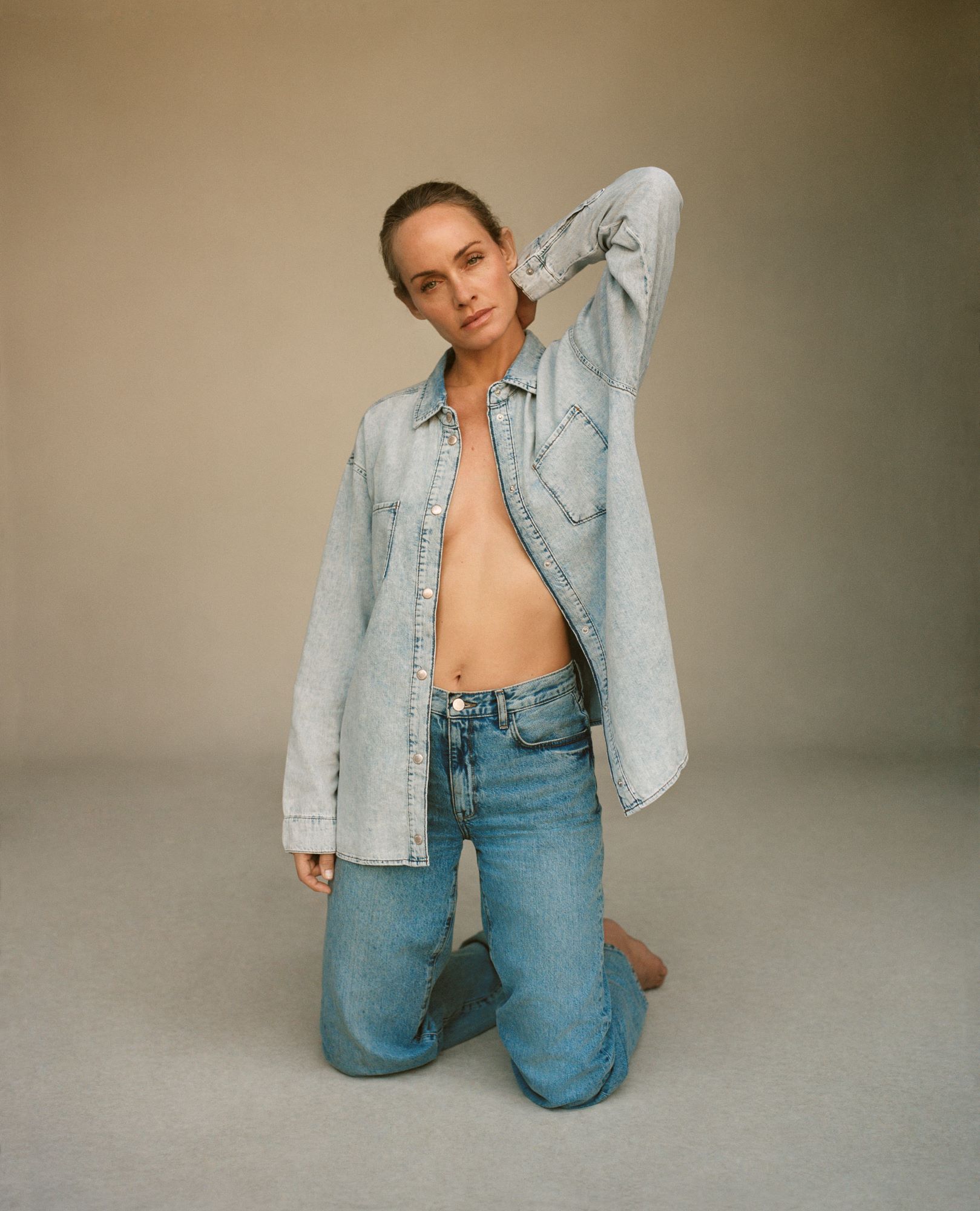
Our PCR program was developed in partnership with Humana People to People Italia and Filatura Astro, aiming to create new denim fabrics from old jeans. Simon Giuliani, the Global Marketing Director at Candiani Denim, discussed this initiative in the Circular Fashion Talks podcast, hosted by Francesca Romana Rinaldi, the director of the Monitor for Circular Fashion, and journalist Silvia Gambi.
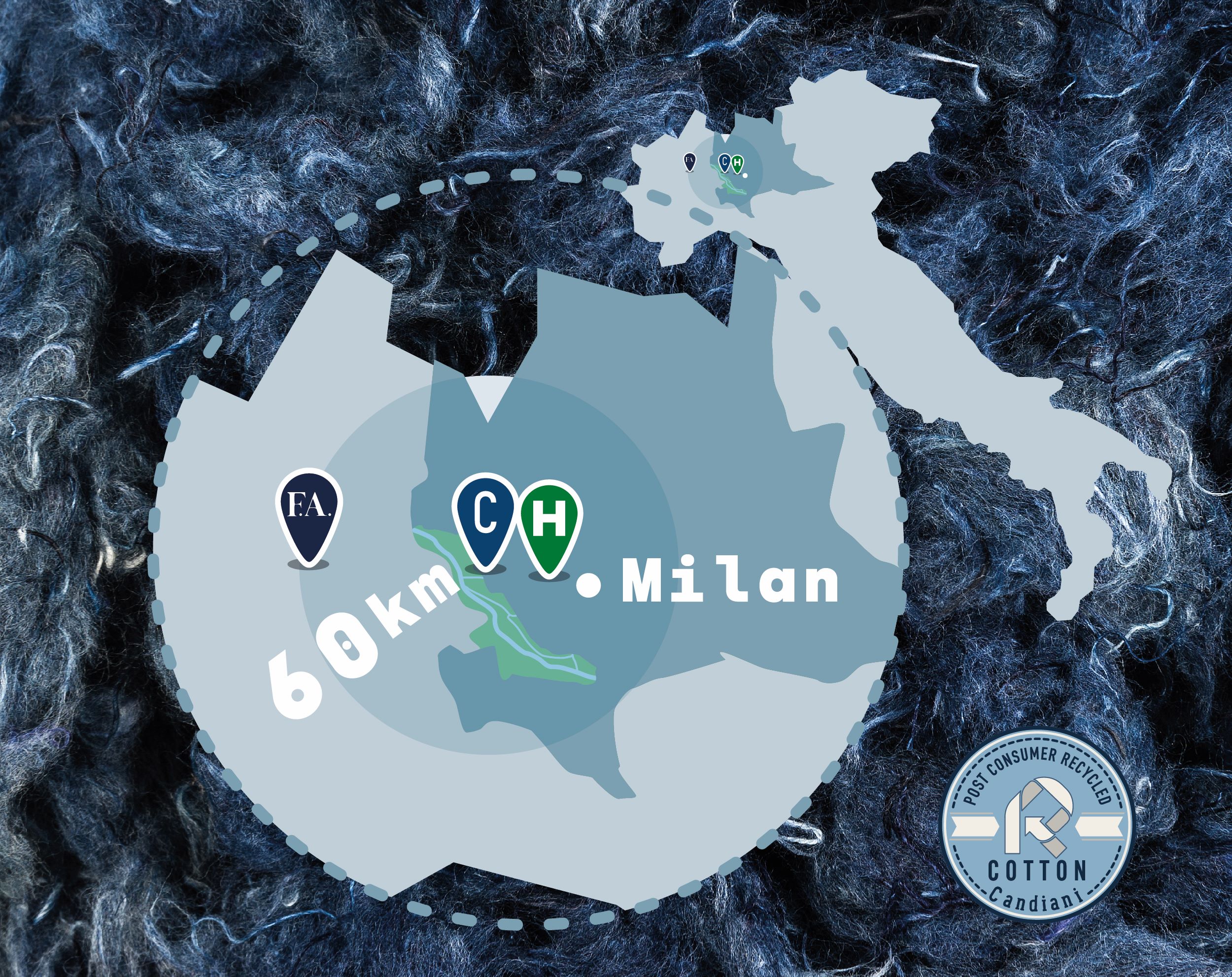
Humana People to People Italia collects old, damaged jeans from across the country and sorts them at its headquarters in Pregnana Milanese, near Milan. Filatura Astro then shreds these jeans back to the fiber stage, manufacturing yarns from recycled cotton in Vigliano Biellese, close to Biella. Finally, we incorporate these recycled yarns into our denim fabrics at our headquarters in Robecchetto con Induno, which is also in the Milan area.
This partnership represents a virtuous program because it reduces the textile waste that would otherwise end up in incinerators or landfills. Additionally, it meets two essential key performance indicators (KPIs). First, it maintains a low carbon footprint, as the entire recycling process takes place within just 60 kilometers between Milan and Biella. Second, to address the weakness commonly associated with PCR fibers, we blend them with our proprietary Blue Seed cotton, which enhances quality and durability. This allows us to incorporate a significant amount of PCR cotton—up to 30%—in our denim fabrics.