 Log into your account
 Register



Building sustainable partnerships and fostering eco-collaborations are vital steps toward achieving meaningful environmental and social change. By uniting their efforts, businesses, organizations, and individuals can significantly enhance their impact, combine resources, and effectively address the complex challenges our planet encounters. This text aims to highlight the positive contributions of these collaborations and demonstrate how they can pave the way for a more sustainable future, showcasing examples from the textile and fashion industries.
What are sustainable partnerships?
Sustainable partnerships and eco-collaborations represent a proactive approach where businesses, organizations, and individuals unite to enhance their positive impact, share resources, and collectively address the pressing environmental and social challenges our planet faces.
These collaborations offer a significant opportunity to harness diverse expertise and resources, fostering innovation and speeding up the development of sustainable solutions. By exchanging ideas and best practices, partners can explore new possibilities, leading to the creation of groundbreaking technologies, products, and services that positively contribute to the environment and society.
Moreover, eco-collaborations are instrumental in raising awareness and engaging the public in sustainability efforts. When businesses, NGOs, and community groups work together on initiatives, they can amplify their messages and reach wider audiences. This increased visibility not only inspires further action but also creates a ripple effect of positive change in society. Therefore, fostering clear communication, establishing shared goals, and ensuring a mutual understanding of roles are essential components of these partnerships. Building trust and maintaining transparency will help cultivate strong, lasting relationships.
As the textile and fashion industries navigate significant challenges, such as resource depletion, pollution, and social inequities, sustainable partnerships and eco-collaborations are vital for driving constructive change, promoting circularity, and educating consumers. Noteworthy examples include the collaborations between fashion brands and innovative material suppliers. At Candiani, we are dedicated to partnering with like-minded brands and suppliers to develop progressive and sustainable denim products, contributing to a more sustainable future for all.
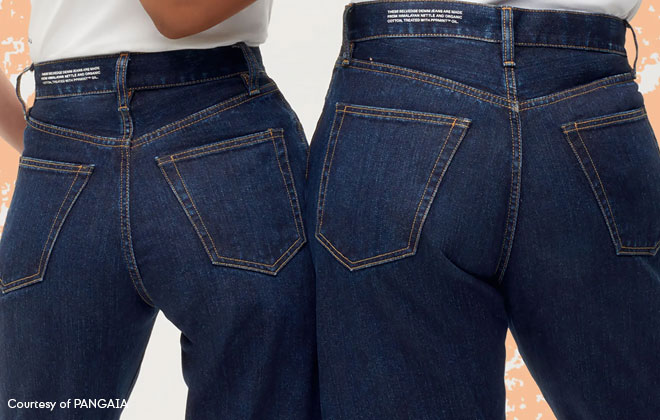
Pangaia’s nettle denim
Nettle is emerging as an innovative and sustainable fiber for crafting denim fabrics. Our collaboration with PANGAIA and Himalayan Wild Fibers led to the launch of a unique nettle denim collection, which debuted at the end of 2021. PANGAIA, a lifestyle brand founded in 2018 and based in New York City, unites the expertise of scientists, technologists, and designers to develop essential products using cutting-edge technologies and bio-materials. Himalayan Wild Fibers is dedicated to producing and selling textile fibers sourced from wild plants in the Himalayas, providing local farmers with a fair off-season income.
By blending organic cotton with nettle fibers harvested from the Himalayan mountains, we have created a distinctive fabric that offers significant environmental benefits. Nettle cultivation requires less water and no chemicals than cotton, as it grows naturally in the Himalayan forests. With responsible management practices, nettle fibers can also absorb higher levels of CO2 and help stabilize areas prone to landslides while providing additional income for local subsistence farmers through off-season harvesting.
Nettle fibers have a long history in textile production, dating back centuries. They were widely used in Europe before the widespread adoption of cotton, particularly during times of scarcity, such as World War I, when the German army utilized them to produce soldiers’ uniforms.
Nettle fibers are not only extremely durable and resistant but also soft and breathable due to their hollow core. They can be processed into a variety of textiles, from fine fabrics for clothing to coarser materials for ropes and canvas, providing them with a lustrous appearance. Additionally, Himalayan nettle fibers can stretch by 12-14%, compared to 8-9% for cotton, enhancing overall comfort.
Alberto Candiani, president of Candiani, remarked on the collaboration: “We started talking about Himalayan nettle years ago, but during the pandemic, we started to make a trial with nettle when PANGAIA approached us — it was perfect timing. The fabrics are beautiful. I was shocked when I saw the early trials. Right now, denim is including more and more hemp, even linen is growing, and nettle will most likely be next. The fiber is quite magical and includes outstanding physical performances that other natural fibers don’t have.”
The exclusive nettle denim fabrics for PANGAIA were woven on our vintage shuttle looms, resulting in a distinctive purple selvedge. These garments are designed to endure for generations, with the added benefit of being easily recyclable at the end of their life cycle. Furthermore, they decompose without causing harm to the environment, as they contain no synthetic materials and are entirely plastic-free, utilizing threads made from lyocell cellulose.
PANGAIA’s nettle denim collection features three thoughtfully designed fits by former Levi’s® designer Jonathan Cheung, including a unisex ‘90s-style denim jacket, unisex straight-leg jeans, and women’s high-rise jeans. This collaboration marks an exciting milestone as PANGAIA introduces its first denim collection, highlighting our commitment to sustainability and innovation in the fashion industry.
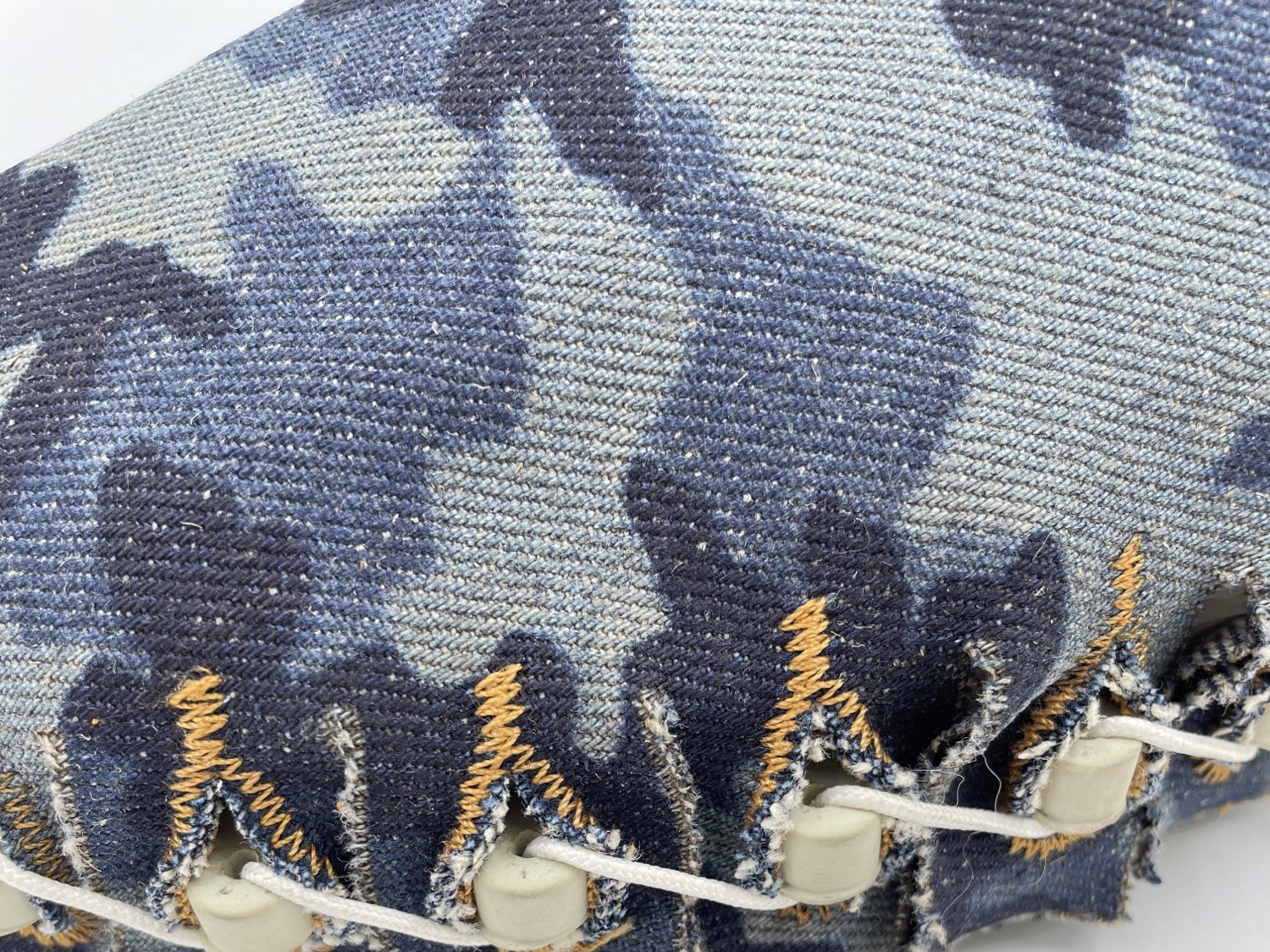
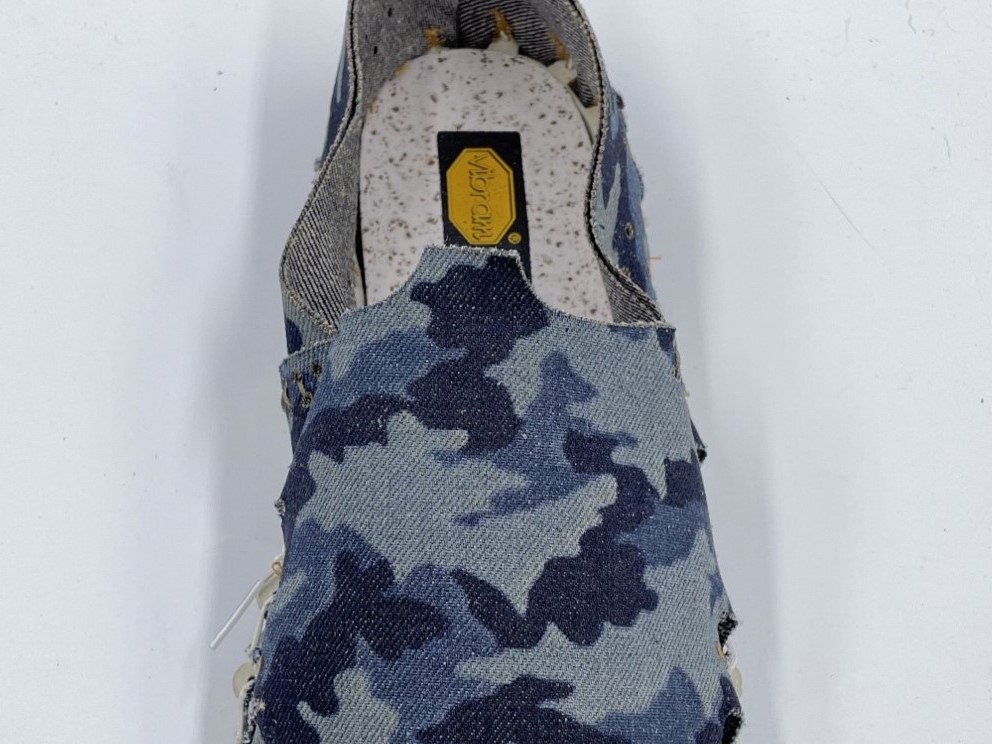
Vibram’s eco-footwear
We embarked on an innovative project in collaboration with Vibram as part of the Monitor for Circular Fashion, organized by SDA Bocconi School of Management and powered by Enel X. Vibram is a global leader in the production of high-performance rubber soles designed for outdoor and leisure activities, workwear, fashion, orthopedics, and corrective footwear. With over 80 years of experience, Vibram is headquartered in Italy and is recognized worldwide for its commitment to quality, performance, safety, and innovation within the footwear industry.
Our initiative, titled Component Shoe, aimed to create a sustainable footwear solution consisting of just five easily assemblable, disassemblable, repairable, and recyclable components. This design aligns seamlessly with the principles of the circular economy. The components of our shoe include the upper, sole, midsole, laces, and yarn for the buttonhole, all of which can be separated in approximately five minutes.
The upper is crafted from upcycled cotton denim and cotton threads, while the sole features natural materials certified by the Forest Stewardship Council (FSC). The connection between these components is made possible through a lace composed of a cotton and TENCEL™ blend.
Our component shoe was thoughtfully designed around four key principles:
- Eco-design: eco-design is about prioritizing the environmental impact of a product throughout its entire life cycle. We emphasized recyclability, the use of recycled inputs, resource reduction, and repairability throughout the development process of our shoes. Additionally, we assessed design for circularity, co-creation, and modularity as vital Key Performance Indicators (KPIs)
- Raw material sourcing: sourcing sustainable raw materials minimizes harm to ecosystems. Our sourcing strategy focused on circular inputs, with 21% of our materials derived from pre-consumer recycled sources, including production leftovers
- Manufacturing processes: manufacturing processes must be optimized for efficiency, reducing water and energy consumption, and minimizing chemical usage. We adopted on-demand production and modular solutions as primary KPIs to guide the manufacturing of our shoes, ensuring efficiency and sustainability
- End-of-life considerations: designing for durability, repairability, and recyclability ensures products remain in circulation, minimizing waste and maximizing resource utilization. We placed a strong emphasis on the lifecycle of our products, exploring options for recycling and regeneration. Our shoes are designed for easy home repairs, and all components can be disassembled and recycled, reinforcing our commitment to sustainability
Through such projects, like those with PANGAIA and Vibram, we aim to inspire a shift towards more responsible and sustainable fashion practices while demonstrating the potential of collaborative efforts in creating innovative solutions.