 Log into your account
 Register



Tech-integrated fashion is transforming what we wear into something intelligent. From shirts that track your heart rate to jeans that regulate temperature, smart textiles blend technology and style in ways we never thought possible. Once confined to labs and military gear, these innovative materials are now making waves in everyday life, reshaping healthcare, sportswear, and even denim.
What are smart textiles?
Smart textiles, also known as e-textiles or intelligent textiles, are fabrics that incorporate electronic components, allowing them to sense, react, and adapt to environmental conditions or user inputs. These fabrics go beyond traditional textiles by offering features such as sensing, actuation, and data processing, making them interactive and intelligent.
Smart textiles originated from military and aerospace research in the mid-20th century and later expanded into the medical and sportswear industries. These materials are now poised to enter the broader fashion industry. This potential has particularly surged since the 2020 pandemic, when the importance of monitoring our health became evident.
Examples of sensor-enabled denim
Sensors can be embedded into fabrics to create smart textiles that monitor physiological or environmental factors, serving as dynamic tools in various sectors, including healthcare and sports, as well as in our daily lives. These sensors can be woven or printed onto the fabrics, allowing them to monitor health, track performance, or trigger specific actions in response to environmental conditions.
Biometric sensors can:
- Monitor heart rate or breathing rate, transmitting this data wirelessly for fitness tracking or medical monitoring
- Track muscle engagement and fatigue, which is beneficial for athletes or individuals undergoing physical therapy
- Monitor skin temperature to gain insights into body temperature regulation and potentially detect fever
Environmental sensors can:
- Detect moisture levels in the environment, alerting the wearer to uncomfortable conditions or triggering a drying mechanism
- Monitor posture changes or detect falls by measuring blood pressure
- Adjust the reflectivity of denim or trigger other actions based on ambient light levels
Other potential applications include GPS location tracking, using sensors to determine position for safety or navigation purposes, and gesture recognition, which enables hand gestures to control other devices or interact with applications.
Sensor-enabled fabrics typically incorporate conductive fibers or yarns that create circuits connecting to the sensors. These sensors can be made from various materials, including polymers and metallic fibers, and they transmit data to a connected device, such as a smartphone or smartwatch.
Benefits and use cases
The primary benefit of smart textiles is their ability to monitor vital signs—such as heart rate, body temperature, and respiration—in real time, without the need for bulky devices. These textiles offer a non-invasive, continuous, and often washable solution, as the electronics are seamlessly integrated into flexible, wearable forms that provide better ergonomics compared to traditional wearable devices.
This functionality optimizes safety and performance by detecting fatigue, impact, or exposure to hazardous conditions, making them ideal for workers, athletes, and military personnel. Smart textiles can also provide early warnings in dangerous environments. Moreover, they come with enhanced capabilities, featuring adaptive elements like temperature regulation, moisture-wicking properties, and shape memory. They can finally respond to environmental stimuli such as light, heat, motion, and pressure.
While smart textiles are not inherently sustainable—since this depends on the materials and manufacturing processes used—they can be energy-efficient. Some designs are capable of generating or storing energy (such as solar or kinetic-powered fabrics) and help reduce the need for separate hardware components, ultimately minimizing electronic waste.
Healthcare & medical
Wearable health sensors monitor vital signs and offer feedback to patients. They track ECG, glucose levels, and hydration status. In rehabilitation, smart textiles provide guidance for physical therapy exercises through feedback. Additionally, incontinence sensors and smart bandages monitor wound healing.
Sports & fitness
Smart textiles monitor athletic performance by assessing muscle activation, posture, and gait. Additionally, compression wear adjusts pressure according to movement or recovery needs, optimizing training and enhancing comfort.
Fashion & consumer wearables
Smart textiles can be used to create clothing that provides personalized comfort or changes appearance based on the environment; for instance, they can illuminate clothing for special events or branding, while color-changing fabrics respond to temperature or emotional states. Additionally, gesture-controlled interfaces can be integrated into sleeves or gloves.
Military & defense
Smart uniforms monitor vital signs, detect injuries, and assess chemical exposure, while textiles with camouflage capabilities adapt to their surroundings. This protective gear can also incorporate features such as thermal regulation and communication capabilities.
Occupational safety
Protective gear can detect gas leaks, extreme temperatures, or UV exposure. Additionally, posture-correcting vests for manual laborers help prevent injuries.
Automotive & interiors
Smart seats and steering wheels monitor driver fatigue and stress, while temperature-regulating and haptic-feedback seats enhance comfort and safety.
Home & lifestyle
Smart bedding tracks sleep cycles and adjusts its firmness and temperature accordingly. Additionally, curtains and upholstery can modify transparency or sound absorption, provide antimicrobial properties, or even change color and pattern.
Is Candiani innovating in this space?
While we don’t produce denim with sensors, we are committed to incorporating more innovative ingredients into our fabrics. A significant recent innovation in the realm of next-generation textiles is GRAPHITO.
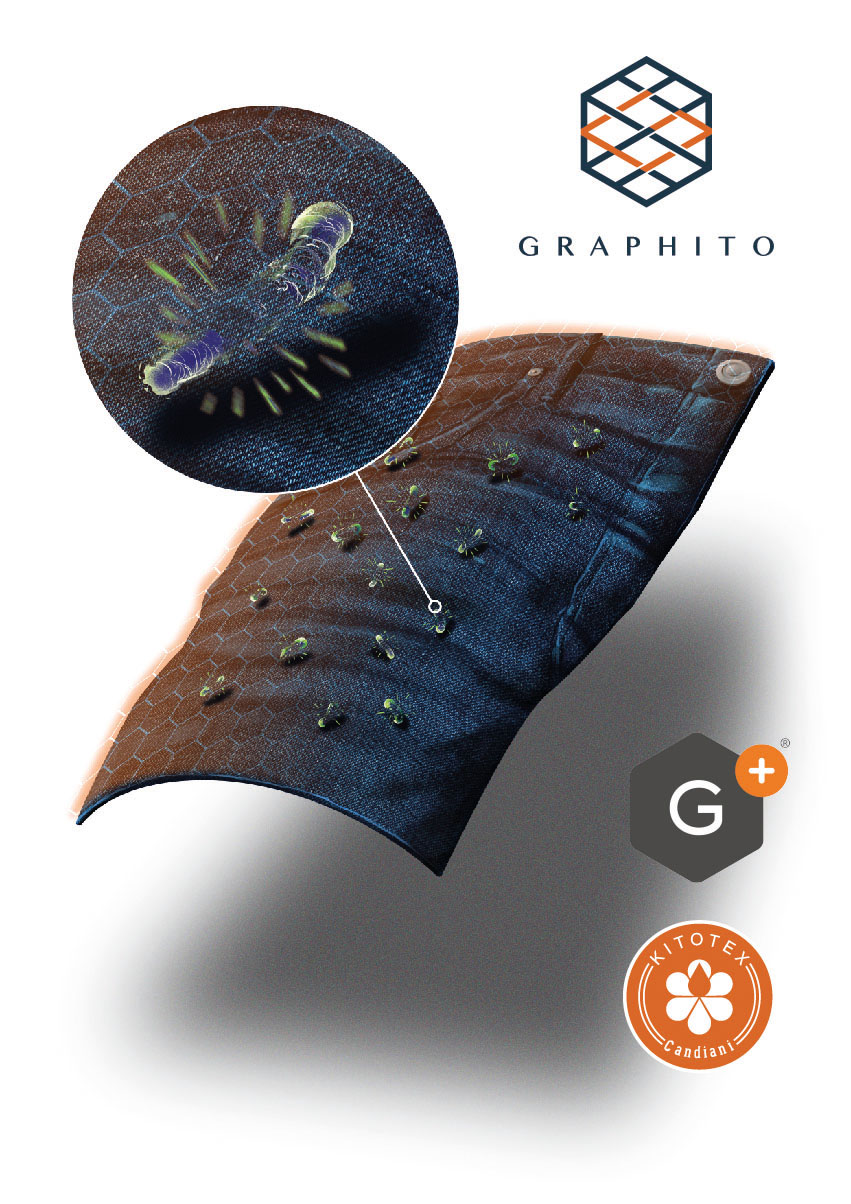
GRAPHITO is our graphene-infused denim, made with G+® Graphene Plus, the purest form of graphene patented by Directa Plus. In a waste-free process that avoids the use of chemicals and solvents, every gram of graphite is transformed into a gram of G+®. As a result, G+® is certified as safe, skin-friendly, non-toxic, and non-cytotoxic.
Although GRAPHITO does not contain any electronic components, it can enhance thermal comfort. Jeans infused with G+® have been tested and shown to maintain a lower skin temperature while achieving a higher external surface temperature. This results in superior heat dissipation and greater thermal comfort for the wearer compared to conventional denim fabrics.
Additionally, G+® improves the antiviral and antibacterial properties of denim. The bacteriostatic qualities of G+® are further enhanced by our patented Kitotex® technology, which employs a bio-based sizing agent to replace conventional polyvinyl alcohol (PVA). Kitotex® boasts excellent binding and film-forming properties while improving the color richness of indigo-dyed yarns and enhancing the overall aesthetics with a polished look and feel.