 Log into your account
 Register

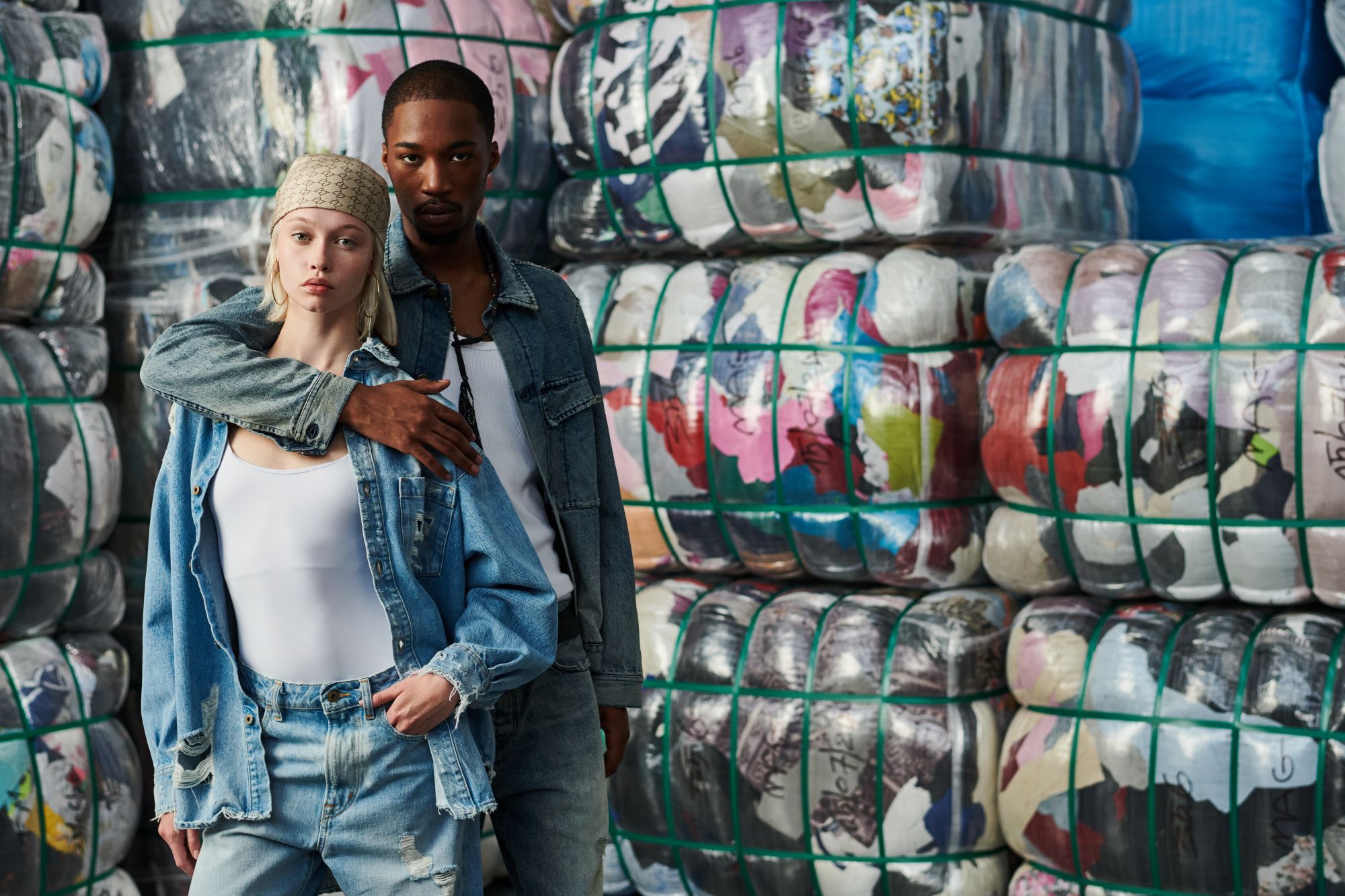


Recycled cotton jeans are making a splash in the denim world as part of a growing movement toward circular-economy models. This approach, backed by European institutions and an increasing number of fashion brands, aims to reduce waste and lessen the reliance on new raw materials. Let’s dive into what circular denim means and how it operates.
What circular denim means
When we talk about circular denim, it generally refers to two main ideas: first, that denim can be recycled or made from recycled materials, and second, that it can be composted and returned to nature at the end of its life cycle. However, let’s focus more on the recycling aspect for now.
Recycling is not a new concept, but it has gained significant attention in the fashion industry due to the staggering amount of textile waste generated. The UN Environment Programme estimates that about 92 million tons of textile waste are discarded each year. We buy 60% more clothes today than we did 15 years ago, yet we keep them for just half as long. The Boston Consulting Group puts the annual value of textile waste at around $150 billion—resources simply going to waste. If we could reclaim even a fraction of that, it could support the material needs of the world’s 30 major fashion brands.
Recycling keeps valuable resources in circulation. It usually starts with fabric recyclers assessing old textiles for potential resale. Those that can’t be sold may become rags for various industries, such as construction or cleaning, or be sent to recycling facilities for dismantling. Unfortunately, only about 1% of used textiles are recycled into new fibers, while a staggering 85% ended up as mixed household waste in 2022, according to the European Environment Agency, meaning they can’t be reused or recycled. The New York State estimates that 95% of discarded clothing, footwear, and other household textiles can still be reused or recycled.
Recycling cotton fiber
Textile recycling begins with the collection and sorting of materials that require different treatment processes. As we are interested in recycled denim, which primarily uses cotton, we will focus on this material. It’s interesting to note that recycled cotton accounts for only about 1% of the total cotton fibers produced each year, as reported by Textile Exchange.
Cotton textiles are sorted by type and color and then cleaned to remove any hardware. Mechanical recycling is the most common approach, primarily because chemical methods are still developing. It works best with monofiber items and is particularly effective for cotton, making recycling 100% cotton jeans significantly easier than stretch jeans. The mechanical process involves shredding or pulling apart the fabric into individual fibers, which are then aligned through a process called “carding” to prepare them for reweaving.
It’s also worth noting that recycled textiles are categorized into three types: post-industrial, pre-consumer, and post-consumer materials. Post-industrial and pre-consumer waste includes fibers lost during production, cutting and sewing scraps, deadstock, and damaged items that can’t be sold. In contrast, post-consumer waste refers to products that have been sold and used by consumers.
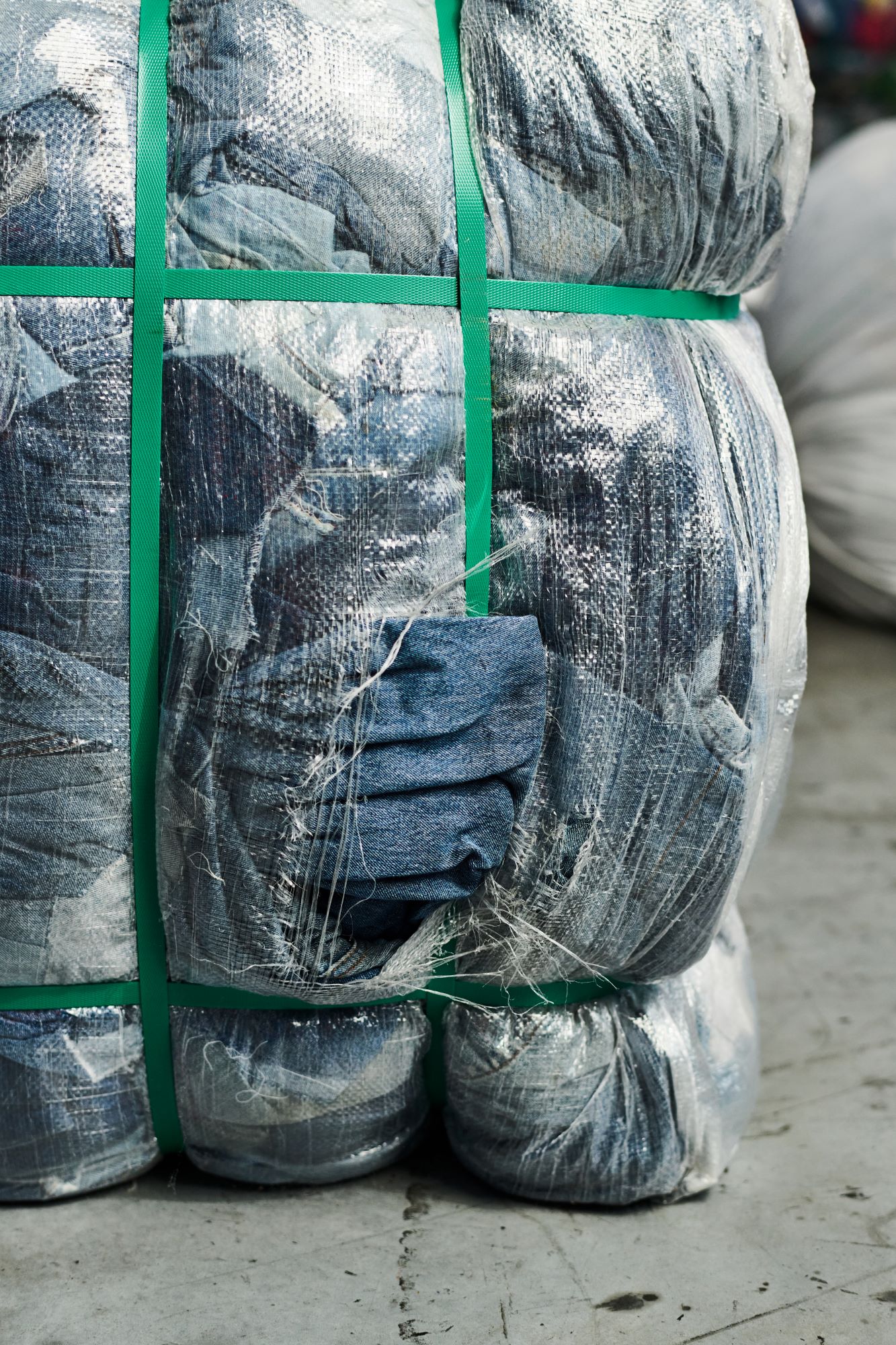
Humana People to People Italia’s headquarters.
Challenges of recycled denim
While textile recycling offers significant potential, there are challenges throughout the process. Many consumers lack information about how to properly dispose of their textiles, and current technologies aren’t equipped to handle the volume of waste. Sorting processes tend to prioritize resale over recycling and often rely on manual labor, making it challenging to categorize textiles or eliminate contaminants effectively. Plus, the infrastructure needed to effectively collect and process used textiles can be logistically challenging and resource- and energy-intensive, potentially reducing some environmental benefits.
Moreover, most fabrics are made from blended fibers, and the prevailing mechanical processing methods are tailored for single-fiber materials. Mechanically recycled fibers can often be shorter and weaker, necessitating blends with virgin materials to maintain quality. On the flip side, chemical recycling can preserve the original quality of textiles, but it produces only synthetic materials, as it isn’t possible to chemically revert natural fibers to their original state. Additionally, chemical processing can be costly and involves careful handling of chemicals.
Finally, recycled fibers often cost more than virgin materials because production processes have been optimized for the latter, and the market for recycled textiles can be unpredictable, with significant fluctuations in demand, prices, and the availability of suitable materials for recycling. And even when recycled fibers are available, concerns over quality and compatibility with existing supply chains can make them less attractive. Consumers also have limited awareness about the characteristics and benefits of recycled textiles.
Future of circular fashion
The issue of textile waste has become a significant topic on the European agenda lately. It’s crucial to recognize that tackling such a vast problem isn’t something anyone can do alone; it requires a collective effort across the entire supply chain to shift current production methods.
The EU’s Strategy for Sustainable and Circular Textiles takes a comprehensive approach, addressing the entire lifecycle of textile products. It pushes for coordinated actions to enhance both production and consumption models, aiming to create a competitive, resilient, and innovative industry. The goal is to promote profitable reuse and repair services while ensuring that textiles sold in the EU market are durable, repairable, and recyclable; essentially, they should be both high-quality and affordable. The strategy emphasizes that textiles should be made largely from recycled fibers, be free of harmful substances, and be produced in a way that respects both social rights and the environment. Importantly, producers will be held accountable for their products throughout the value chain, working towards sufficient recycling capacities and minimizing incineration and landfilling.
The European Parliament highlights three main benefits of moving toward a circular economy. First, from an environmental standpoint, extending the lifespan of raw materials reduces the exploitation of natural resources, prevents ecosystem disruption, and protects biodiversity. Economically, as demand for raw materials continues to grow while their supply dwindles, the shift away from heavy reliance on imports can help mitigate risks such as price volatility and supply shortages. Finally, embracing a circular economy could enhance competitiveness, foster innovation, and stimulate economic growth, with estimates suggesting it could create up to 700,000 new jobs in the EU by 2030. Consumers would also benefit from more durable, high-quality products, as these could improve their quality of life and save them money in the long run.
In our journey to promote circular economic practices, we’re dedicated to enhancing the use of recycled materials in our fabrics. This is why our full-width denim selection for The Primo Jean features materials with post-industrial recycled content, mixed with regenerative cotton.