Log into your account
 Register

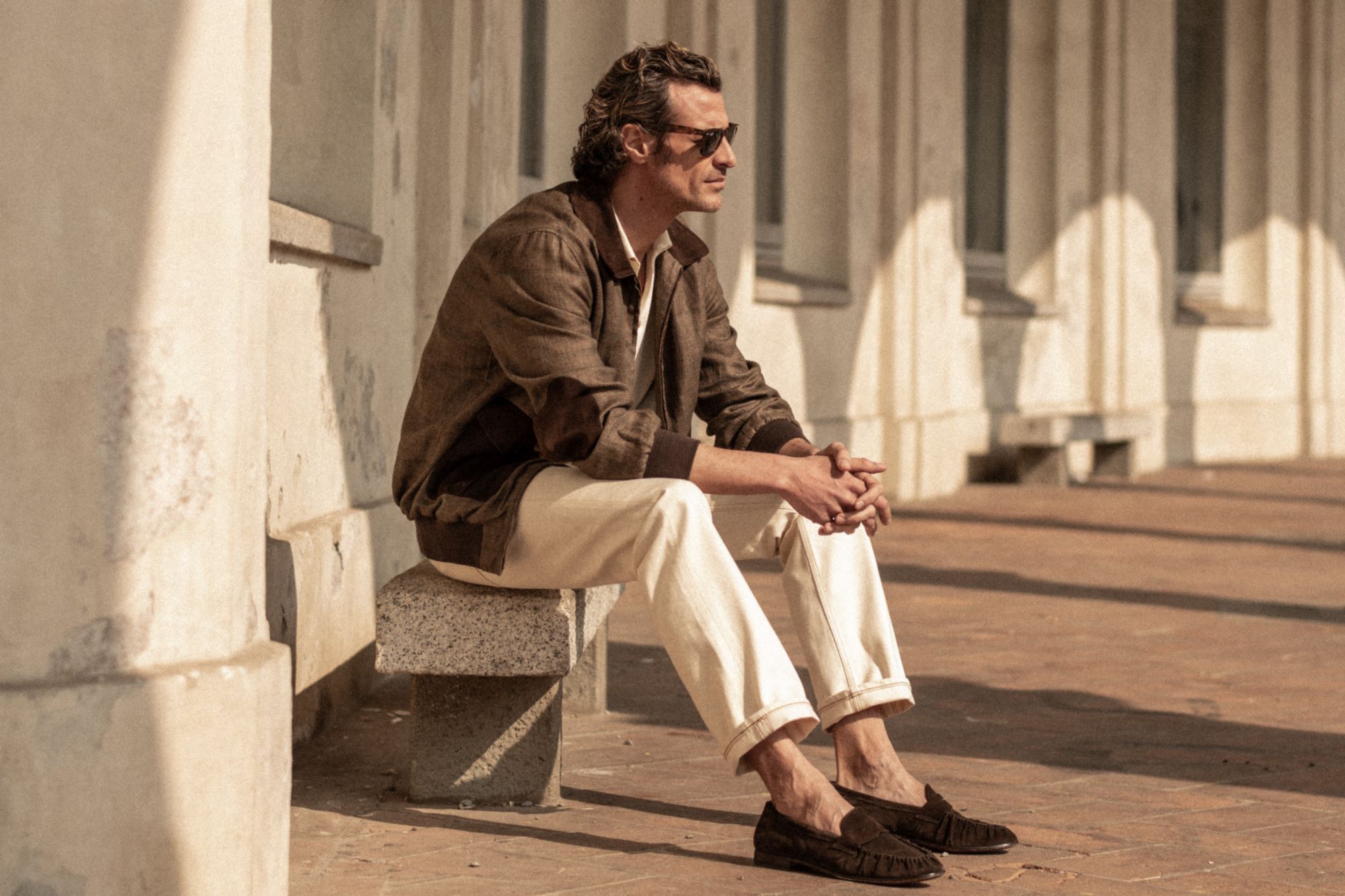


Ecru and white denim fabrics are commonly mistaken for one another, but they are distinct. Ecru denim retains the natural color of cotton. In contrast, white denim undergoes a finishing process to achieve a brighter, more uniform look. This difference has long been recognized in the textile industry and can be traced back to medieval European fustian. Let’s take a closer look at the reasons behind it.
What’s ecru denim and how is it produced?
Ecru denim is a unique fabric that showcases the natural color of cotton. The word “ecru” itself is derived from the French term “cru,” meaning “raw,” which traces back to the Latin word “crudus.” As defined by the Cambridge Dictionary, ecru refers to a pale brown or cream color. In fashion, this term highlights materials that are untreated and natural, particularly when describing yarn or cloth that hasn’t been bleached. In the denim industry, the term “raw” refers to jeans that haven’t undergone finishing or refinement.
Different from the more commonly seen indigo and black denim, ecru denim is undyed. However, its production process remains consistent across various fabric colors. Often, ecru denim serves as a base for additional treatments after the garments are sewn. This allows for options such as whitening to create bright white jeans or overdyeing to achieve colors beyond traditional denim shades.
As with other types of denim, ecru denim can be found in both full-width and selvedge forms, depending on the weaving technique used. Selvedge denim is considered the most authentic, woven on shuttle looms that were prevalent until the 1960s, when more efficient full-width looms took over to meet growing demand. Today, selvedge fabrics are relatively rare, but we take pride in preserving this tradition, which is highly valued by denim enthusiasts who appreciate its history and distinctive qualities.
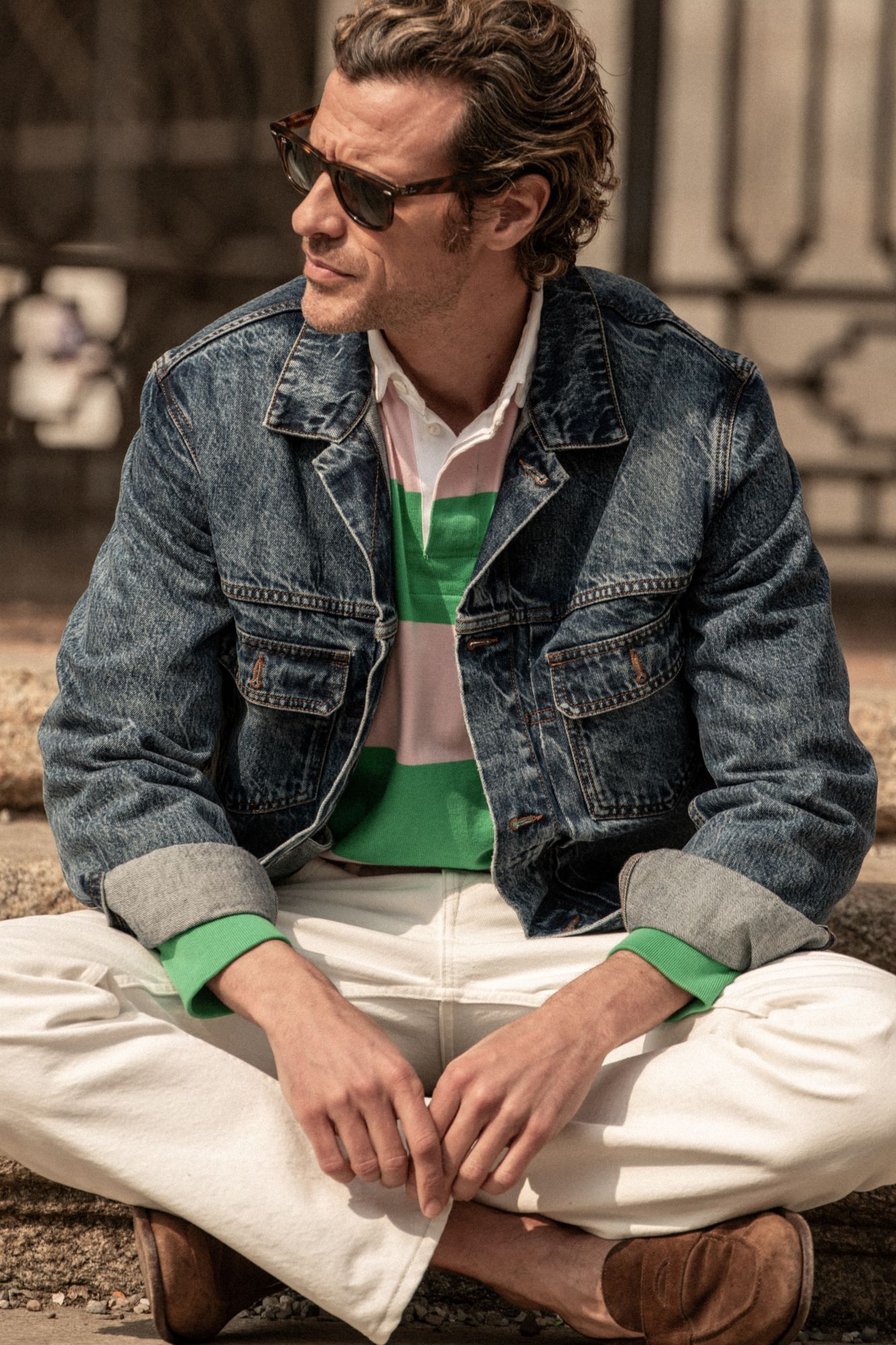
Rising temperatures are making white jeans popular
Ecru and white jeans have become popular alternatives to traditional denim, offering a fresh and bright look while maintaining the core qualities of strength, durability, and comfort.
White jeans typically feature a consistent, artificially created shade. At the same time, ecru denim showcases natural imperfections that lend each piece a unique appearance. This makes ecru a more neutral and sophisticated choice, perfect for those looking to embrace the quiet luxury trend.
Both ecru and white jeans shine in warmer weather, especially when designed with wide fits and crafted from lightweight fabrics like linen and cotton blends that are engineered to keep you comfortable in rising temperatures. They can easily be alternated with classic summer styles, such as 100% linen or lightweight cotton chinos, providing versatile options for your wardrobe.
Explore ecru jeans on the Candiani website
On our website, you’ll discover the ecru 100% cotton Primo Jean available in both selvedge and full-width options. Our Primo Jean features a classic 5-pocket design with a regular cut, providing a straight leg that falls from the hip to the ankle. This design ensures both comfort and freedom of movement, while delivering a polished, balanced look that flatters any body type and personal style.
The selvedge fabrics featured are crafted in their raw state to showcase their natural beauty and maintain the authenticity of the denim. While the typical color fading associated with wear doesn’t apply to ecru jeans, keeping these fabrics raw highlights the unique imperfections that make each piece special. As the selvedge is present on the inseam, we recommend opting for a slightly longer length than usual so you can cuff your selvedge jeans.
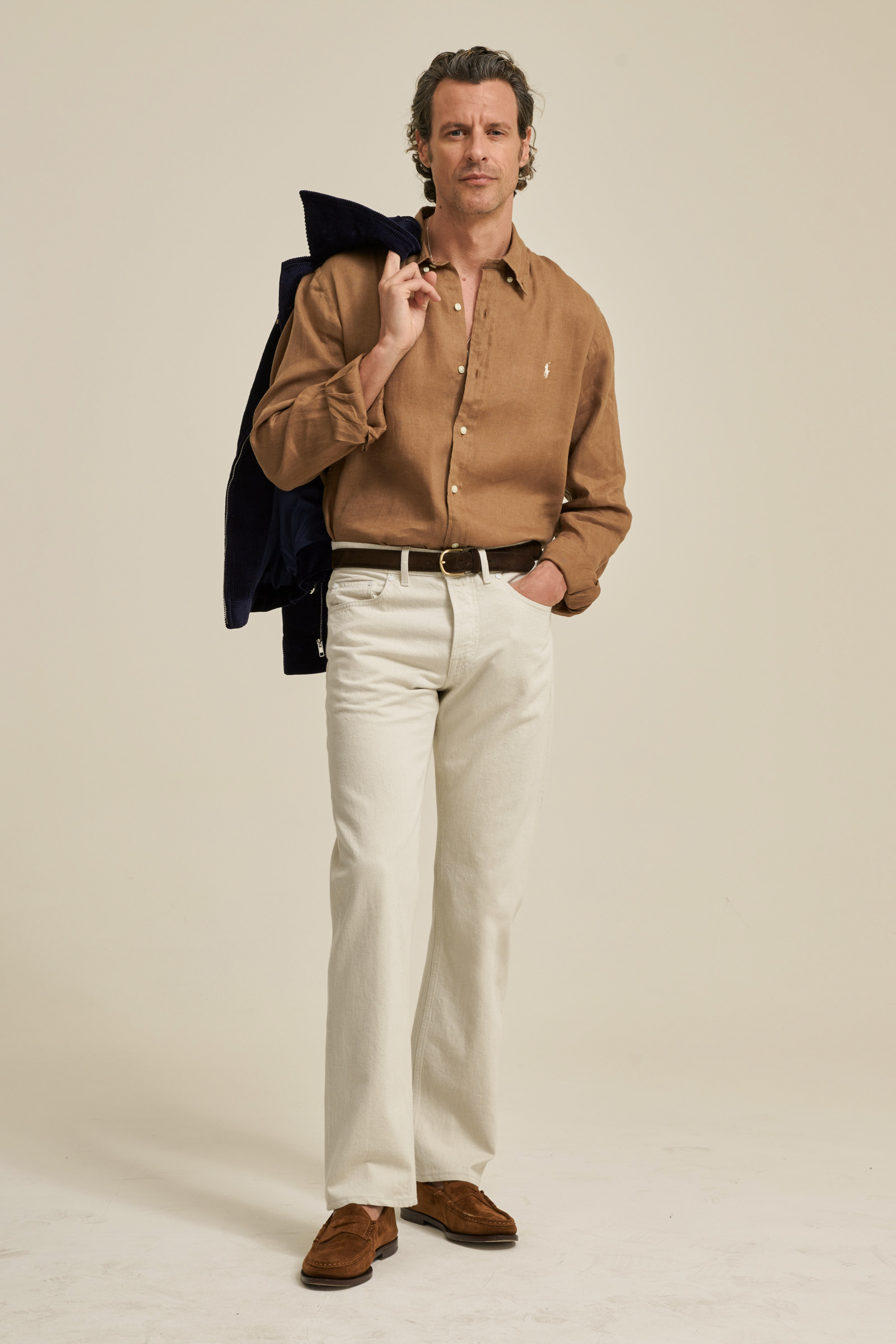
For styling, we suggest pairing ecru jeans with jackets and sweaters in rich, darker shades, such as deep greens or blues, for a striking contrast during the colder months. As spring and summer approach, consider a linen shirt in lighter, natural tones such as beige or light brown to bring a refreshing touch to your outfit.
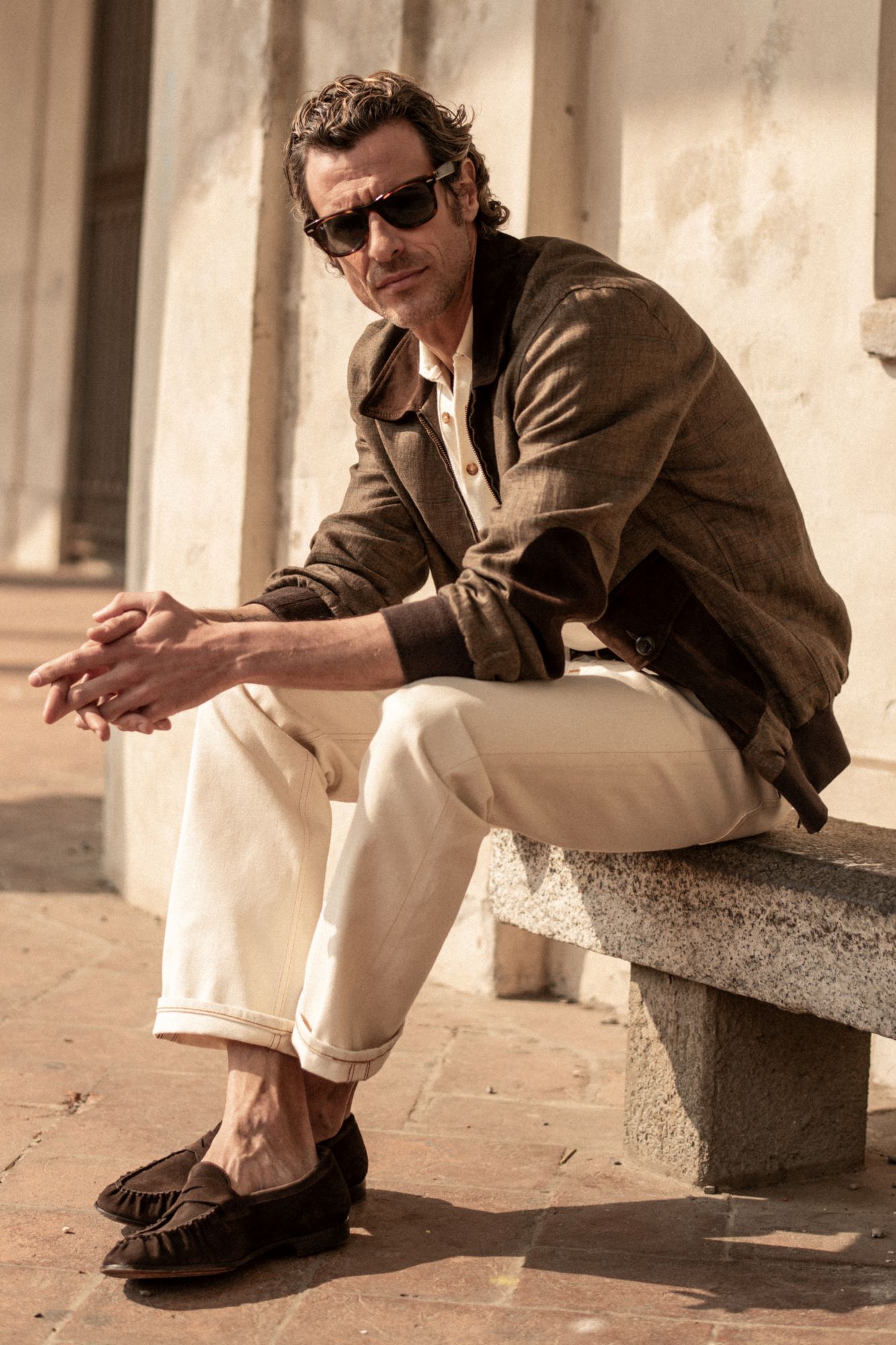
Let’s meet the predecessors of ecru denim
If you’ve been following along, you likely understand that modern denim has its roots in 16th-century Genoese fustian and, more broadly, in medieval European fabrics. Classic denim, particularly the iconic blue variety, comes from indigo-dyed fustian that Genoese merchants began producing in rural areas surrounding the city. This blue fustian became the go-to choice for sailors and port workers, thanks to its durability and reasonable price for work clothing. The combination of quality and affordability led to its popularity across Europe and beyond, facilitated by exports from the bustling Ligurian port.
Around the same time, white and ecru fustian was also prevalent, as seen in Chieri. This town in Piedmont confidently claims to be one of the birthplaces of denim, with an official fustian production dating back to 1347. This development came after a decline in Milanese fustian production that had begun nearly a decade earlier. Chieri also secured advantageous trade deals and exemptions along trade routes to central Europe. Most importantly, they were adept at meeting market demands, producing a range of low- to medium-quality fabrics that were affordable and accessible to a broader audience.
“Fustanei albi et crudi”
Chieri’s fustian featured a unique diagonal weave that set it apart. While there’s no record of the earliest examples of this fabric, we do know that by the 17th century it used a 2x1 construction. Several types of fustian were produced in the city, each with its own characteristics.
There were the “fustanei albi,” known for being the finest white fustians. Then we had “fustanei albi et crudi,” which were raw and not whitened—similar to what we now call ecru denim. Additionally, there were “fustanei leviu,” recognized for their lightweight and convenient price; “fustanei forti,” which were heavier and of good quality; and “fustaneis magne sortis,” indicating the highest quality available. Lastly, we had “fustanei mediocri,” or “mezani,” of medium quality, and “fustanei nigri,” dyed with woad, a European plant historically used to produce blue dye before indigo became popular.
“Whitt jeane”
England played an important role in the fustian trade. During the 16th and 17th centuries, there was a significant rise in demand for strong, yet affordable fabrics for everyday use, and Genoese products gained popularity due to their favorable quality-price ratio. Each city had its own unique method of producing fustian, leading to fabrics being named after their place of origin and often after their color.
By the end of the 16th century, terms such as “jean,” “jeans,” “jeanes,” “geanes,” and “jeane” began to appear in English inventories to describe fustian imported from Genoa. Numerous white fustian fabrics were also noted in these documents. For example, in 1577, Thomas Pasmore from Richmond recorded the arrival of two yards of “whitt jeane,” which referred to white fustian from Genoa. Similarly, a 1578 inventory mentioned various types of white fustian from Ulm, labeled as “whit holme fustian” and “white holmes,” as well as “fustion in aples” from Naples and “jeanes fustian” from Genoa.
This etymology suggests that the term “jeans” likely evolved from a variation of the French name for Genoa, “Gênes.” Consequently, “blue jeans” is derived from “bleu de Gênes,” meaning “blue from Genoa,” reflecting both the most common color and the most popular type of fustian.