 Log into your account
 Register



Have you ever heard of selvedge denim? This type of fabric, a denim trend in 2026, is now rare in the industry and is often associated with Japanese artisanal jeans that emerged after World War II. However, the origins of selvedge denim date back even further, tracing back to Leonardo da Vinci and the port workers of Genoa. Would you like to learn more? Join us as we explore the history of selvedge denim!
What is selvedge?
selvedge
/ˈsel.vɪdʒ/ noun [ U ]
the edge on a piece of fabric that prevents it from fraying (= forming loose threads)
Source: Cambridge Dictionary
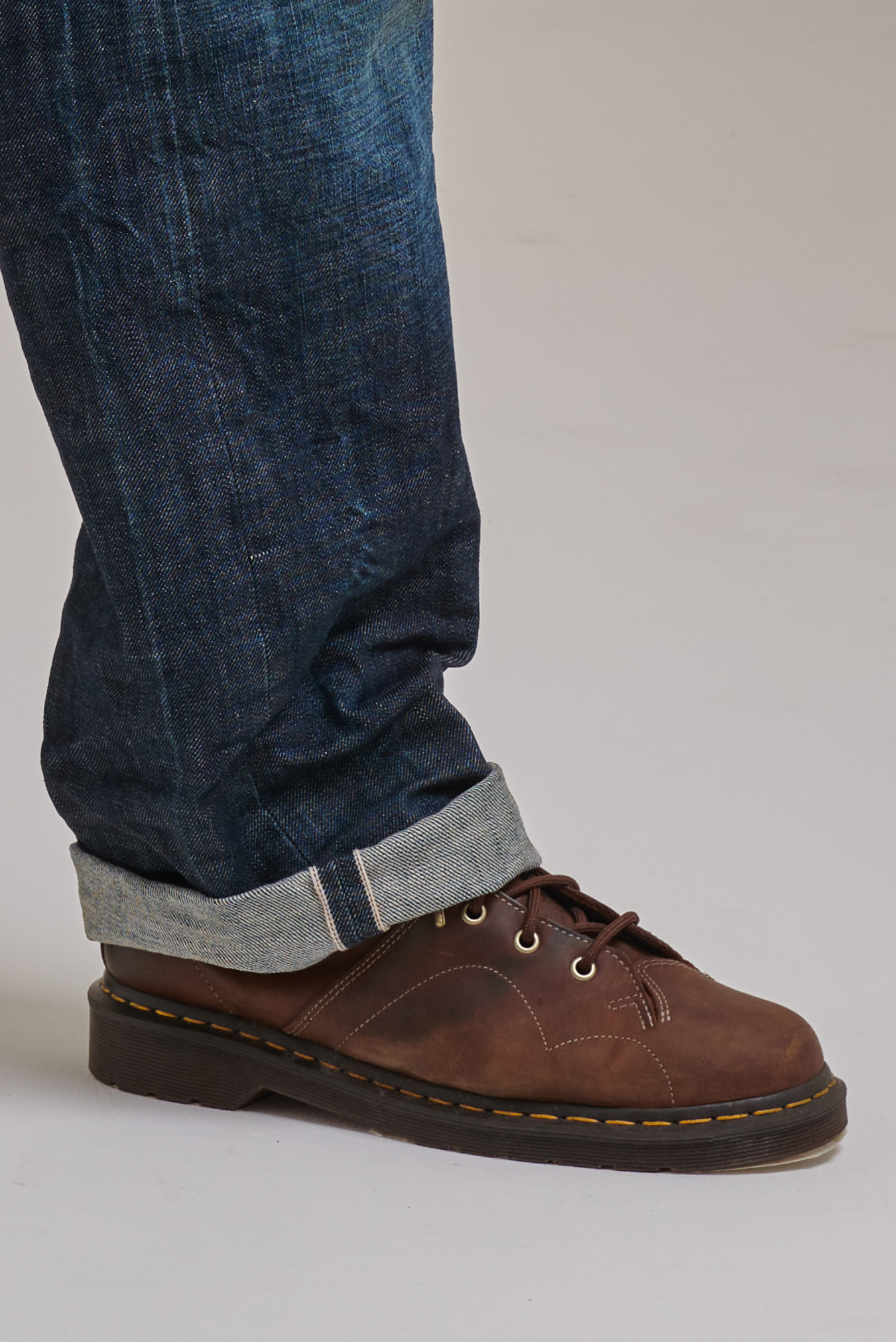
Selvedge refers to the clean “self-edge” that forms when fabric is woven on shuttle looms. The first blue jeans, which originated at the end of the 19th century, were made from selvedge denim, as shuttle looms were the industry standard until the end of World War II.
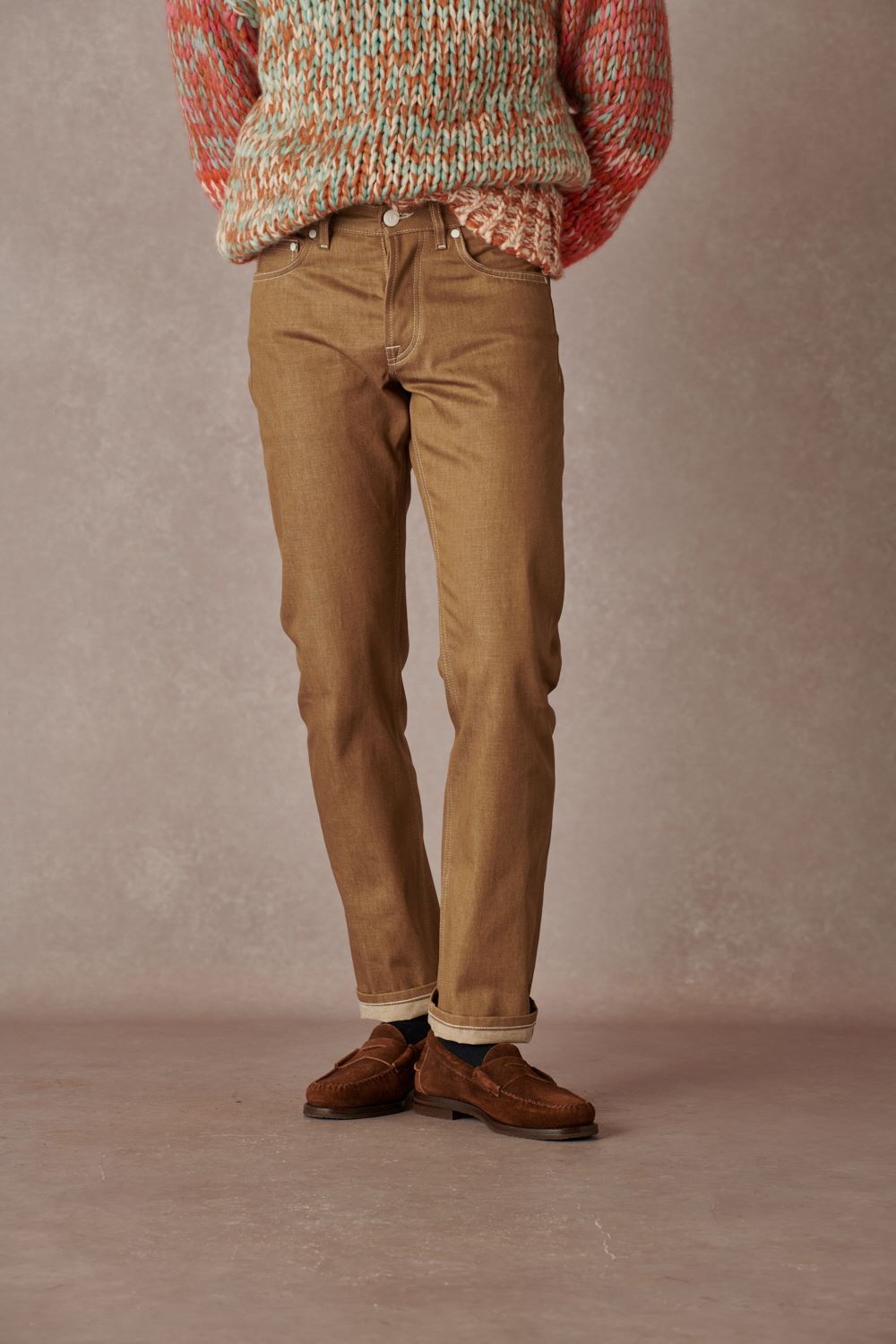
This durable edge is created with a thicker warp and is typically a different color from the rest of the fabric. Traditionally, selvedge denim features a white border with red stitching, which are the classic colors associated with Levi’s®. However, it is now possible to use a wide variety of colors and constructions for selvedge denim. The fabric is cut and sewn so that the edge is visible on the garment’s inseam and often on other parts as well, such as the pockets.
The history of selvedge denim begins in Italy
Modern denim has its roots in fustian, a fabric that gained popularity in medieval Europe as an affordable and durable option for clothing and textiles. Each city had its own methods for producing fustian, which is why fabrics were often named after their place of origin. The term “denim” itself derives from “de Nîmes,” referring to the French city that produced the renowned Serge de Nîmes, a blue twill fabric originally made from wool and later blended with cotton and hemp.
However, the denim we are familiar with today has evolved from Genoese fustian. In the 16th century, Genoa was known for its cotton fustian, featuring a warp dyed with indigo instead of the local woad, which was primarily used in France and Italy during the Middle Ages to make blue fabrics. Workers and sailors in the Ligurian port, one of the largest and most progressive ports of that era, were among the first to appreciate this fabric. They used it to make sails, cover cargo, and produce strong, durable workwear. The port of Genoa’s importance enabled the city to import and export goods worldwide. This, combined with the good quality and affordable price of Genoese fustian compared to its competitors, contributed to the long-term success of this fabric.
On a journey towards England and California
In the 1500s, London played a central role in the trade of various goods, including fabrics. Genoese fustian gained a large share of the English market and maintained its prominence in the following centuries. In the British archipelago, this fabric began to appear in inventories as “geanes,” “jeanes,” and finally “jeans,” a modified form of the French name for the Ligurian city, Gênes. Jeans fabrics became so popular that the term started to be used for any cloth with similar characteristics. Today, “jeans” refers to finished garments, while “denim” refers to the fabric from which they are made.
From England, the jeans fabric found its way to California, where the entrepreneur Levi Strauss sold heavy cotton materials to tailor Jacob Davis. Davis made a pair of work pants for a logger that featured rivets to reinforce areas prone to wear and tear, further enhancing the fabric’s durability. This innovation proved to be highly successful among workers seeking fortune in the Western United States. As a result, Davis approached Strauss to establish a production chain in San Francisco. In 1873, they patented these pants, now recognized as the first official pair of modern jeans.
The advent of mass production
After dominating the workwear industry and becoming a symbol of the California Gold Rush, jeans were also introduced into the military. Specifically, they were issued by the U.S. Army to non-combat roles such as mechanics, engineers, and sailors during both World Wars. U.S. soldiers stationed in Europe and the Pacific played a crucial role in boosting jeans’ global popularity, as their clothing became associated with freedom and progress in liberated countries.
Furthermore, we know that the 20th century was an era of unprecedented change. The economic boom, along with rising consumer purchasing power and the desire to rebuild after the horrors of World War II, led to a significant rise in global clothing demand and the emergence of mass production. Jeans, which had evolved from basic workwear to a symbol of youth culture—thanks in part to Hollywood stars and famous artists—were no exception to this trend. To meet the growing demand, shuttle looms were largely replaced by more efficient full-width looms. These new looms were better suited for large-scale industrial and standardized production, as they operated more quickly and could weave larger, more uniform fabrics.
The central role of Japan after World War II
Japan was the country that most embraced U.S. culture after World War II. Japanese artisans proved to be particularly skilled at preserving the heritage of traditional jeans, creating accurate replicas of U.S. garments from the first half of the 20th century.
As a result, selvedge denim is often thought to be exclusively Japanese. However, as we have seen, this distinctive feature is due to the use of specific machines rather than a particular place of origin. Therefore, selvedge denim represents the highest expression of the tradition, history, and authenticity of jeans, regardless of where it is manufactured.
Did you know that Leonardo da Vinci sketched the first shuttle loom?
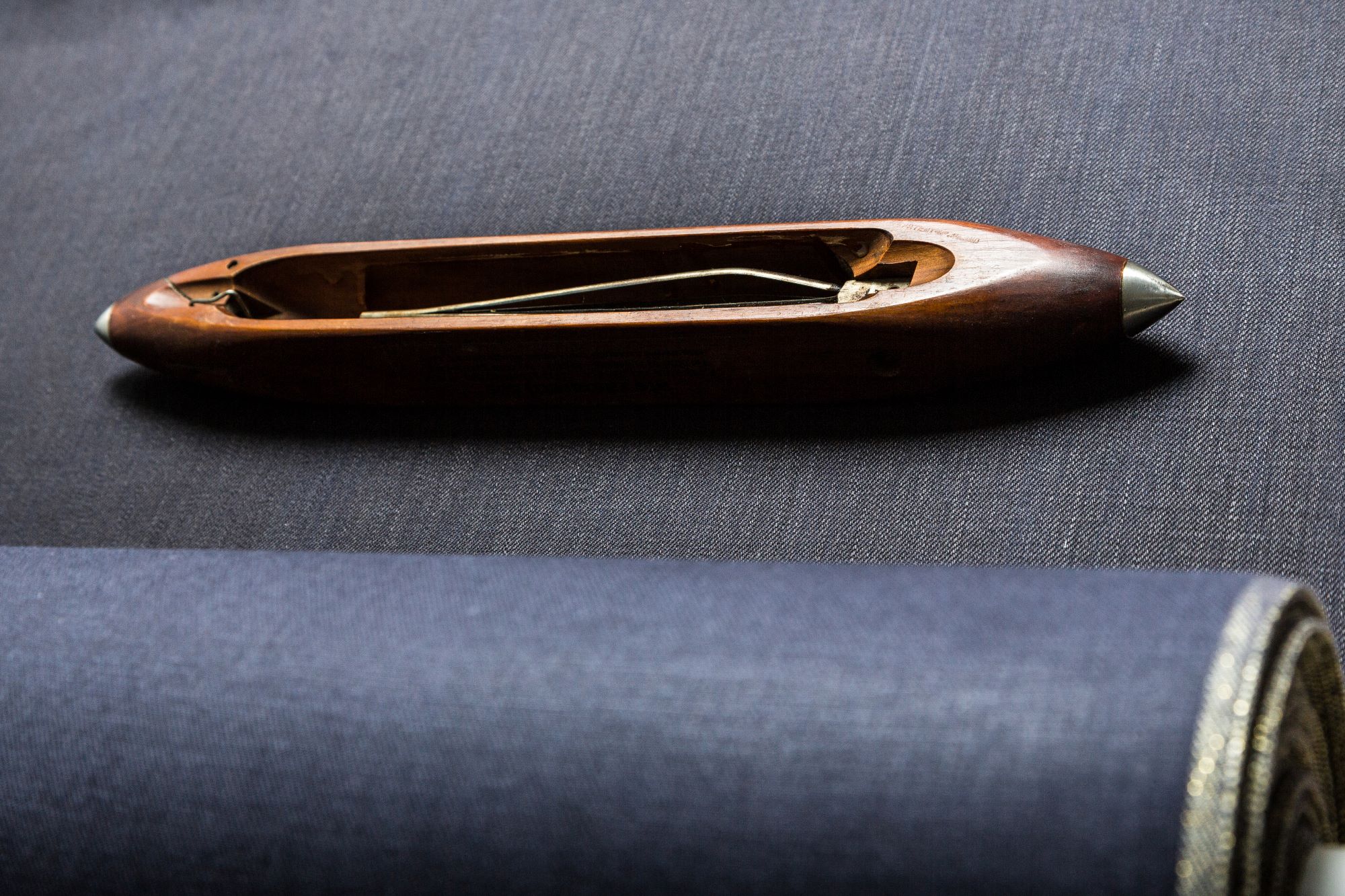
Shuttle looms, like denim, have their roots in 15th-century Italy, when Leonardo da Vinci lived in Milan from 1479 to 1499 while serving Duke Ludovico Sforza. During this time, he sketched a mechanical loom with an automatic shuttle rather than a manually operated one. This sketch, created in 1495, is the earliest known drawing of a similar machine and is now found on page 985 of the “Codex Atlanticus.”
However, a shuttle loom was not actually produced until over 200 years after Leonardo’s death. English inventor John Kay patented his flying shuttle in 1733, which was propelled by a paddle. This innovation significantly increased the speed of the weaving process and allowed for the production of larger fabrics, making it a symbol of the Industrial Revolution.
In these looms, the warp (vertical) yarns serve as the foundation, while the shuttle weaves the weft (horizontal) yarns. The weft and warp yarns are then beaten together to create the finished fabric. The selvedge is formed as the shuttle repeatedly moves the weft yarn back and forth.
Why the selvedge still matters today
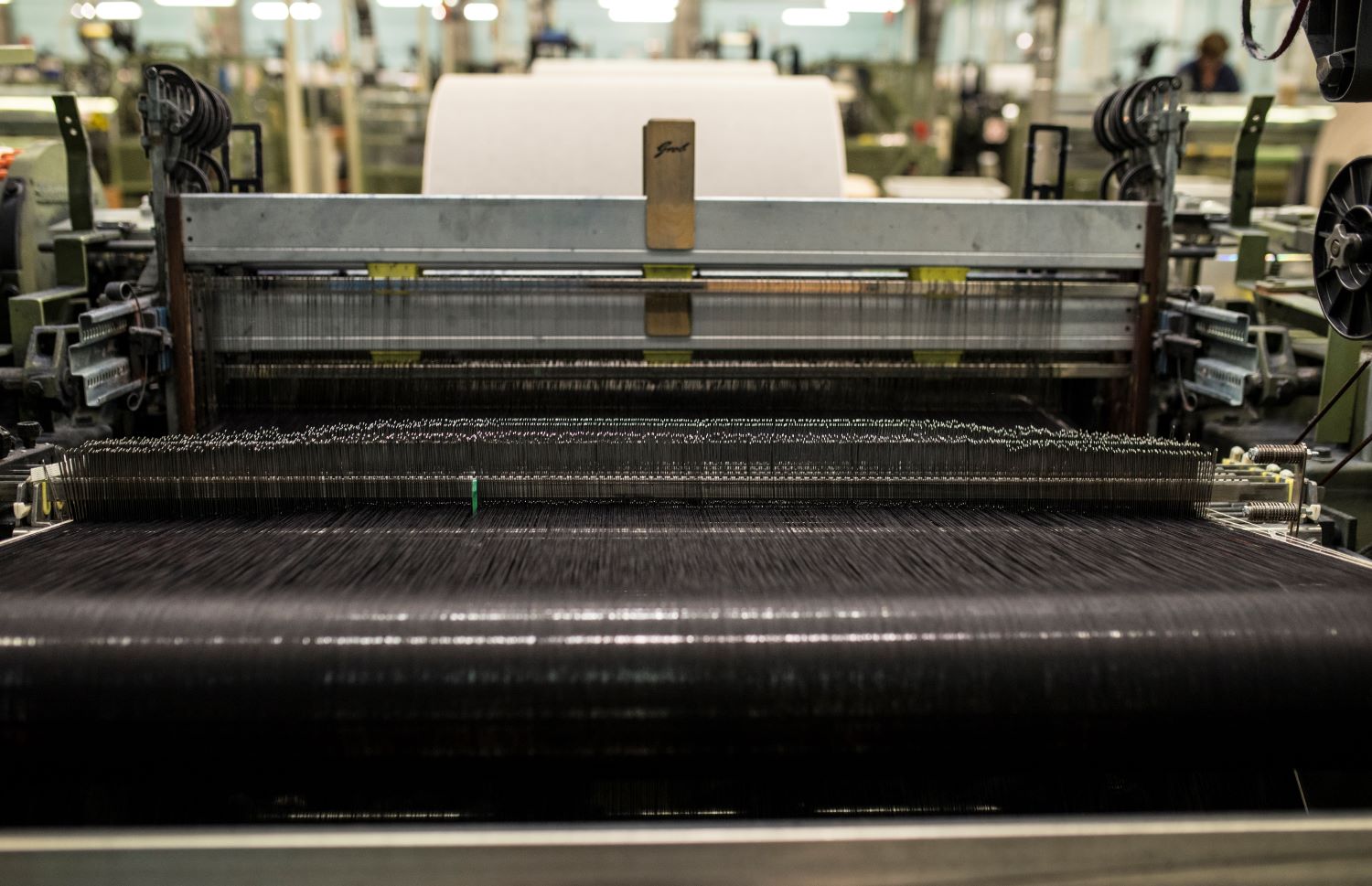
Shuttle looms are slower and have less precise combs, as well as a more relaxed yarn tension, compared to modern machines. However, they are the only looms capable of creating selvedge and the irregular texture that many denim enthusiasts consider to be symbols of authenticity and tradition. That’s why at Candiani, we take pride in being one of the few denim producers in the world that still weaves selvedge denim fabrics on vintage shuttle looms.
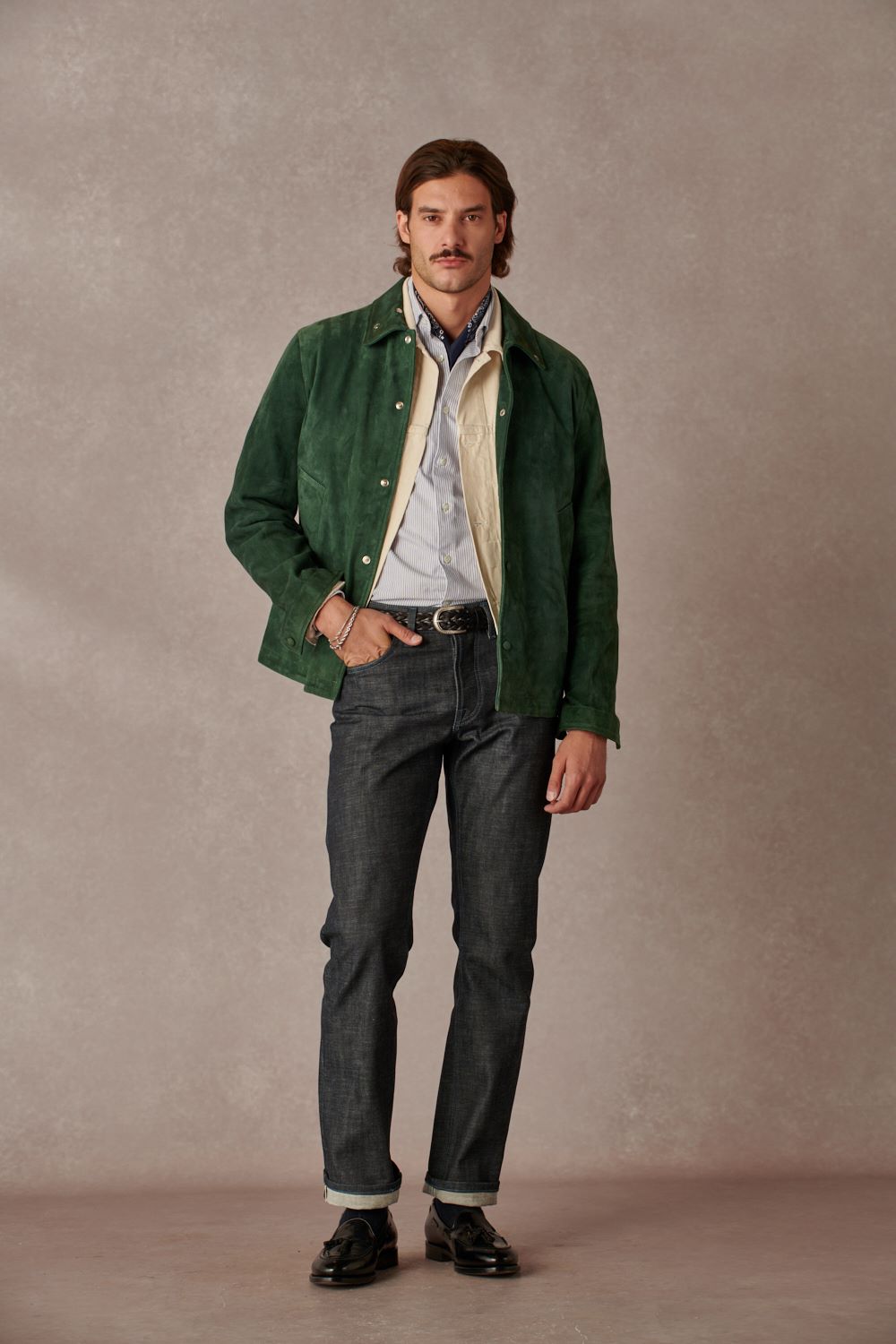
The unique charm of selvedge fabrics is set to make them a key denim trend in 2026. They are particularly suited for creating elegant, sculptured jeans that offer a well-defined structure to your outfit. This revival of authentic fabrics aligns seamlessly with the growing interest in heritage styles and timeless designs, which emphasize values such as quality and durability.
On our website, we offer selvedge jeans only in their raw state to enhance their natural beauty, meaning they are not treated industrially. Our selvedge jeans come almost directly from the loom to your closet, allowing them to naturally mold to your body as you wear them. This results in unique fading patterns, as they lose the top layer of indigo over time, ultimately telling your personal story.