
 Log into your account
 Register

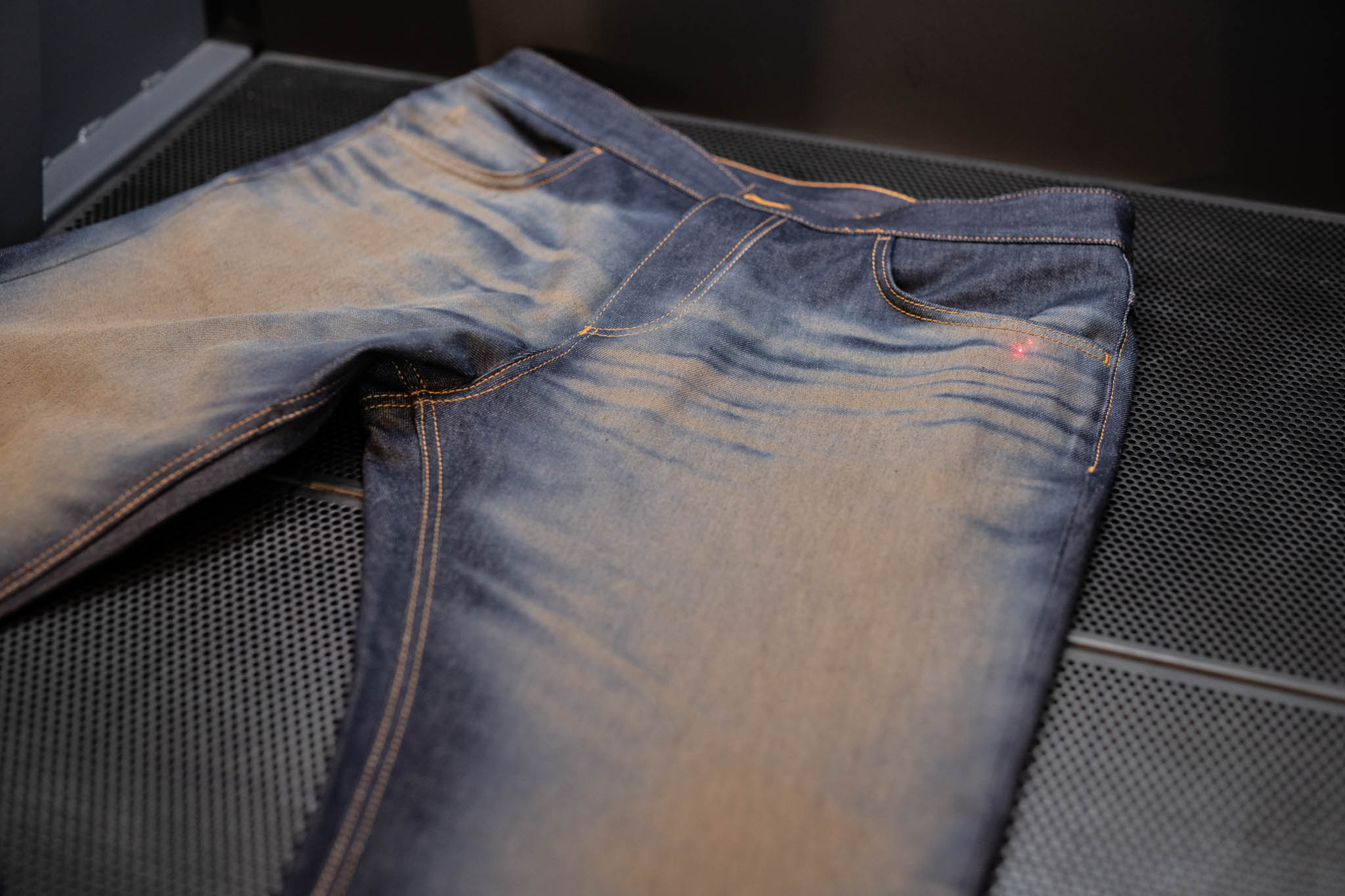


Laser technology provides a practical alternative to conventional denim-finishing methods that often use a lot of water and chemicals. By employing a light beam to vaporize the top indigo layer, it can create specific fades, whiskers, and distressed patterns more precisely. This approach not only achieves the desired aesthetic but does so more cleanly and safely.
Traditional finishing methods
Stone washing is a classic technique in the denim industry, and arguably one of the most well-known. The main goal of stone washing, much like other garment-finishing methods, is to mimic the worn-in, vintage look that raw denim acquires over time through wear. This process involves adding pumice stones to washing machines with the jeans, which helps abrade the fabric and remove some of the indigo dye.
Throughout the years, several individuals and companies have claimed to have developed this technique, especially between the 1950s and 1970s. While there isn’t a definitive source crediting the invention of stone washing, Marithé and François Girbaud certainly played a significant role in popularizing it on an industrial scale. In 1986, the Rifle Jeans Company patented a variation of the method in Italy, combining pumice with chlorine to create an acid-washed effect that could lighten jeans to a near-white shade.
Stone washing had a defining impact on the fashion of the 1980s. Yet, it has also raised important environmental and social concerns over the years. Its widespread use has led to significant pumice mining, which has drawn criticism from environmentalists. Additionally, the wear and breakdown of traditional pumice stones can create problematic waste, as the resulting mud can be harmful to the environment if not disposed of properly. There are also potential health risks for workers due to the dust that may remain in washing machines.
Beyond stone washing, other traditional denim-finishing methods have also raised concerns regarding their impact on people and the planet. For instance, sandblasting involves using a high-speed air mixture with fine sand to wear down fabric, while potassium permanganate treatments typically entail spraying the fabric to selectively bleach areas, creating the characteristic whiskers that resemble natural fading from wear.
Fun fact: surfers used to fade jeans in seawater
In the 1960s, surfers in California and others involved in the counterculture scene preferred worn-in looks to raw jeans. They discovered methods to achieve this by soaking their jeans in saltwater and then drying them in direct sunlight, which encouraged fading. Another popular technique involved mixing diluted bleach with beach sand to strip away the top layers of the indigo dye. Common household items like chlorine bleach and muriatic acid, often found in swimming pools, were also utilized for this purpose.
The rise of denim-finishing treatments coincided with the shift of jeans into everyday casual wear. As people began to appreciate authentic aesthetics, there was a growing impatience with the natural fading process of prolonged use. Plus, these treatments softened the denim, making it more comfortable to wear right from the start.
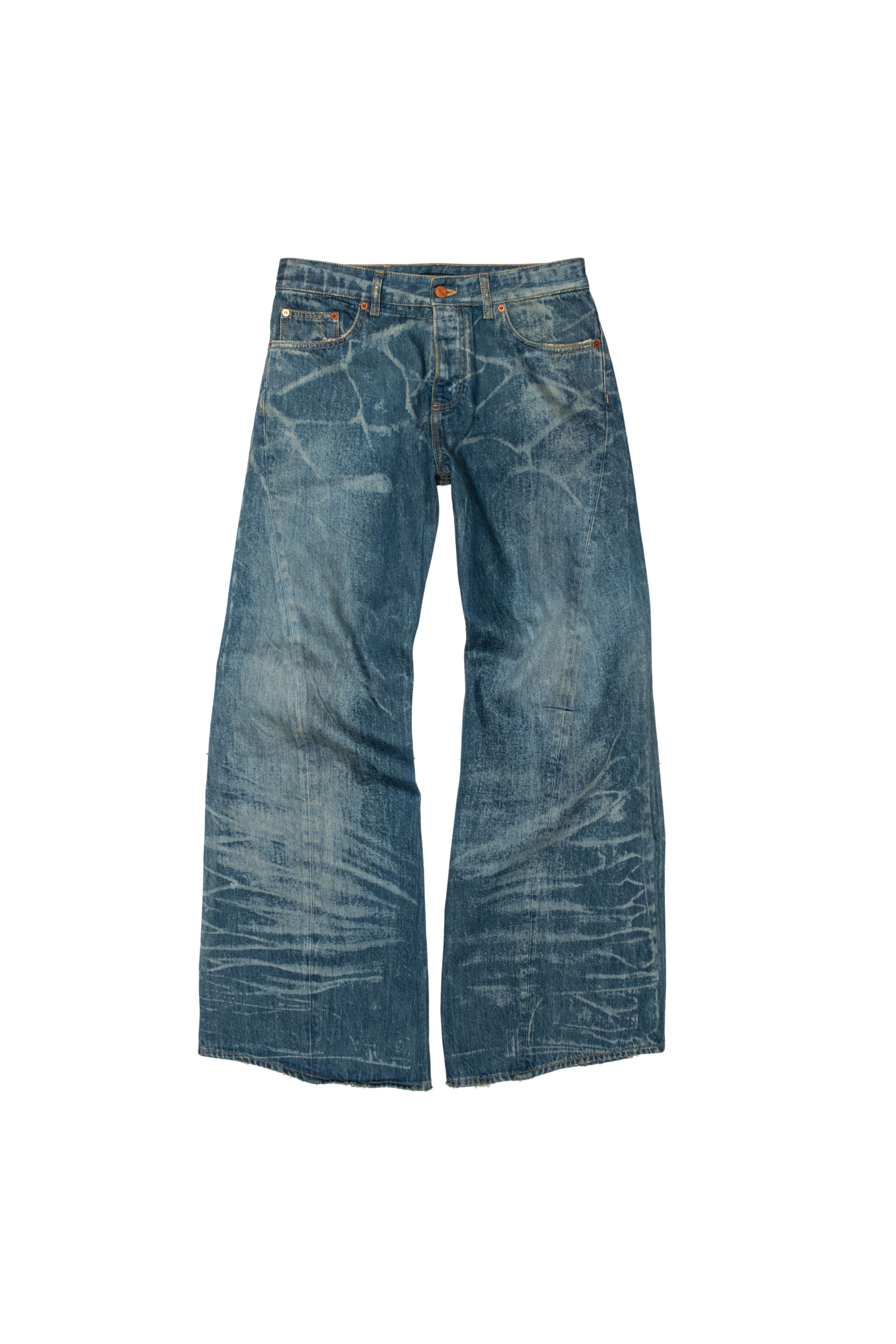
Andrea Grossi for our project “The Laser Experience.”
How laser finishing works
Laser technology stands out as one of the most versatile options for garment finishing. These machines use a focused beam of light to precisely vaporize the top layer of indigo dye from the denim fabric, with intensity and heat that can be adjusted to achieve the desired aesthetic. For instance, it can gently fade the top indigo layer to mimic natural wear or apply high-definition patterns to denim. Additionally, it can produce distressed designs with tears and holes, as well as cut through various fabrics and materials. The laser can work as a standalone technology or can be combined with washing and other treatments.
One of the key benefits of laser technology for jeans is its precision. Indeed, denim is always cut and sewn in its raw state, and garment-finishing treatments are applied only after jeans have already been sewn. Software directs the laser, adjusting beam intensity and speed to turn the top indigo layer into gas without burning or ruining cotton yarns. The ability to work with such accuracy allows for the creation of complex and intricate details, ensuring designs are precisely placed. This capability opens the door for robust customization options for denim, metal hardware, back patches, and other accessories. At the same time, it can also provide consistency and repeatability in quality when needed.
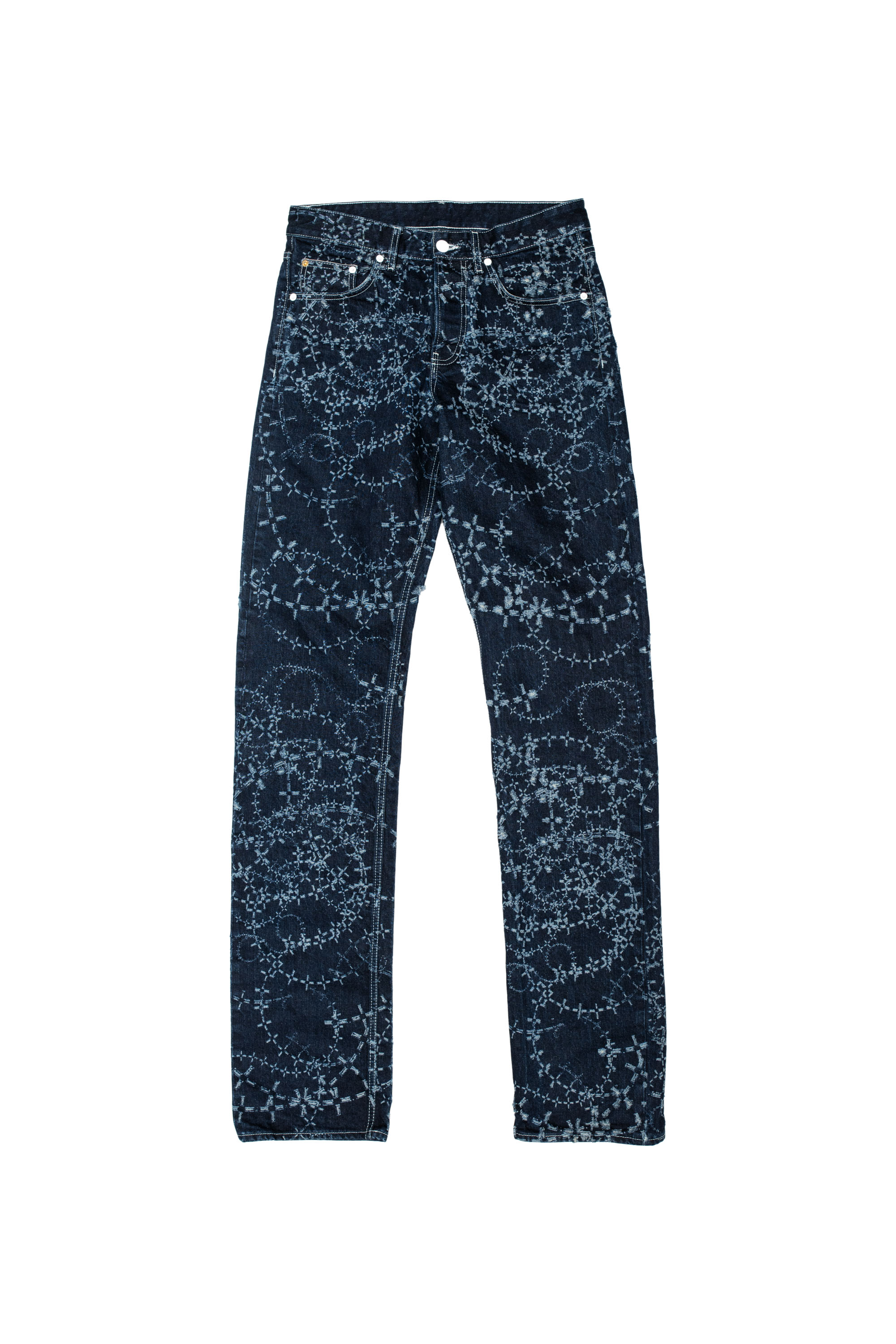
Marcello Pipitone for our project “The Laser Experience.”
Environmental benefits
Laser finishing in denim has become a practical alternative to traditional manual scratching and dry finishing processes, which can put workers at risk, especially when dealing with harmful chemicals that might come into contact with skin or be inhaled. One of the significant advantages of laser treatment is that it is both water- and chemical-free.
In addition to laser technology, there are other new sustainable denim-finishing methods for treating jeans more responsibly, such as ozone technology and enzyme washing. Ozone gas can effectively fade denim while reducing water use and eliminating harmful chemicals, which also helps prevent pollution in wastewater.
Enzyme washing, which was introduced in 1989 due to rising environmental concerns about stone washing, offers another eco-friendly option. Enzymes are proteins produced by living cells that help speed up chemical reactions. In the denim industry, cellulase enzymes are frequently used to break down cellulose—the main component of cotton—and selectively remove indigo from the yarn. This method is not only more environmentally friendly but also easier to control than stone washing. It typically helps maintain the durability of the fabric, unlike stone washing, which can weaken denim through abrasion if not managed well.
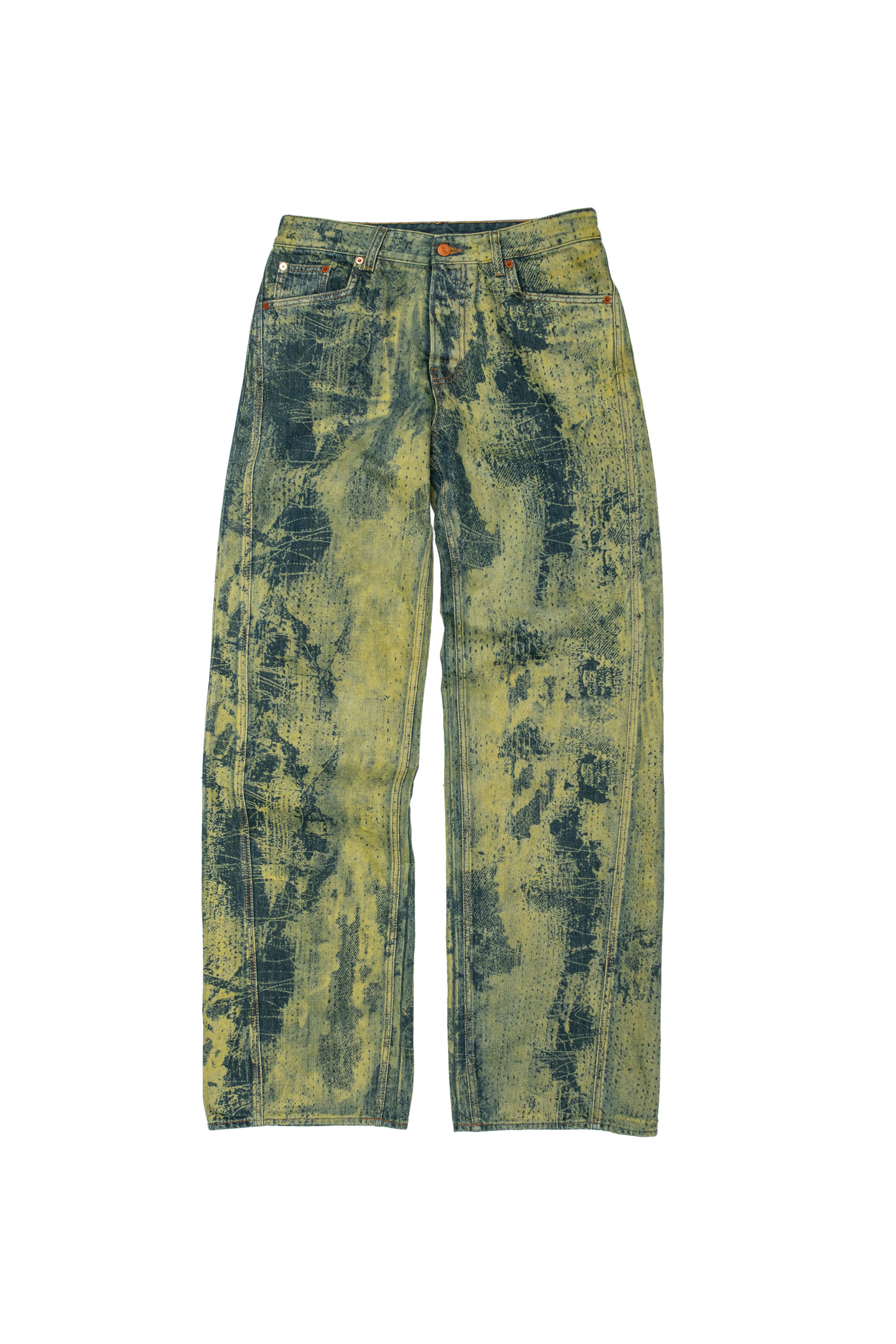
Domenico Formichetti for our project “The Laser Experience.”
Future innovations
The European Parliament highlights that global textile production contributes to around 20% of clean water pollution. The denim-finishing process is also particularly intensive in terms of water and chemicals. This underscores the importance of focusing on innovations that can optimize and minimize their consumption in this segment. It’s essential to recognize that innovation extends beyond creating new tools; it also involves refining and enhancing existing technologies to boost efficiency and reduce environmental impact.
In recent years, the industry has started to move in this direction, responding to increasing consumer demand for responsible practices, tighter regulations, and rising production costs. The looming threat of water scarcity has spurred further investments. However, for these advancements to truly make a difference, broader adoption of sustainable practices is necessary. This includes ensuring that all stakeholders are aware of the evolving priorities, which presents a significant challenge in an industry deeply rooted in tradition and legacy.
Additionally, the trend towards digitalization and automation is paving the way for new technological investments. Experts believe that these digital advancements will help reduce lead times, minimize waste, and enhance overall efficiency and consistency in production. Moreover, AI technologies have the potential to improve the precision and accuracy of equipment, such as laser systems, further benefiting the industry in the coming years.
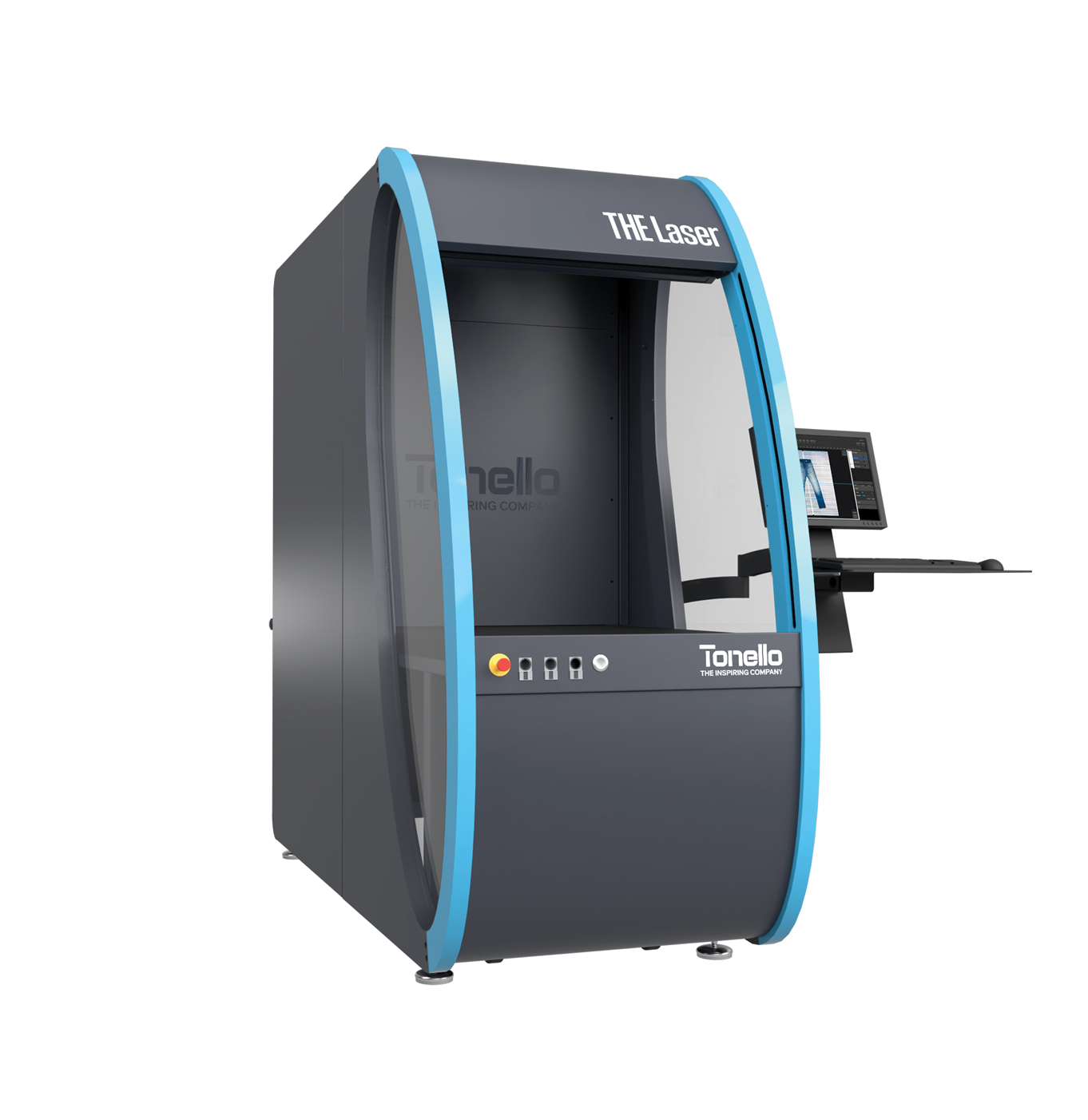
The laser machine we use in our Candiani Custom micro-factory. Photo by Tonello.