 Log into your account
 Register



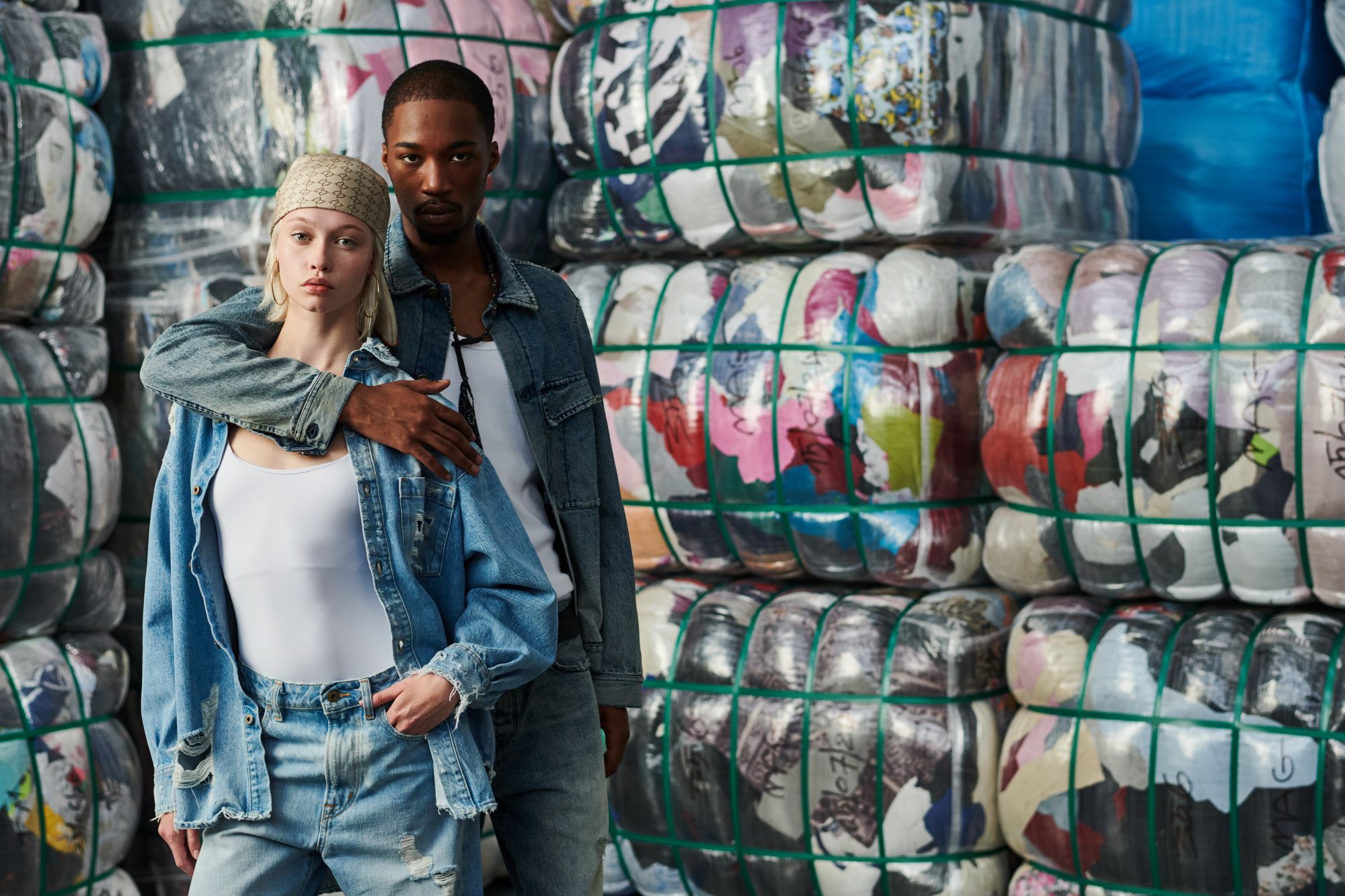
As the fashion industry grapples with its environmental footprint, the denim recycling process is emerging as a key solution, particularly through closed-loop recycling—a system that transforms old jeans into new ones without compromising quality. Unlike downcycling, this approach keeps materials in play longer, reduces waste, and supports a truly circular economy. In this article, we explore the technologies, challenges, and groundbreaking innovations that are shaping the future of sustainable fashion.
What is closed-loop recycling?
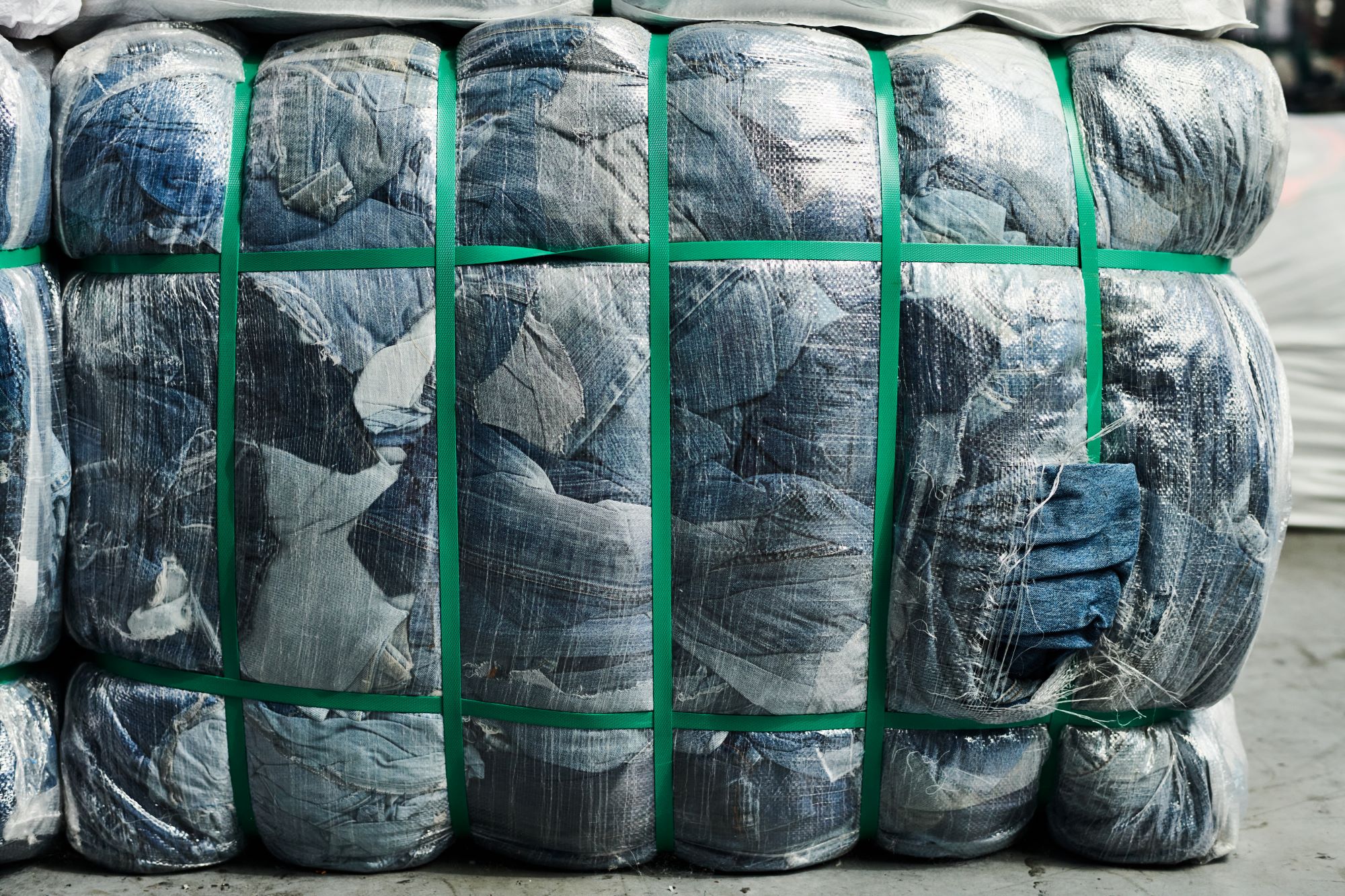
Recycling in fashion can be categorized into two types: open-loop and closed-loop systems. In open-loop systems, textiles and clothing are recycled into new products that are different from the originals. This process is often referred to as downcycling because the fabrics are typically converted into lower-quality materials for the fashion industry or other sectors. Common examples of these products include industrial rags, insulation materials, and stuffing for furniture or automotive interiors.
In contrast, closed-loop recycling refers to the process where textiles and clothing are recycled into new products of the same type and quality as the originals. This textile-to-textile recycling system aims to maintain the integrity and properties of the materials, creating a continuous cycle of reuse.
Technologies enabling circularity
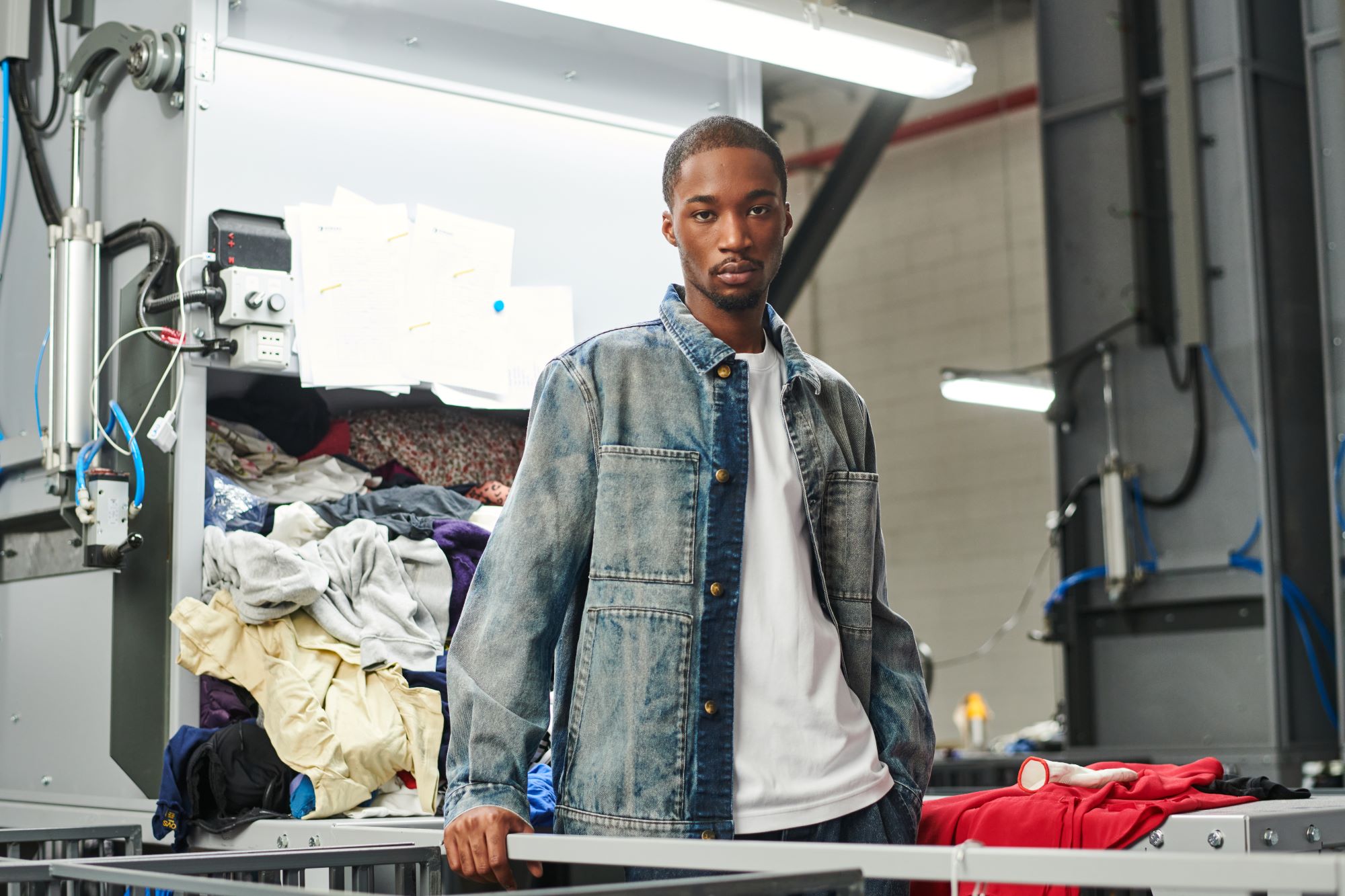
Textiles can be recycled through two main processes: mechanical and chemical. Mechanical recycling physically breaks down fabrics into fibers for reuse, while chemical recycling utilizes chemical processes to break down fabrics into their molecular building blocks, which can then be reassembled into new materials.
Mechanical recycling is most effective for natural mono-fiber fabrics. This process requires textiles to be separated by color and material, and all non-textile components, such as metal accessories, zippers, and buttons, must be removed before the fabrics can be shredded. After shredding, the fibers are disentangled and aligned in a carding process, allowing them to be spun into new yarn. However, mechanically recycled fibers tend to be shorter than virgin fibers, so their weakness needs to be compensated for with stronger virgin materials to ensure that the final product is of high quality and durability.
Chemical recycling, on the other hand, allows for the recovery of the entire garment. In this process, old textiles are dissolved in a chemical bath, breaking them down to their molecular levels, known as monomers. These monomers can then be bonded together to create new yarns. Chemically recycled fibers typically retain the same quality as the original material, with no loss of physical properties. However, they are all classified as man-made materials, as it is not possible to chemically recycle natural fibers, such as cotton and linen, back into their original form.
Both techniques have their pros and cons. Mechanical recycling has been utilized for over a decade and is generally more accessible and cost-effective than its chemical counterpart, which is still in the early stages of development. Although it requires innovations and investments, chemical recycling shows great promise. One key difference is that chemically recycled materials tend to be of higher quality since mechanically recycled fibers become shorter with each recycling process. However, chemically recycled fibers are also chemical-intensive, meaning that the handling of these chemicals must be done with care.
Candiani’s circular innovations
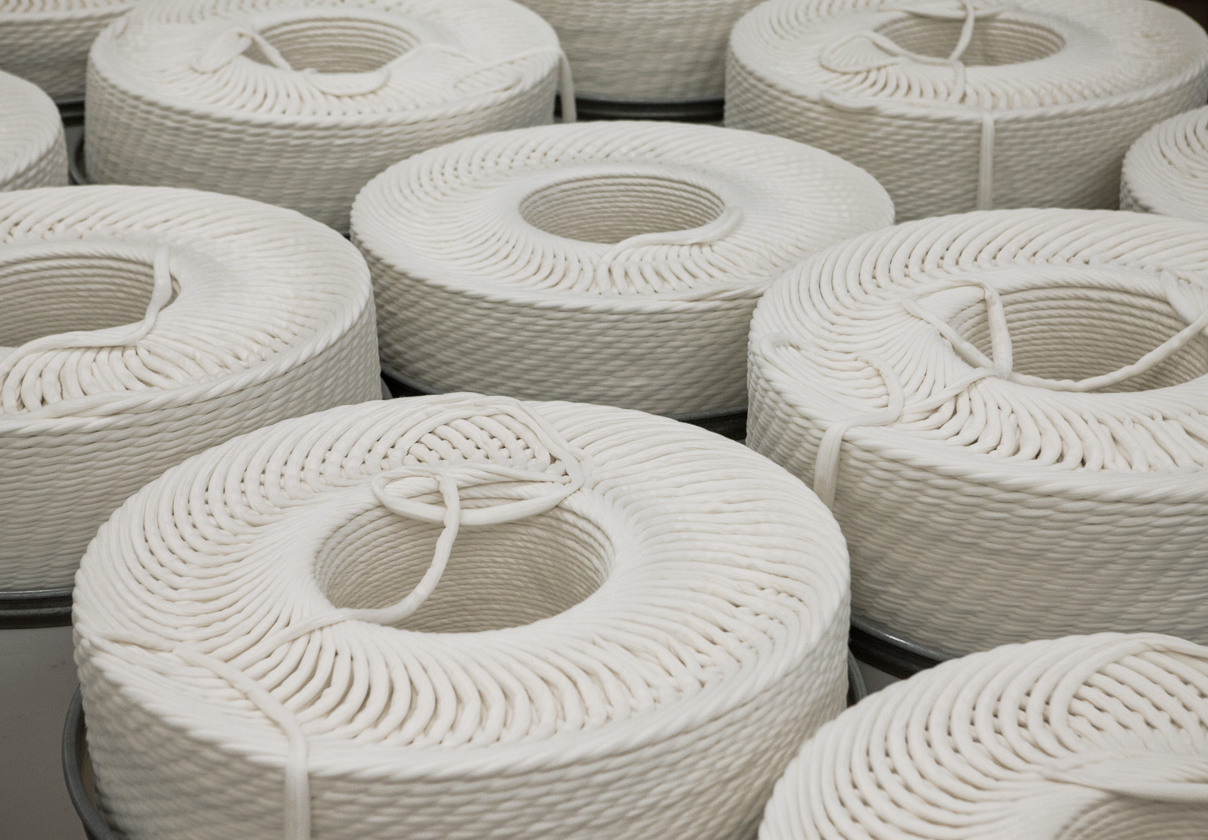
We have always prioritized the values of reduce, reuse, and recycle as the foundation of our business. Circularity begins at the design stage, where choosing the right raw materials is crucial for ensuring product longevity—this is the first principle of a sustainable model. However, at some point, our denim garments will need to be discarded. To minimize their environmental impact, we can focus on two key aspects: using either recyclable fibers or environmentally compatible materials. Both enable waste reduction and closing the loop in the industry, either by creating new products or by cultivating raw materials.
We began our journey in denim recycling in 2019 with our ReGen line, which features a recycled rigid fabric made from post-industrial cotton waste and TENCEL™ x REFIBRA™, a blend of leftover materials including cotton and wood. This initiative was followed by our ReLast collection, which includes a specialized pre-consumer recycled elastomer derived from byproducts of elastane manufacturing. This material is certified by the Global Recycled Standard, ensuring it contains at least 20% recycled content and complies with traceability standards as well as social and environmental management practices while imposing chemical restrictions throughout the supply chain.
Our newly developed closed-loop denim recycling program utilizes both post-industrial and post-consumer recycled (PCR) cotton. Post-industrial cotton is derived from the unavoidable waste generated during the manufacturing process and retains qualities similar to those of virgin fibers, enabling the production of fully recycled denim fabrics. In contrast, PCR fibers must be blended with stronger virgin materials to maintain quality. We utilize our proprietary Blue Seed cotton, ensuring that our recycled fabrics are both high-quality and traceable.
Among our most significant circular innovations is also the development and patenting of the world’s first technology for creating plastic-free and compostable stretch denim, known as COREVA™. Under appropriate conditions, COREVA™ can be transformed into compost at the end of its useful life. Testing has confirmed that COREVA™ denim disintegrates without leaving harmful residues, allowing plants to thrive.
Challenges and opportunities
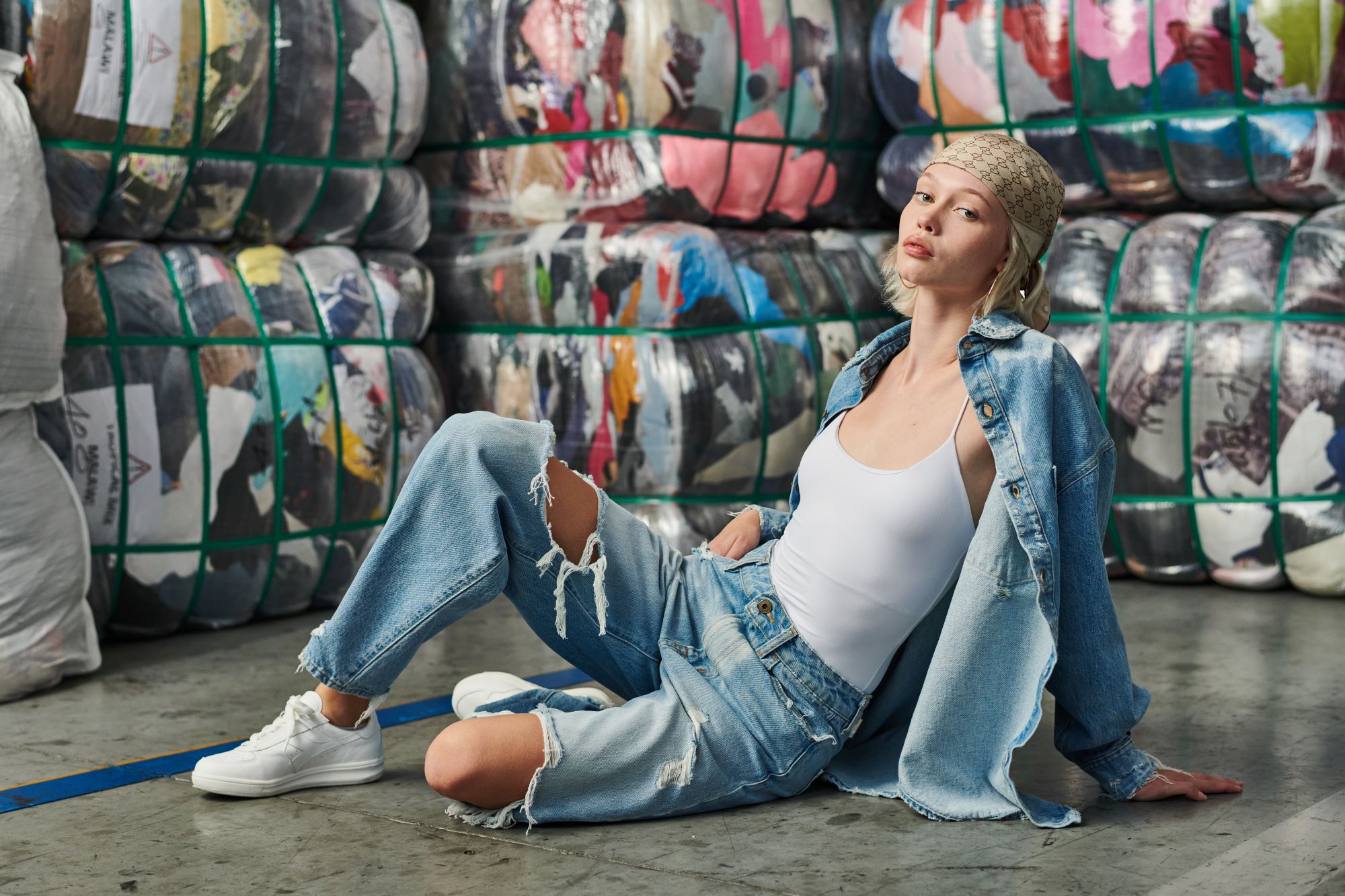
According to the European Environment Agency, only 1% of used clothing is recycled into new garments. There are indeed several challenges associated with closed-loop recycling systems in the fashion industry, which are all valid for the denim recycling process:
- Many garments contain blended fibers, which are difficult to separate and recycle efficiently
- Repeated recycling can degrade fiber quality, making it impossible to maintain the original properties and performance of the materials
- Advanced, specialized technology is required to separate, clean, and process textiles effectively, and much of the current machinery has limited capabilities for handling closed-loop recycling processes
- The market for recycled textiles can be volatile, with significant fluctuations in demand and price, which can affect the economic viability of similar initiatives
- A robust infrastructure is necessary to collect, transport, and process textiles for closed-loop recycling. This makes efficient collection and sorting logistically challenging and resource- and energy-intensive, potentially offsetting some environmental benefits
- There may be fluctuations in the availability of used textiles for recycling
- There’s limited consumer awareness about the benefits of recycled textiles, which can hinder their widespread adoption
However, the circular economy offers numerous opportunities, which the European Parliament has categorized into three main areas: environmental protection, reduced reliance on raw materials, and job creation, which also leads to monetary savings for consumers.
Globally, approximately 92 million tons of textile waste are generated each year. Official EU data indicated that in 2020, the region produced about 16 kg of textile waste per person, but only 4.4 kg was separated for reuse and recycling. Of this waste, 82% comes from post-consumer sources, while the remainder stems from manufacturing and unsold items. By extending the lifespan of raw materials within the economy, we can reduce the exploitation of natural resources, prevent disruption to landscapes and habitats, and protect biodiversity.
As the population grows, the demand for raw materials continues to rise, but their supply is limited. Reducing reliance on these materials can help mitigate risks associated with supply issues, including price volatility, the availability of critical raw materials, and dependence on imports. The European Parliament reported that the EU had a trade deficit of €29 billion in 2023. Several EU countries have limited resources and have become dependent on imports. Eurostat estimated that in 2022, each EU citizen consumed an average of 14.22 tons of raw materials.
Finally, a circular economy has the potential to enhance competitiveness, foster innovation, and stimulate economic growth. The European Parliament estimates that this transition could generate up to 700,000 new jobs in the EU by 2030. Additionally, consumers would benefit from access to more durable and high-quality products, which could enhance their quality of life and lead to long-term savings.