
 Log into your account
 Register

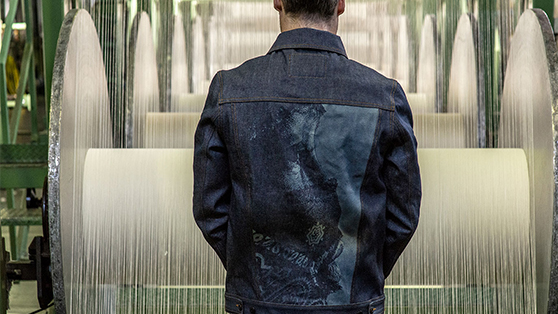


We’re passionate about blending denim with art! For generations, artists have turned to this beloved fabric as a canvas to showcase their ideas, feelings, and creativity through diverse artistic expressions. Denim isn’t just material; it’s a dynamic medium that allows us to explore and boldly make statements about culture, fashion, and identity. Our collaboration with Jonathan Mannion is a striking example of this vibrant fusion, and we can’t wait for you to experience it!
The unexpected artistic potential of denim
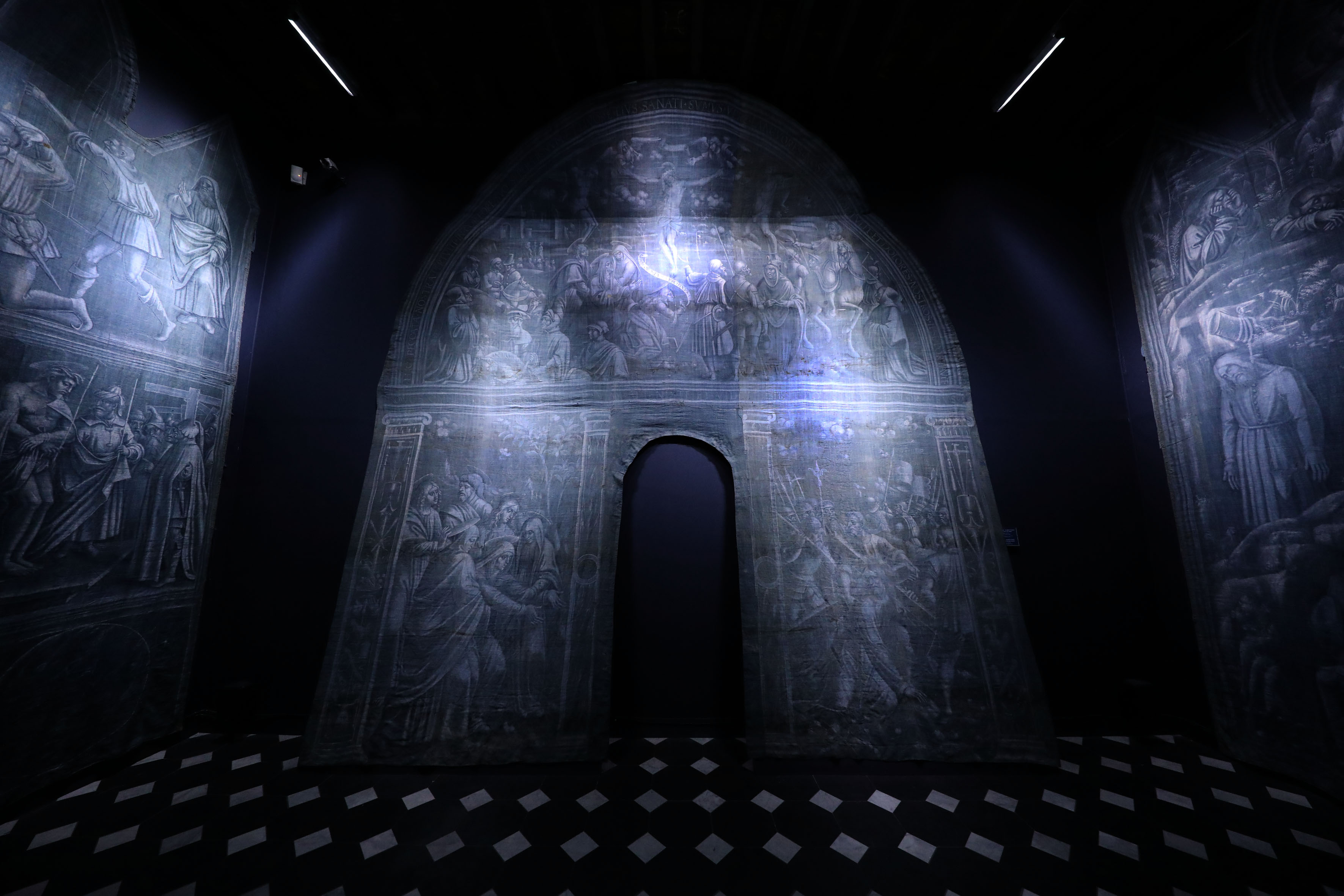
The use of denim in art has ancient roots. While the modern version of denim is a relatively recent invention, fabrics with similar characteristics and indigo dyeing techniques have been utilized for centuries. An excellent example of the early use of denim-like fabric in art can be seen in the Passion Canvases from Genoa, which date back to the 16th and 17th centuries. These canvases feature a blue background created with indigo, showcasing the early application of indigo-dyed fabrics in artistic works. Notably, Teramo Piaggio and other Genoese painters depicted scenes from the Passion of Christ on these canvases. Today, all fourteen canvases are exhibited at the Diocesan Museum of Genoa.
In addition, an anonymous Italian painter known as the Master of the Blue Jeans was also active in the 17th century. This artist depicted peasants wearing blue denim-like garments in their paintings, which showed signs of fading, similar to our modern jeans. This discovery emphasizes the early presence of denim-like fabrics in everyday clothing and their representation in art. Furthermore, nativity figures dressed in Genoese fustian, the true predecessor of contemporary denim, can be traced back to the second half of the 18th century and primarily depict shepherds and panhandlers.
Genoese fustian and, later, denim have long been associated with workers, starting with Genoese sailors. These fabrics were durable, strong, and sold at affordable prices. However, in the 19th and 20th centuries, denim emerged as a powerful symbol of the working class. This connection to labor and industry has influenced its portrayal in art, often representing resilience, authenticity, and the everyday struggles of working people.
In recent decades, denim has evolved into a versatile medium for contemporary artists such as Ian Berry, Jeroen De Boer, and Deniz. These artists have pushed the boundaries of denim art, creating intricate and thought-provoking works that challenge traditional notions of art and materials.
The history of denim in art mirrors its evolution in the fashion industry. It has transformed from a functional fabric into a symbol of cultural identity and artistic expression. From the early use of indigo-dyed fabrics in religious art to contemporary explorations of denim’s potential, this material continues to inspire and captivate artists and designers around the world.
Transforming denim into art
The use of denim in art has been prominent for centuries thanks to its distinctive characteristics:
- Unique medium: denim, with its rugged texture and rich history, provides artists with a unique medium for exploration. Its durability allows for experimentation with techniques such as embroidery, bleach painting, and even cutting or burning to create layered, three-dimensional pieces
- Cultural symbolism: denim’s widespread presence in fashion and culture makes it a familiar and accessible material. It often symbolizes rebellion, individuality, and resilience, adding cultural significance to the artworks created with it
- Textural depth: unlike traditional canvases, denim adds an extra dimension to the artwork through its texture, fading, and wear patterns. These natural variations can create visual interest and depth in a piece
- Artistic expression: whether through intricate stitching, bold painting, or radical deconstruction, denim offers endless possibilities for artistic expression. Many artists and designers use denim to reflect personal stories, emotions, or social movements
- Versatility: artistic expression includes hand-painted designs, embroidery, patchwork, and even mixed media. Denim’s surface allows for intricate details, vibrant colors, and a level of creativity that transforms it from a functional material into a unique piece of art
- Sustainability: by repurposing old jeans and denim scraps, artists contribute to a more sustainable future
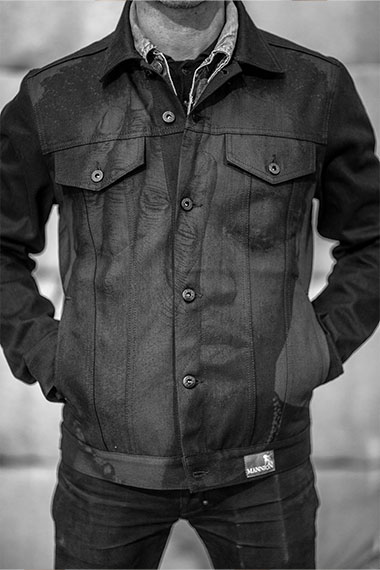
In recent years, we have collaborated with several artists, allowing them to express their creativity through our denim. A notable collaboration involved photographer Jonathan Mannion and the US streetwear brand Prps, in which Mannion’s photographs were lasered onto our denim fabrics. This partnership celebrates both Mannion’s cultural influence and Candiani’s commitment to craftsmanship and innovation in denim production.
The exhibition experience
The Jonathan Mannion collaboration was unveiled on December 4th, 2019, in Miami during the annual Art Basel art fair. The photographer sought to move beyond the traditional two-dimensional digital realm and create physical, tangible artworks. He aimed to provide an opportunity for people to come together and experience something they could not only see but also touch and feel.
The exhibition at TheArsenale featured denim fabrics lasered by Jeanologia using low-impact textile technologies, showcasing some of Mannion’s most iconic photographs. These pieces were transformed into a limited-edition denim collection that combines artistic elements, street culture, luxury fashion, and craftsmanship.
“This is not a typical art exhibition. The project highlights the simplicity of using denim as a canvas, which adds a whole new dimension and context to Mannion’s work. We are elevating denim through art. Both Candiani and Prps believe that denim should not be treated as a mass commodity; every pair of jeans is a piece of art,” commented Alberto Candiani, president of Candiani.
The collaboration between Jonathan Mannion and Candiani showcases a shared commitment to artistic integrity and sustainability. By merging Mannion’s impactful visual storytelling with Candiani’s dedication to responsible denim manufacturing, this partnership illustrates how fashion, art, and sustainability can unite in an innovative and meaningful way. The collection serves as a testament to the creative possibilities that arise when the fields of photography and fashion come together with purpose.
About Jonathan Mannion
Jonathan Mannion is a renowned US photographer best known for his iconic portraits of musicians, athletes, and celebrities, particularly within the hip-hop and entertainment industries. He gained fame for his ability to capture the essence of hip-hop culture from the 1990s to the present day, and his photographs have played a significant role in shaping the visual identity of the genre. Mannion’s work highlights influential figures such as Jay-Z, Eminem, Dr. Dre, Nas, Missy Elliott, and Lil Wayne, effectively defining the visual aesthetic of hip-hop.
In addition to his portraits, Mannion has created memorable album covers and promotional images for some of the most legendary hip-hop albums, including Jay-Z’s Reasonable Doubt and Dr. Dre’s 2001. These album covers have become iconic symbols in the music world. His photography is often praised for its sharp, cinematic quality and its ability to convey the essence of each artist’s persona.
However, Jonathan Mannion’s work extends beyond hip-hop, reaching into various aspects of pop culture, including fashion, sports, and entertainment. His photographs of athletes like LeBron James and Kobe Bryant showcase his versatility as a photographer, capturing moments of strength, vulnerability, and dynamism. Before gaining recognition in the photography world, Mannion worked as a music video set photographer, where he began to refine his craft.
Mannion is known for his clean, high-contrast style, often utilizing stark lighting and emphasizing the subject’s expression. His ability to capture the mood and aura of his subjects has made his portraits some of the most memorable and recognizable in celebrity photography. Over the years, Mannion’s work has been celebrated in exhibitions, books, and documentaries. He remains one of the most influential photographers in the music and entertainment industries, especially for his contributions to documenting the cultural and artistic evolution of hip-hop.