 Log into your account
 Register



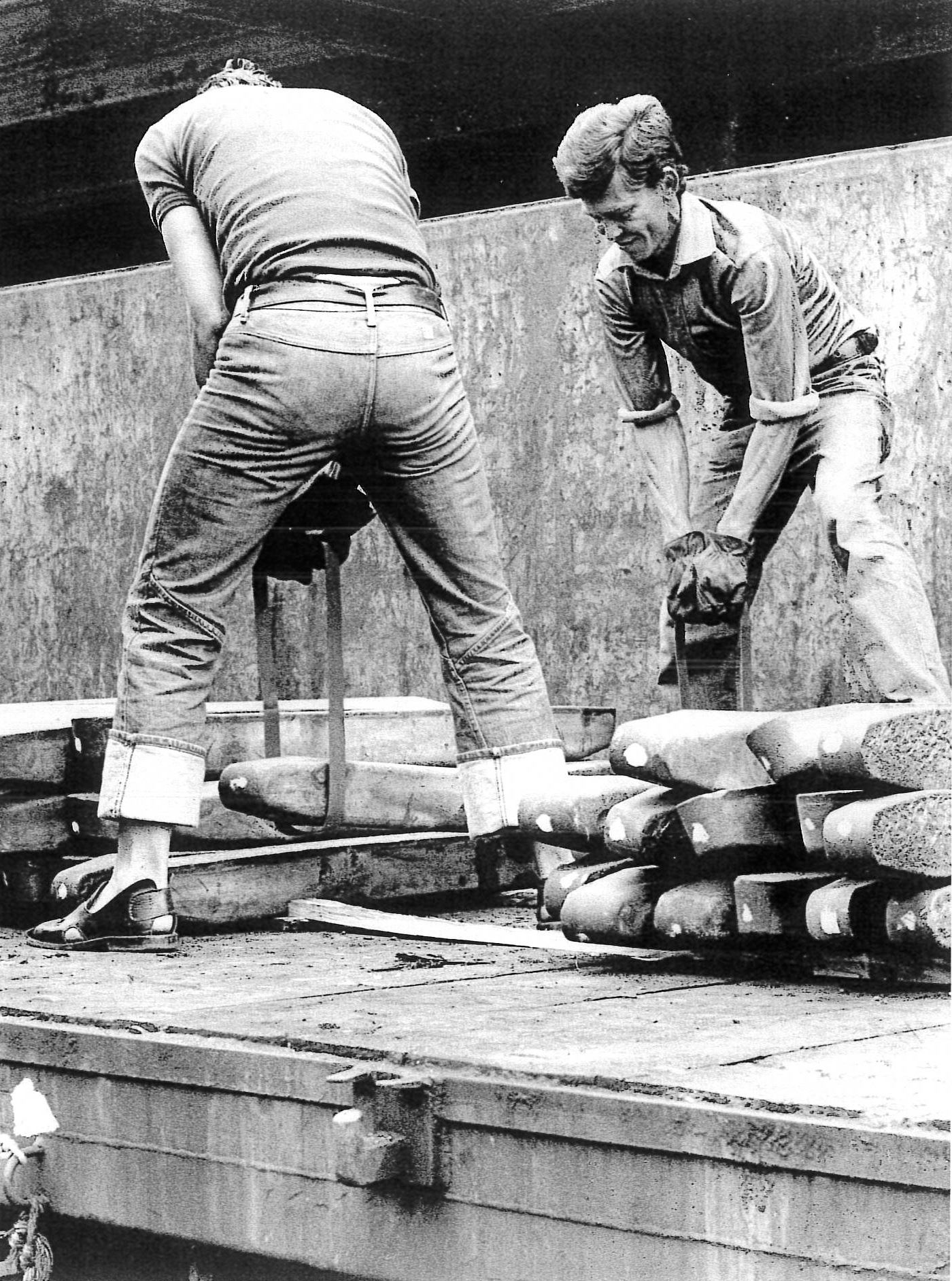
Picture the lively port of London in the 16th century. A ship from Genoa has just arrived, loaded with fustian, noted as “jeans” in inventories. This affordable fabric is intended for sturdy textiles. Fast-forward to late 19th-century California, where hopeful workers have come seeking opportunities. They need durable and comfortable workwear, leading to the creation of revolutionary riveted pants. Their unique “self-edge” prevents fraying. Jeans terminology is as vibrant as their history, filled with tales of struggle and victory. Curious about the origin of denim expressions? Join us to explore the world of denim slang and the stories behind this iconic fabric!
Where does denim slang come from?
The world of denim has a rich vocabulary that reflects its historical and geographical evolution, manufacturing nuances, and cultural significance. The word “denim” itself originates from the city of Nîmes in southern France, meaning “de Nîmes” or “from Nîmes.” In the 15th century, this city produced fustian, a durable and affordable fabric that is the predecessor of modern denim. The fabric known as Serge de Nîmes was originally a blue twill made from wool, later blended with cotton and hemp. Twill is a weaving technique that produces a diagonal pattern on the fabric’s surface.
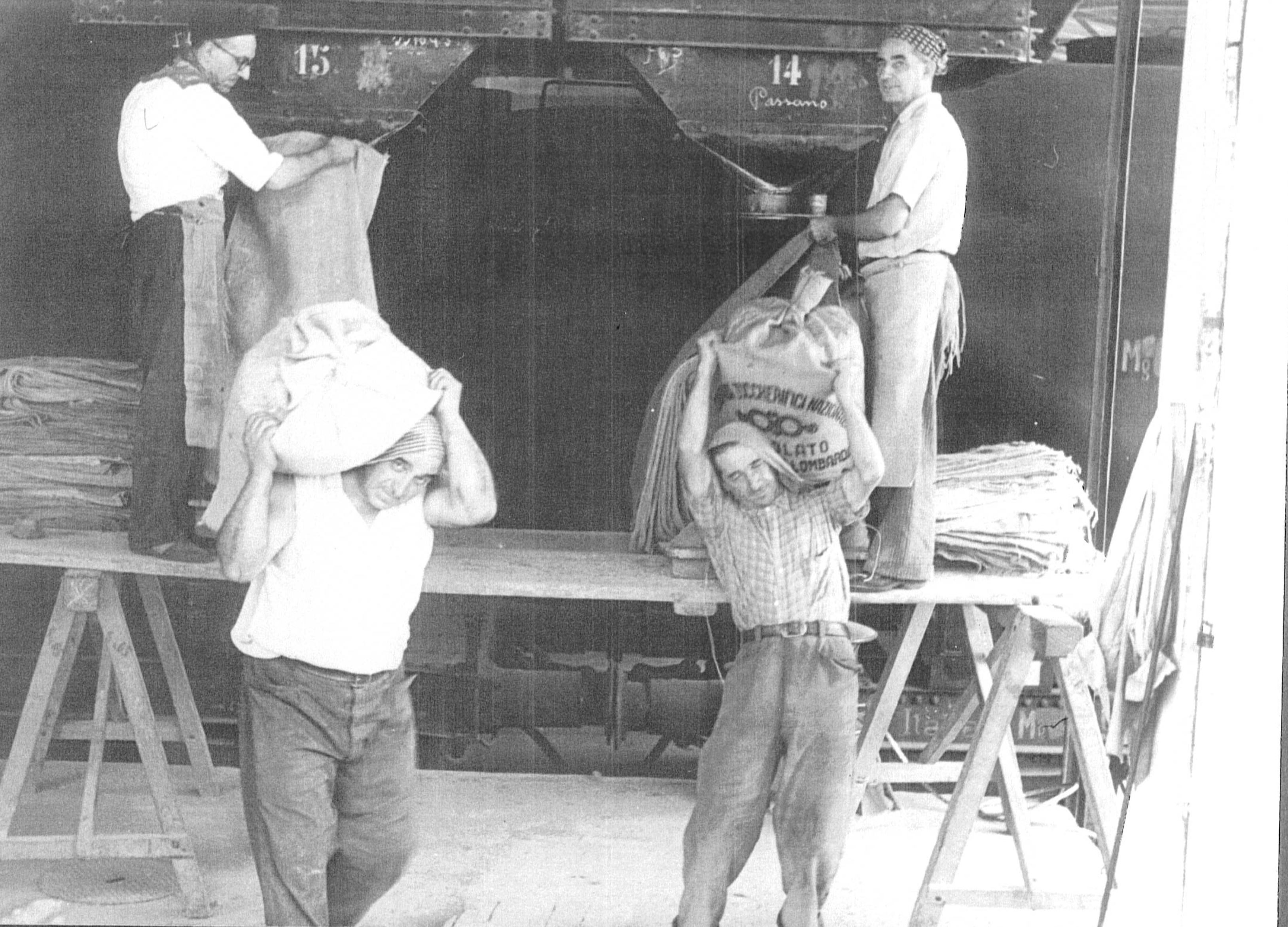
The term “jeans” is instead derived from the Italian city of Genoa, which historically produced fustian with a blue warp and a white weft. Starting from the 16th century, this fabric was shipped to England, where it was common practice to name fabrics after their place of origin. Over time, variations of the words such as “jeanes,” “geanes,” “jeane,” “jean,” and “jeans” began to appear in English inventories. This fabric eventually made its way to the United States, where it was used to create the work pants we now know as “blue jeans,” named for their characteristic color. Today, “denim” refers to the fabric, while “jeans” are the finished pants made from it.
Denim and jeans are global, and the name of the iconic dye used in their production, indigo, also has a geographical origin, but this time from far far away from Europe. Indigo has been utilized by various civilizations for over 6,000 years, with the oldest known indigo-dyed fabric discovered in Peru. However, it was first imported to Europe from India by Arab merchants, and the term “indigo” itself comes from the Latin word “indicum,” meaning “Indian.” Pliny the Elder mentioned indigo as a product from India in his writings, indicating that the Romans were aware of this dye.

Popular terms explained
Warp and weft are the two basic components of denim fabric. The warp refers to the yarn that runs vertically through your jeans, held in tension on the loom, while the weft yarns are woven over and under to create the fabric. Denim typically has a 3x1 construction, meaning there are three warp threads for every weft thread. Generally, the warp yarns are dyed with indigo, while the weft yarns remain undyed.
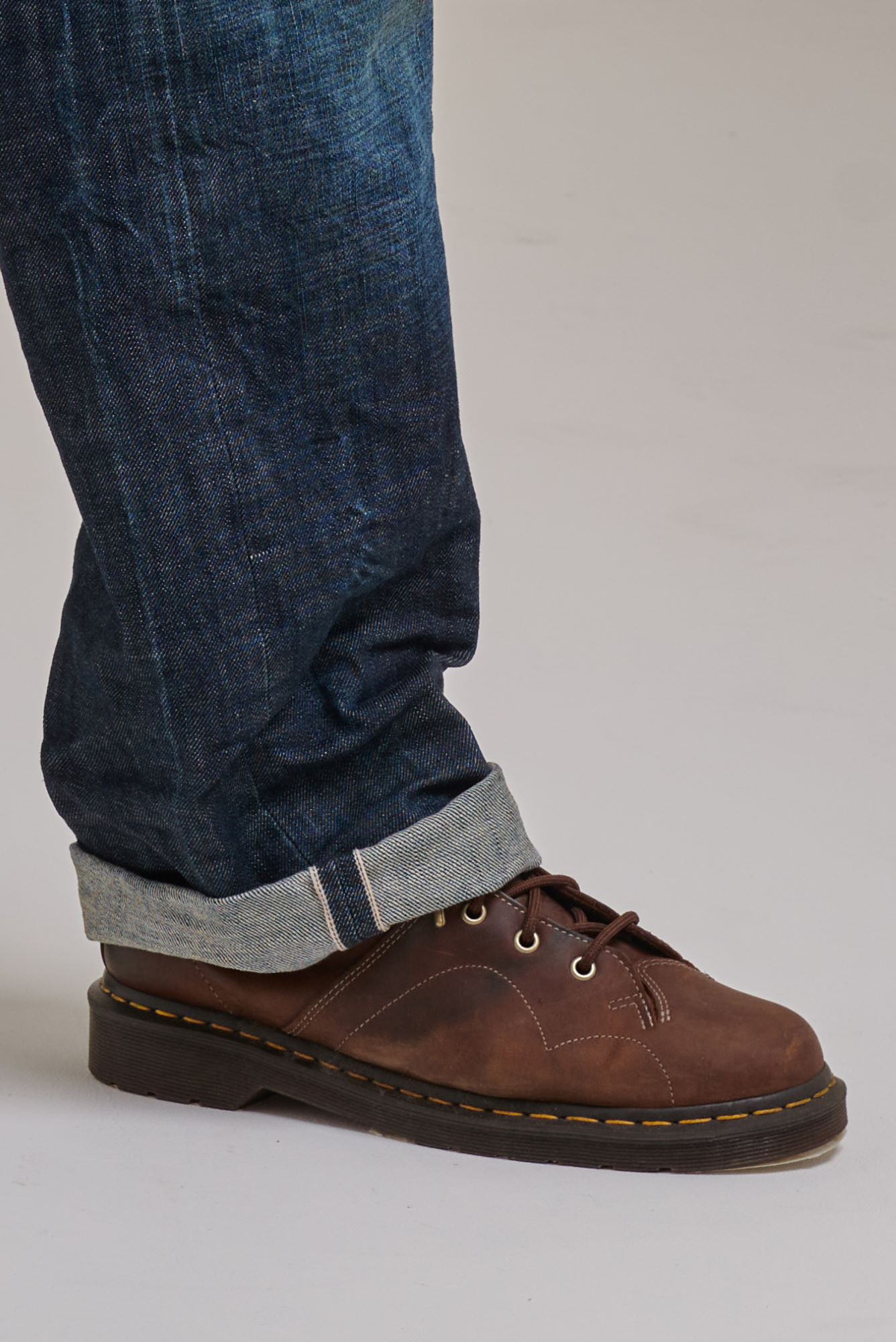
Selvedge denim is produced using traditional shuttle looms, which are now rare in the industry. This method creates a unique self-finished edge, known as the “self-edge,” from which the term “selvedge” is derived. The edge usually features a white band with red stitching, traditionally used by Levi’s®, but today selvedge denim can include a variety of colors and constructions. The fabric is cut and sewn to leave the edge visible on the inseam. Therefore, wearing selvedge jeans with cuffs allows you to showcase what makes them special.
Raw denim is unwashed and untreated by industrial laundries. Its beauty improves over time due to a natural fading process, which reflects the wearer’s habits and tells a unique story. Fades and whiskers develop from long-term wear, causing the top layer of indigo dye to gradually lose its color. Whiskers are subtle horizontal lines that appear along the thighs and other areas of wear. Raw denim has become uncommon in the industry since most jeans undergo finishing treatments that create a vintage aesthetic, mimicking the natural aging of denim and providing a softer feel.
Rivets are metal hardware pieces used to reinforce the weakest points of a garment. The riveted work pants were patented by Levi Strauss and Jacob Davis on May 20, 1873. Although they are now recognized as the first pair of blue jeans, they were primarily referred to as denim overalls until the mid-20th century. Traditionally, metal is used for jeans hardware, which also includes shank buttons. However, rivets can sometimes be substituted with bartacks, a series of tight zigzag stitches that also provide additional strength and durability to belt loops and pocket corners. During World War II, Levi’s® opted for bartacks instead of rivets to conserve metal.
Topstitching is the visible stitching on the outside of a garment, commonly seen in jeans with tobacco-colored thread. It plays a vital role in the double flat-felled seam, where fabric edges are folded under and concealed, with two rows of stitching that keep the seam flat and durable. Lockstitching secures the top thread under the bottom thread, creating a strong seam, while chainstitch forms a looped pattern.
The yoke is the back section of jeans under the waistband, and both the inseam and outseam refer to stitching along the inside and outside of the leg, respectively. The rise measures the distance from the crotch point to the top of the waistband, determining where the pants sit on your body. The J-stitch, used in the fly of the jeans, is typically double topstitched for reinforcement and hides buttons behind a continuous denim panel.
Five-pocket jeans are the traditional style of blue jeans. They originally featured two back pockets, two main front pockets, and a smaller pocket located within the right front pocket, which was originally referred to as the watch pocket. The work pants patented by Strauss and Davis initially had only four pockets, with one back pocket. Levi’s® added the fifth pocket at the beginning of the 20th century.
Cultural impact
While most terms and expressions in the denim dictionary have practical, functional, and straightforward origins rooted in the workwear fabric, denim has evolved over the centuries to become a cultural symbol and, ultimately, a fashion statement.
World War II shook and shocked the entire world, dramatically transforming perceptions of many things, including denim. Before the war, denim was primarily worn in the United States as men’s workwear. During the conflict, U.S. soldiers in Europe and the Pacific wore denim as part of their uniforms and in their leisure time, giving it popularity in those regions. There, denim became associated with freedom and progress. Additionally, women who stepped in to fill roles left vacant by men fighting overseas began wearing practical men’s work clothing like denim. This shift linked the fabric to the emerging economic power and independence of women.
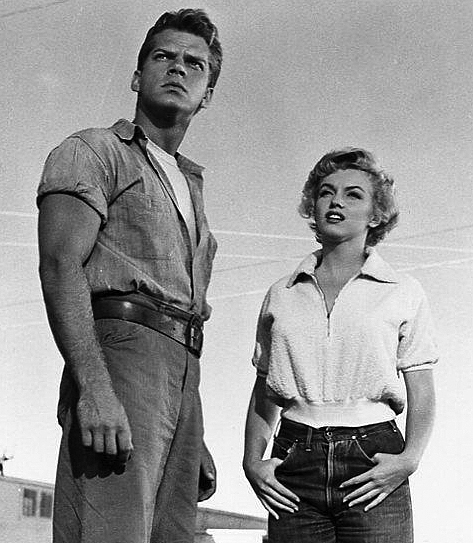
After the war, iconic movie stars like Marlon Brando, James Dean, and Marilyn Monroe further elevated denim’s status as leisurewear. They sported jeans on-screen in their most memorable roles, such as in “The Wild One,” “Rebel Without a Cause,” and “Clash by Night,” as well as in their personal lives. The music industry also embraced denim, with figures like Elvis Presley, Jimi Hendrix, Janis Joplin, and The Rolling Stones popularizing it as a symbol of youthful rebellion.
Consequently, jeans experienced a surge in popularity among young people who wanted to emulate these stars. The younger generations sought to distance themselves from the values of the previous society and the formality of the establishment, and jeans became a symbol of their will. This was evident during the Woodstock Festival in 1969, protests against the Vietnam War, and demonstrations for civil rights. The garment also came to represent individuality and self-expression, serving as a means to convey ideas freely.
Modern usage in fashion
Denim made its debut on the fashion scene in 1976, thanks to Calvin Klein. Its rise to prominence in the fashion world coincided with the invention of stretch denim, which allowed for the creation of skinnier, more feminine jeans that became highly sought after by women worldwide. This marked the beginning of the premium denim era, during which jeans transitioned from being mere commodities to luxury items, as noted by Adriano Goldschmied, the father of premium denim.
Brand names and designer labels began to overshadow traditional denim attributes, such as comfort, durability, and authentic character. It became essential for garments to be easily recognizable, as they represented a significant fashion statement. Moreover, jeans began to be offered in a wide variety of fits and styles, each associated with a specific status or subculture. Punk, grunge, and rock enthusiasts typically wore slimmer jeans, whereas ‘90s pop and hip-hop artists, as well as skater culture, popularized baggier styles.
Today, denim is an essential component of collections from the most prestigious brands and designers around the world. Though there are no strict rules and both traditional and innovative designs are embraced, the essence of denim remains unchanged. This is evident in its vocabulary, which still includes terms originally used by sailors, dockworkers, miners, and cowboys.