
 Log into your account
 Register

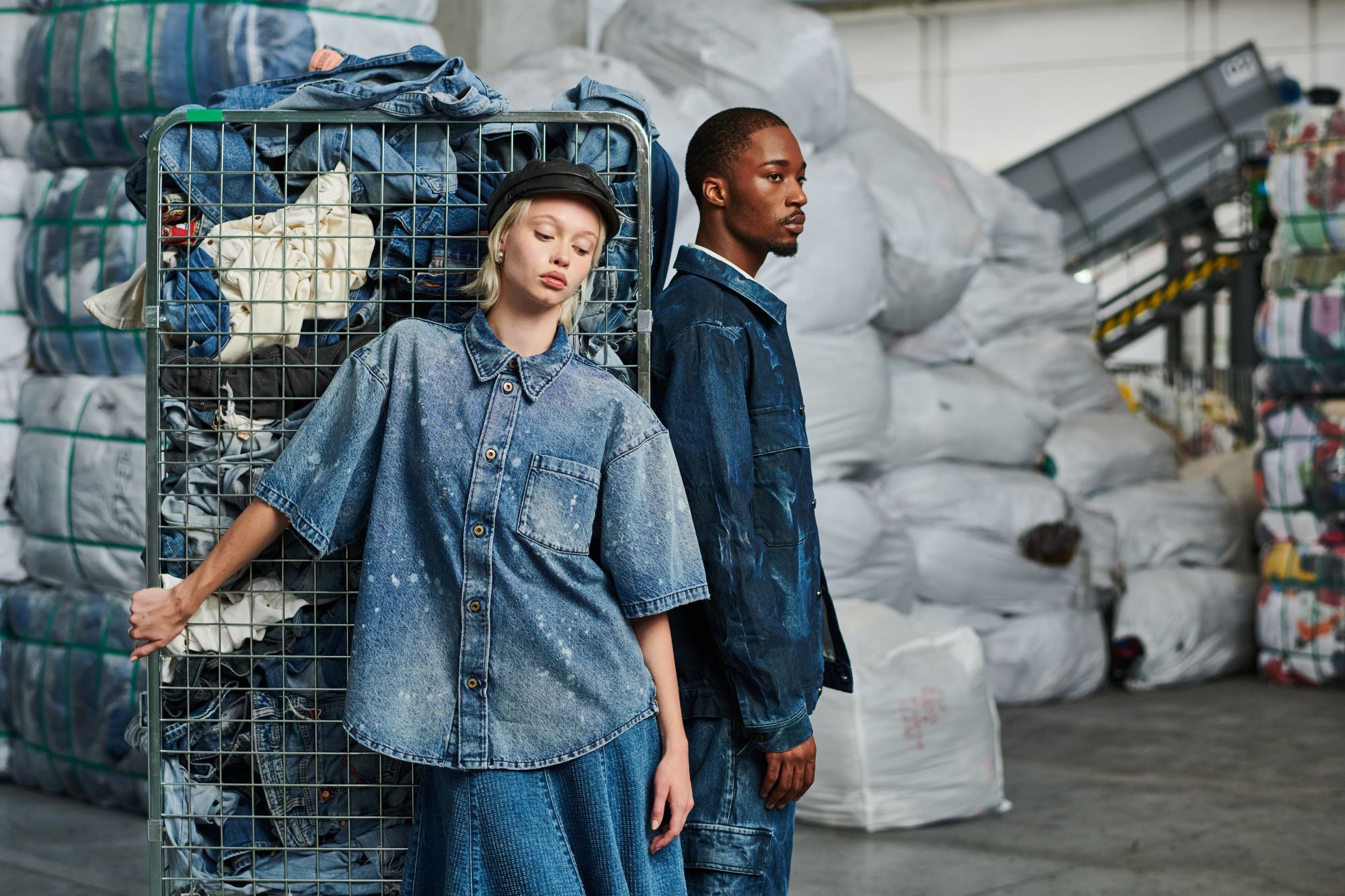


Textile recycling transforms waste into valuable resources, helping to keep materials in circulation and supporting circular economy models. These models aim to extend product lifecycles as much as possible, rather than discarding them after a brief period. In the denim industry, recycled fibers from old jeans and production scraps are becoming increasingly popular to reduce the industry’s environmental impact.
Collection and sorting
Collection and sorting are the first two essential steps in any textile recycling process. According to the European Commission, the EU-27 generated an estimated 6.95 million tons of textile waste in 2020, amounting to about 16 kg per person. Of this, 4.4 kg per person were collected separately for reuse and recycling, while 11.6 kg per person ended up in mixed household waste. The average estimated capture rate for textile waste in this region is only 12%, indicating that the majority is disposed of in mixed municipal waste streams, ultimately landfilled or incinerated. Notably, 82% of this waste is post-consumer, which includes garments and other textile products that consumers have purchased, used, and discarded.
According to Mordor Intelligence, post-consumer waste collected through charitable or municipal collection programs accounted for 60.4% of the textile recycling market in 2025. The introduction of new European regulations on separate textile collection is expected to further enhance the availability of recycled materials over the coming years, as these regulations aim to divert textiles from incineration and landfills, promoting reuse and recycling.
With the implementation of EU regulations on the separate collection of textile waste, we can expect higher household collection rates. However, this may reduce the overall quality of the collected items. Currently, discussions are underway to optimize collection systems to achieve both high capture rates and suitable conditions for reuse. Citizen education may facilitate pre-sorting, provided the quality of reusable textiles is maintained. Still, uncertainty remains about whether individuals should be responsible for distinguishing reusable textiles from textile waste.
Pre-consumer textile waste flows are also on the rise, with a projected annual growth rate of 8.52% through 2031, making this segment the fastest-growing in the industry. Pre-consumer waste includes industrial production scraps generated during the manufacturing process, such as fiber and yarn residues or fabric offcuts. This type of waste has a more homogeneous composition than post-consumer waste, making it easier to collect and sort.

Mechanical recycling
Mechanical recycling is the most widely used method, accounting for over 81.2% of textile recycling technologies by 2025, according to market analysis. This process involves shredding textiles and regenerating fibers. It is relatively simple and cost-effective compared to alternative methods. However, it is primarily effective for monofiber products, and the fibers can lose quality and strength after repeated processing.
As many textiles contain blended fibers, chemical recycling is gaining popularity for its ability to break down fibers into their molecular components and rebuild them with properties similar to those of the original materials. However, this method produces only synthetic materials, as it is not possible to chemically revert natural fibers to their original state. Additionally, chemical processing can be expensive and requires careful handling of chemicals.
Given the prevalence of mechanical recycling, 100% cotton denim is easier to recycle than fiber blends, such as stretch jeans. Recycled cotton fibers are often combined with virgin fibers to improve strength. However, it is possible to create denim made from 100% post-industrial recycled fibers, because fibers lost during manufacturing retain properties similar to those of the original fibers, as they have not yet been treated.

Fiber regeneration
Fiber regeneration is the process of keeping materials in circulation rather than discarding them. In 2017, the Ellen MacArthur Foundation estimated that less than 1% of all textiles worldwide were recycled into new fabrics, a statistic that remains reported by official sources today. Most textile waste is downcycled, meaning it is transformed into lower-value products like rags or insulation materials. While downcycling is beneficial for waste diversion, it ultimately diminishes the material’s value, resulting in products that can no longer be regenerated. In contrast, fiber-to-fiber recycling represents the most advanced achievement in creating a true circular economy in the textile industry.
Regenerated fibers are also defined as those made from natural cellulose, such as wood pulp, which is chemically processed into fiber. According to Textile Exchange, common types of regenerated fibers include viscose, lyocell, and modal. These fibers can also be produced using recycled inputs, and their environmental impact largely depends on the methods used to produce the cellulosic materials.
Challenges and opportunities
Textile recycling is transforming from a marginal activity into a significant segment of the supply chain. According to Mordor Intelligence, the global market for textile recycling reached $6.62 billion in 2025 and is expected to grow to $7.25 billion in 2026, reaching $11.39 billion by 2030. This growth is driven by several factors, including increasing regulatory pressure, particularly in Europe, where the Extended Producer Responsibility (EPR) policy holds producers accountable for the cost and management of textile waste. Furthermore, brands and manufacturers are increasingly seeking recycled materials to reduce their environmental footprint and comply with new traceability and recycled-content requirements.
Despite the opportunities presented by evolving regulations and growing awareness among consumers and producers, many challenges remain:
- Current technologies are not equipped to handle large volumes of textile waste, and sorting processes often prioritize resale over recycling. This process typically relies on manual labor, making it difficult to categorize textiles or eliminate contaminants effectively.
- The infrastructure needed to collect and process used textiles is logistically challenging and energy-intensive.
- Recycled fibers often cost more than virgin materials because production processes are optimized for the latter.
- The market for recycled textiles can be unpredictable, with significant fluctuations in demand, prices, and the availability of suitable materials for recycling.
- Consumers often have limited awareness of the characteristics and benefits of recycled textiles and are accustomed to the low prices of fast fashion, making it difficult to create genuine demand for recycled textiles.
While technological advancements may soon address these issues, the high investment costs of advanced facilities pose a major challenge to economic sustainability.
Nevertheless, increasing textile production and the resulting large volumes of waste make recycled fibers a necessity for our planet and a business opportunity that can no longer be overlooked. Recycling has long been seen as a niche pursuit, primarily adopted by companies focused on sustainability; however, it is now shifting towards industrial-scale production. It is becoming central to textile strategies and institutional goals, requiring all stakeholders to prepare to embrace this significant change. If new regulations are viewed as opportunities rather than constraints, they could serve as a springboard for establishing a large-scale, impactful textile recycling sector.
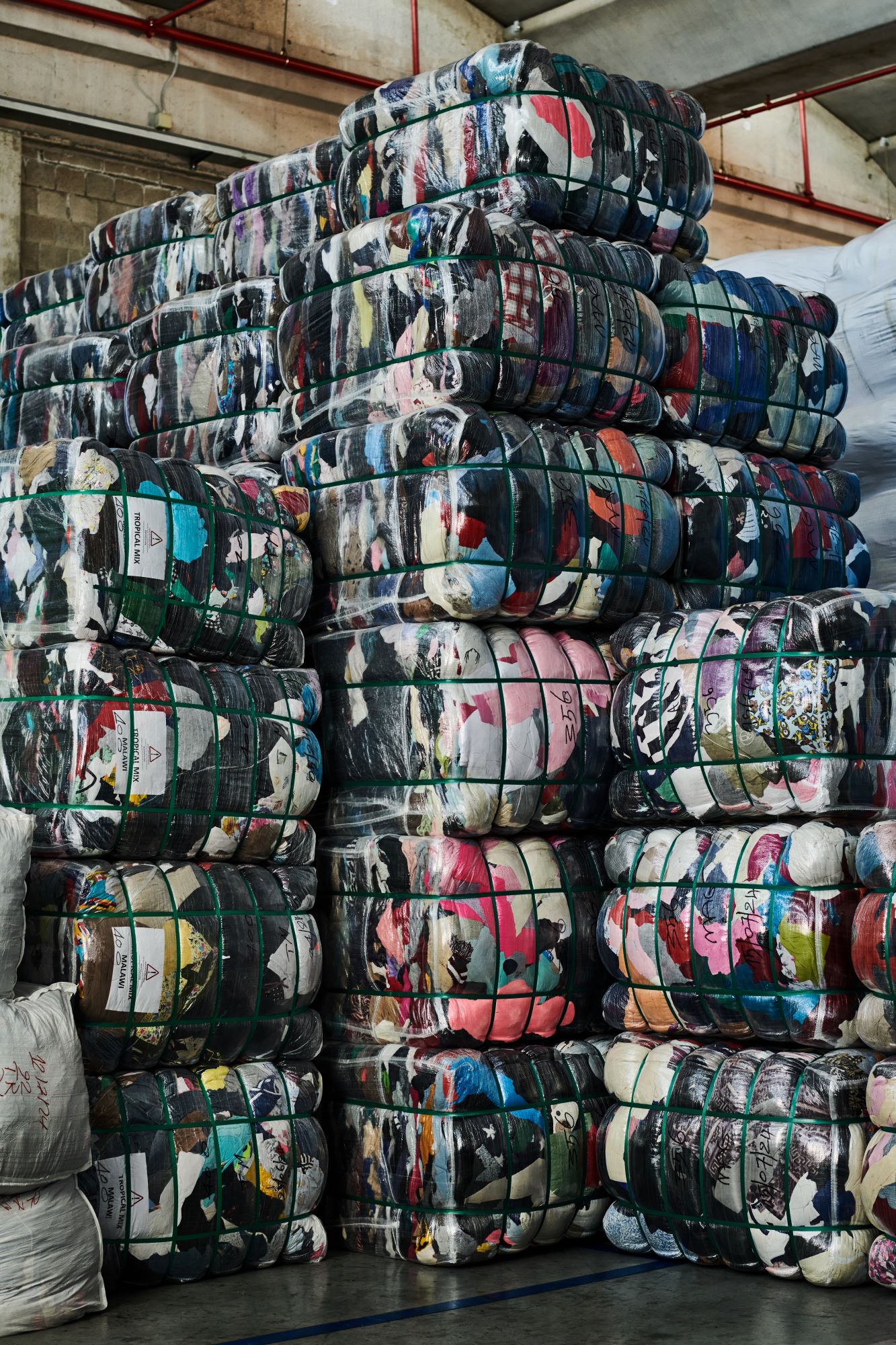
Photos taken at Humana People to People Italia.