 Log into your account
 Register



Washing our clothes is essential for maintaining freshness and hygiene. No one wants to smell bad or look dirty! However, it’s important to realize that the way we wash our garments—when we wash them and what products we use—can impact not only their appearance and longevity but also our planet. Every wash has consequences, from the microplastics we release to the energy we consume. This is particularly true for denim, which has its own unique story to tell.
Why washing matters
When we think about washing our clothes, hygiene is likely the first thing that comes to mind, along with concerns about odor and stains. Clothes can absorb sweat, dead skin cells, bacteria, and environmental pollutants, all of which are removed through regular washing. This process helps prevent unpleasant odors, skin irritation, and infections. Additionally, clean clothes simply look better, feel more comfortable, and are nicer to wear.
However, it’s important to pay attention to how we wash our garments to ensure their longevity, minimize environmental impact, and preserve the fabric. Washing your clothes according to the care labels can help maintain the fabric, color, and shape. Conversely, overwashing or using harsh detergents can lead to fading, shrinking, or damage to the fibers.
Moreover, washing responsibly—by using cold water, washing full loads, and opting for biodegradable detergents—can significantly reduce water and energy consumption. It’s important to note that overwashing synthetic fabrics also releases microplastics, which contribute to ocean pollution.
Lastly, some specialty fabrics, such as denim, wool, or silk, benefit from occasional washing or alternative care methods like spot-cleaning or airing out. These practices help maintain their unique properties and reduce wear.
How often should you wash your jeans?
Washing denim at home can be tricky, as different types of jeans have unique care needs. A general guideline is to wash them as infrequently as possible. We recommend wearing your jeans for at least six months before their first wash, especially if they are dark-colored, to maintain their authentic look.
Denim is distinct from other fabrics because it typically improves in appearance as it ages. With wear, it develops unique faded areas that reflect the story of the wearer, particularly with raw denim. On the other hand, frequent washing, especially in a washing machine, can interfere with this natural fading process, leading to uniform indigo fading.
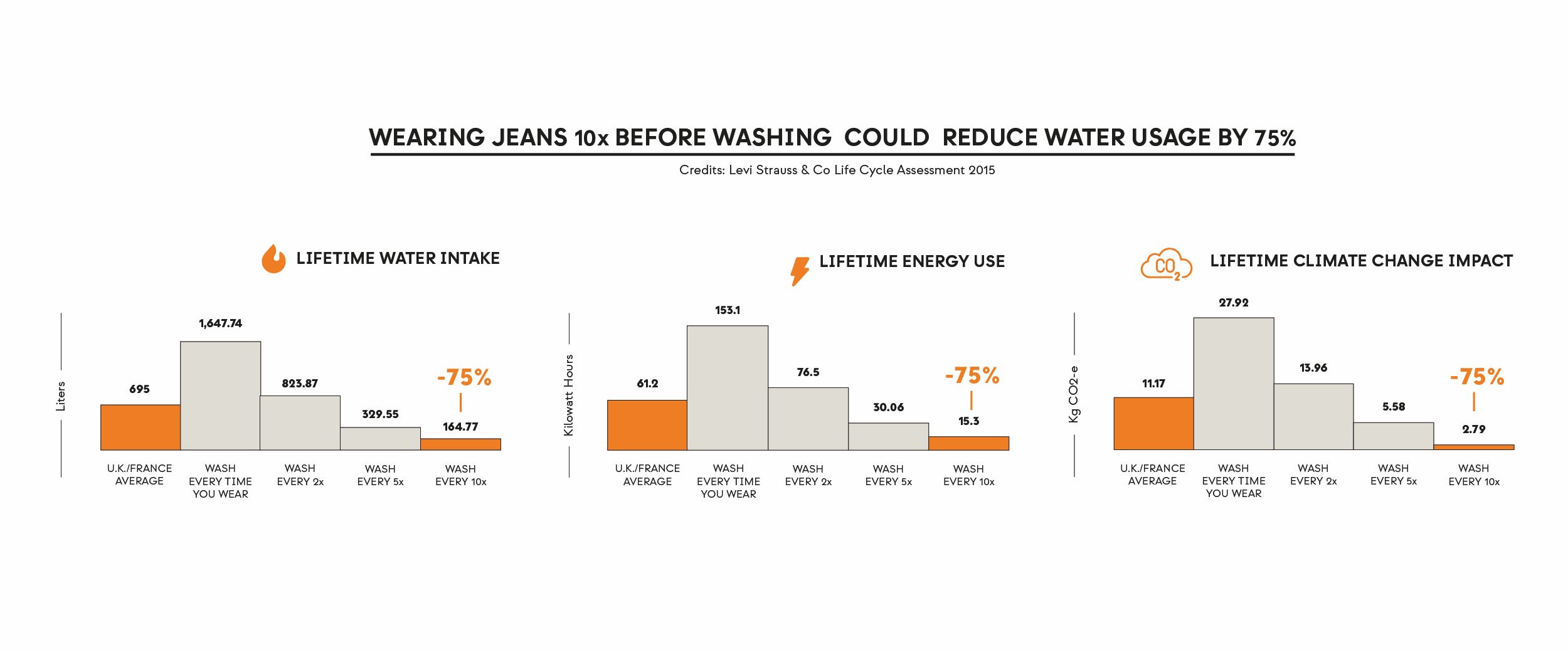
Additionally, washing jeans at home has significant environmental consequences. According to the “Levi Strauss & Co. Life Cycle Assessment” from 2015, jeans are usually washed every 2.5 wears in Europe. Throughout their lifespan, they consume approximately 659 liters of water, 61.2 kilowatt-hours of energy, and produce 11.17 kg of CO2 emissions from household washing. If you made an effort to wear your jeans at least ten times before washing, you could reduce the environmental impact of washing by up to 75%.
Techniques for raw vs. washed denim
How to wash jeans at home depends on the type of denim fabric. Washed jeans have already undergone industrial washing to achieve a specific aesthetic and feel. This process means that the indigo has faded in some areas and that the fabric is less likely to shrink. As a result, washed jeans can be cautiously machine-washed. Here are some tips: turn them inside out to protect the color, and close all zippers and buttons to maintain their original shape. Finally, use a mild detergent and cold water, and select the gentlest cycle on your washing machine.
Caring for raw denim, on the other hand, requires a different approach. Raw denim comes almost directly from the loom to your closet and can lose color or shrink if not washed correctly. To enhance its beauty and value, it’s best to wait as long as possible before washing raw denim, as this highlights the character that denim enthusiasts appreciate. However, when the time comes to wash it, follow these precautions to preserve the authentic look of raw jeans.
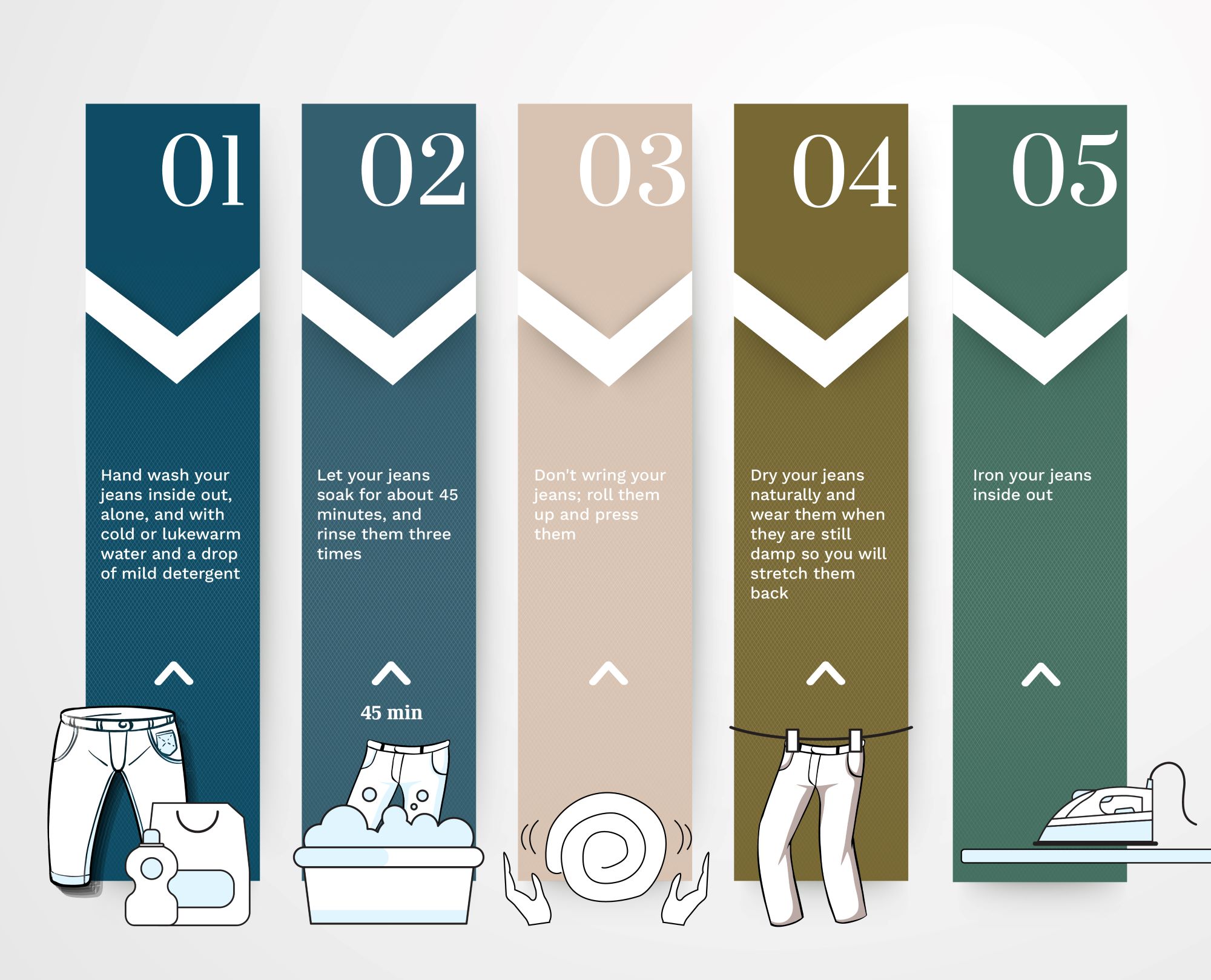
The most important step is to hand-wash raw denim. Fill a clean basin with cold or lukewarm water and let your jeans soak for 45-60 minutes with a drop of detergent. Avoid using too much detergent, as it can actually make your denim dirtier. Alternatively, you can use vinegar mixed with a drop of fabric softener. Always turn your jeans inside out to minimize color bleeding, especially during the first wash.
Use a soft brush to gently remove any dead skin or dirt, and rinse your jeans twice or thrice with clean water to remove all detergent. Do not wring out your jeans; roll them up and gently press to remove excess water. This technique helps maintain their shape. Afterward, air-dry your jeans, keeping them out of direct sunlight to prevent fading.
Wearing your jeans while still slightly damp helps them stretch back to their original fit. Be aware that rigid denim may shrink a little after the first wash. Finally, iron your jeans inside out to protect the fabric. You can cover them with a cloth to prevent heat exposure if necessary. Use a high heat setting with steam for 100% cotton denim, and switch to a cooler setting for stretch denim.
Eco-friendly detergents and habits
As we have discussed in the previous paragraphs, the principle of “less is more” applies when it comes to washing denim at home. This means infrequent washing, using only a small amount of detergent, and avoiding the dryer. Washing jeans less often significantly reduces their carbon footprint. Moreover, hand-washing denim not only saves water, but using cold water and skipping the dryer further conserves resources.
Additionally, taking proper precautions helps to preserve the dye and fibers of the fabric, ultimately extending the lifespan of your jeans. This aligns with the eco-friendly principle of reducing textile waste and the demand for new clothing.
Eco-friendly washing practices for denim at home also include selecting the right detergent. It’s best to choose a product that contains no harmful substances for aquatic life, preferably a plant-based formula, and one that comes in cardboard, glass, or refillable containers. For a more specialized approach, denim can be cleaned by professionals using ozone treatment, which not only maintains the aesthetic quality and prevents fading but also conserves water.