 Log into your account
 Register

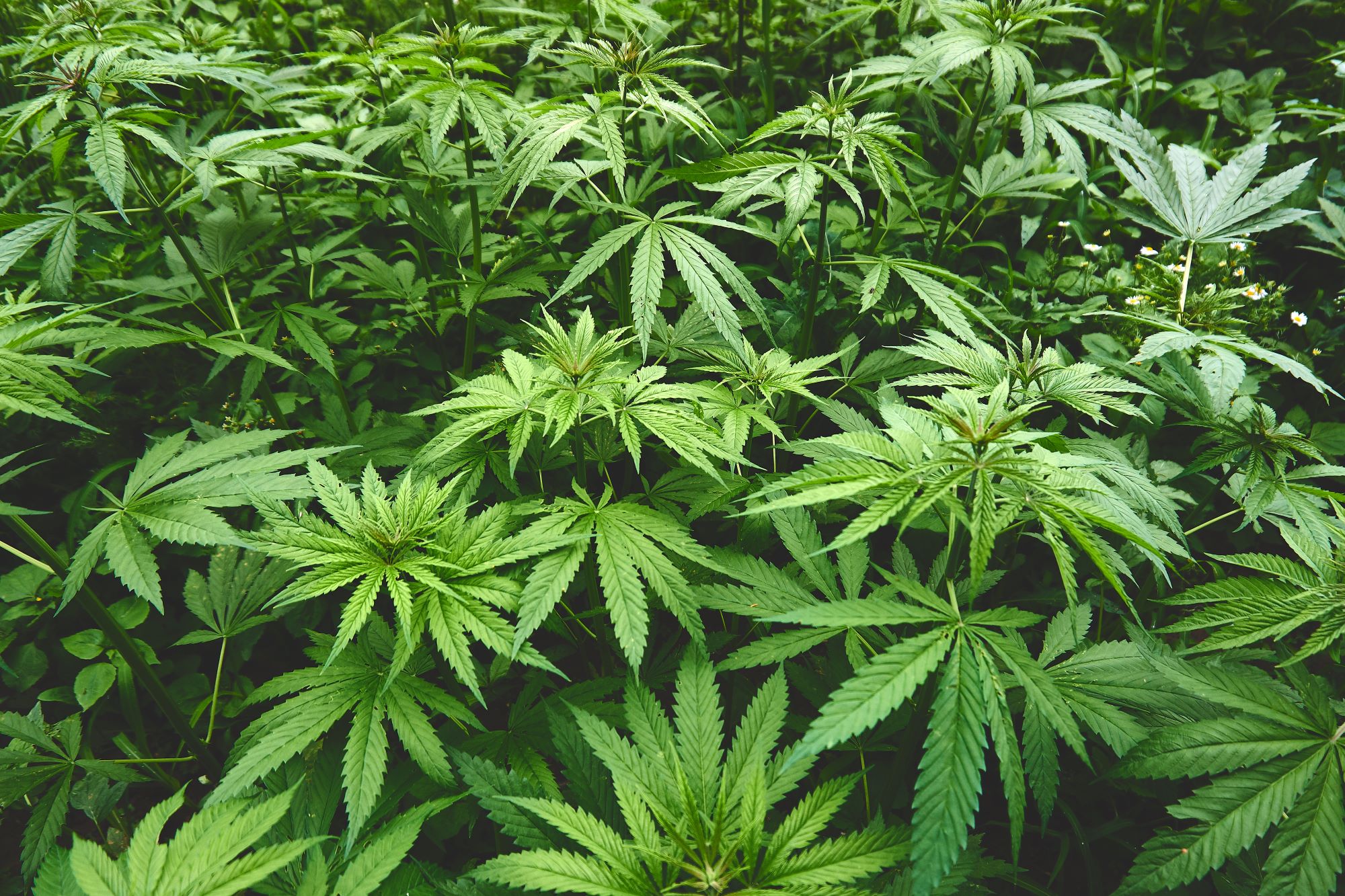


Cotton has been a dominant material in the textile industry for centuries due to its softness, lightness, and durability. However, its success has recently become a challenge. The increasing demand for cotton has led to intensive farming practices that harm biodiversity, deplete soil quality, and pose risks to essential pollinators. Although more responsible alternatives to conventional cotton exist, the majority of global production still relies on environmentally harmful methods. To create a more sustainable future, exploring new options such as alternative natural fibers, recycled materials, and a truly regenerative circular economy is essential.
Why move beyond cotton?
While cotton does not require as much water and pesticides as commonly believed, there are significant concerns associated with conventional industrial cotton cultivation. Cotton is the world’s most popular fiber, cultivated for thousands of years due to its softness, lightweight nature, and durability. Its availability became particularly widespread and affordable during the Industrial Revolution of the 18th and 19th centuries.
The primary issue with cotton cultivation stems from its immense popularity, which has led to a substantial increase in supply over the past few decades and the adoption of intensive farming methods to enhance efficiency and productivity.
Unfortunately, these industrial farming practices harm biodiversity and endanger vital pollinators, including bees, butterflies, bats, moths, beetles, and birds. This decline has a negative impact on overall crop health and soil quality, often necessitating the use of more pesticides, insecticides, and herbicides to maintain production levels. Consequently, conventional industrial agriculture has become one of the most polluting industries on the planet.
Bees pollinate an estimated 80% of crops, while other pollinators handle the rest. In many instances, native specialist pollinators, which have adapted to local plant species, are even more efficient than the more generalist honeybees. Monocultures, habitat loss, pesticide usage, and diseases have detrimental effects on all types of pollinators. Approximately 40% of bees in the US and a third of those in the EU die annually.
This is why, in recent years, preferred cotton fibers, which have added social and environmental benefits, have gained increased attention. However, according to Textile Exchange, around 70% of cotton produced globally is still conventional.
Benefits of hemp and blends
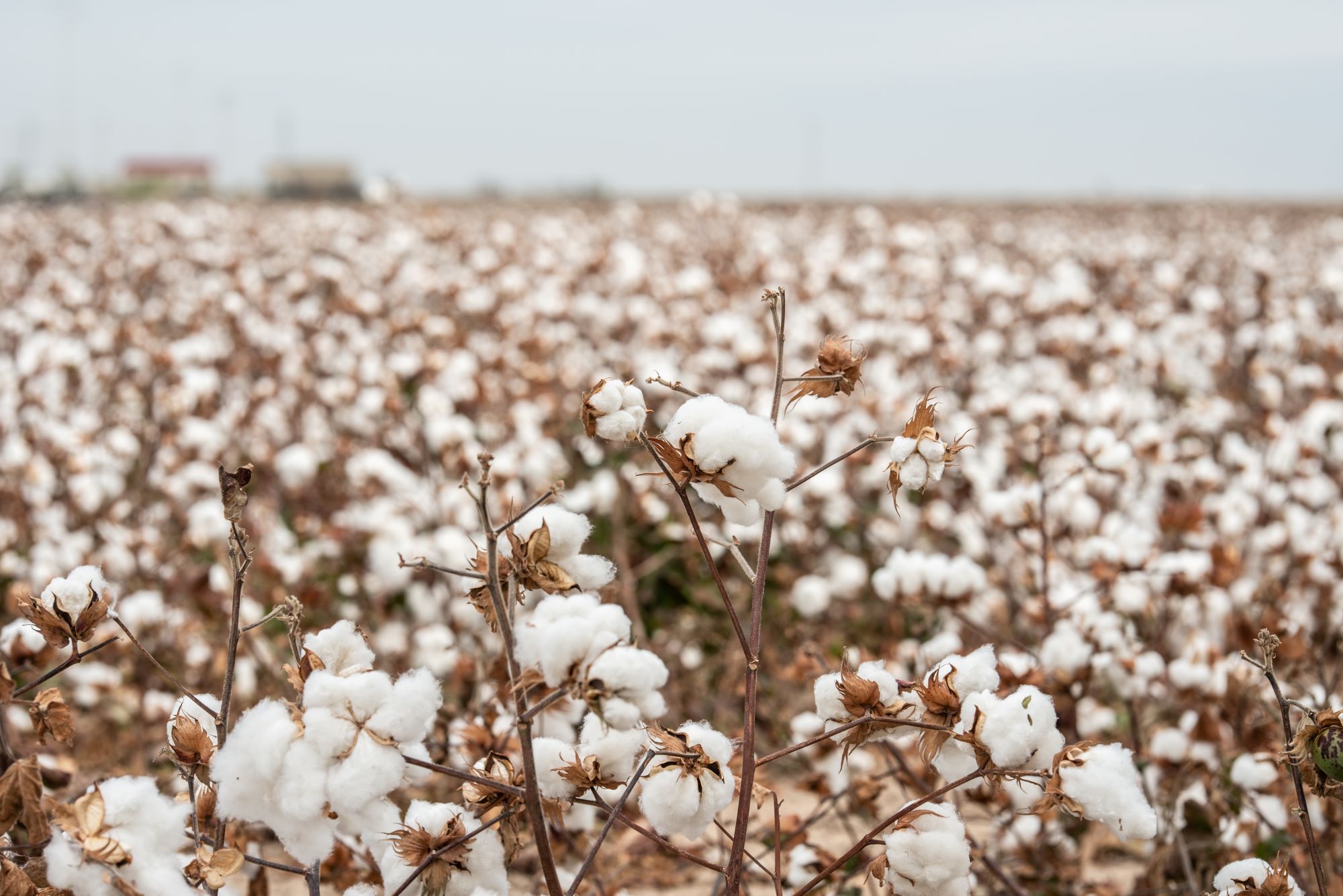
Cotton is the primary material in the denim industry, with traditional denim being made entirely from cotton. However, other fibers can be blended with cotton to create denim fabrics that offer additional benefits or specific features. One notable fiber is hemp, which has many advantages.
According to Textile Exchange, hemp is a bast fiber produced from the strands that run along the length of the plant and surround the woody core of its stem. It is considered a sustainable option among natural fibers because it grows quickly, naturally resists many pests, absorbs significant amounts of CO2, and requires minimal fertilizers, pesticides, and water. This is partly due to its cultivation in areas with moderate temperatures and adequate rainfall. Additionally, hemp’s deep root system helps reduce soil loss and erosion, making it an excellent rotational crop. China is the leading hemp producer, and farmers commonly rotate it with soybeans, tobacco, wheat, and corn.
Hemp has a long history in textiles and was one of the first plants spun into usable fibers. Due to its strength and durability, it was traditionally used in various products, including rope and sail canvas. However, pure hemp fabrics are relatively rare, as they tend to be stiff and rough to the touch, lacking elasticity and comfort. This is why hemp is often blended with other fibers to improve texture and create strong, durable, and comfortable products.
Cellulose fibers can also be blended with cotton to create denim fabrics. Derived from plants, cellulose is biodegradable and has a production process that requires fewer resources compared to other textile materials. Additionally, cellulose-blended textiles are typically lightweight, breathable, and gentle on the skin.
Recycled cotton and circularity
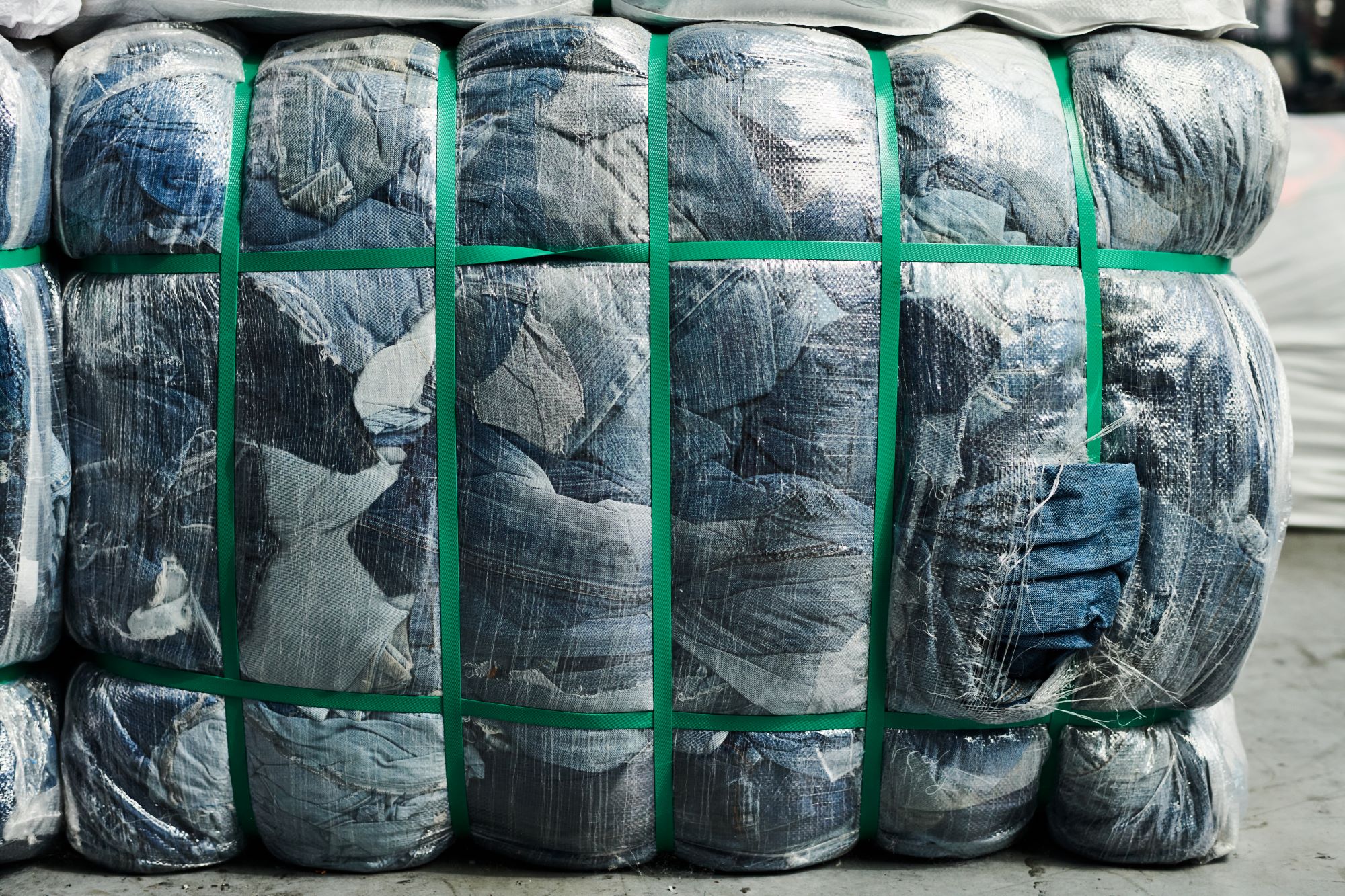
Alongside blending cotton with other fibers, the denim industry is increasingly focusing on recycling to address the significant waste problem in the textile industry. According to the European Environment Agency (EEA), in 2020, each EU citizen generated an average of 16 kg of textile waste, with only 4.4 kg sorted for reuse or recycling. Overall, about 92 million tons of textile waste are produced globally each year, including an estimated 2.16 million tons of denim. Only 35% to 50% of discarded denim is recycled in Western Europe.
Though recycling has great potential, mechanically recycled cotton had only a 1% market share in 2023, as many challenges persist. Fiber degradation during recycling can weaken cotton, prompting the need to blend it with virgin fibers for added strength, particularly from post-consumer sources. Additionally, the presence of synthetics in cotton garments complicates separation, while chemical treatments and coatings can release pollutants. The removal of zippers and buttons also adds to the costs.
Currently, textile recycling systems are still developing, with limited capacity for high-volume, closed-loop processes, and sorting technologies struggle to separate cotton from mixed fabrics. Furthermore, the higher production costs of recycled cotton compared to virgin cotton pose economic challenges, complicating market appeal and industrial planning.
Benefits of a circular economy
Despite their many challenges, recycling programs promote a circular economy, which the European Parliament recognizes for three key benefits: protecting the environment, reducing dependence on raw materials, and creating job opportunities while saving consumers money.
By extending the lifespan of raw materials, we minimize the use of natural resources, protect biodiversity, and reduce overall greenhouse gas emissions. Effective circular practices are vital, as over 80% of a product’s environmental impact occurs during its design phase. These practices also address the significant issue of packaging waste, with each EU citizen generating about 190 kg of waste per year.
Reducing raw material dependence helps mitigate risks from supply issues, such as price fluctuations and import reliance. The demand for raw materials is rising, but supplies are limited. In 2023, the EU faced a trade deficit of €29 billion in raw materials, while each EU citizen consumed approximately 14.22 tonnes in 2022.
Transitioning to a circular economy could boost competitiveness, foster innovation, and generate up to 700,000 new jobs in the EU by 2030. Moreover, consumers would gain access to more durable, high-quality products, ultimately improving their quality of life and saving money.
Candiani’s textile R&D
Raw materials are a key focus of our research and development (R&D) programs. We aim to select the best fibers and discover innovative, low-impact materials to minimize our environmental footprint while enhancing the quality, performance, and aesthetics of our denim fabrics.
In recent years, our selection of natural fibers beyond cotton has expanded to include hemp denim, as previously discussed, along with flax. Flax has a similar production process and is strong, breathable, and environmentally friendly to grow. We also utilize Himalayan nettle, which is durable, resistant, and yet soft and breathable. These rain-fed nettle fibers require no chemicals for growth, can absorb significant amounts of CO2, and help stabilize areas prone to landslides.
Currently, we place a strong emphasis on recycled cotton jeans. We utilize both post-industrial and post-consumer recycled fibers, depending on their source—either from our unavoidable production waste or from damaged garments that are no longer suitable for reuse. While we can produce 100% post-industrial recycled denim fabrics, post-consumer recycled cotton is typically weaker and requires blending with virgin fibers for improved performance.
To address this weakness, we use our proprietary Blue Seed cotton, a hybrid variety that benefits from hybrid vigor, enhancing its biological functions. It combines the quality of extra-long staple cotton with the durability of Upland cotton. Blue Seed cotton is resilient, requiring less water and fewer chemicals for cultivation, and is designed to thrive in arid soil. Our exclusive access enables us to ensure that it is allocated to selected farmers, maintaining a fully traceable supply chain.