 Log into your account
 Register




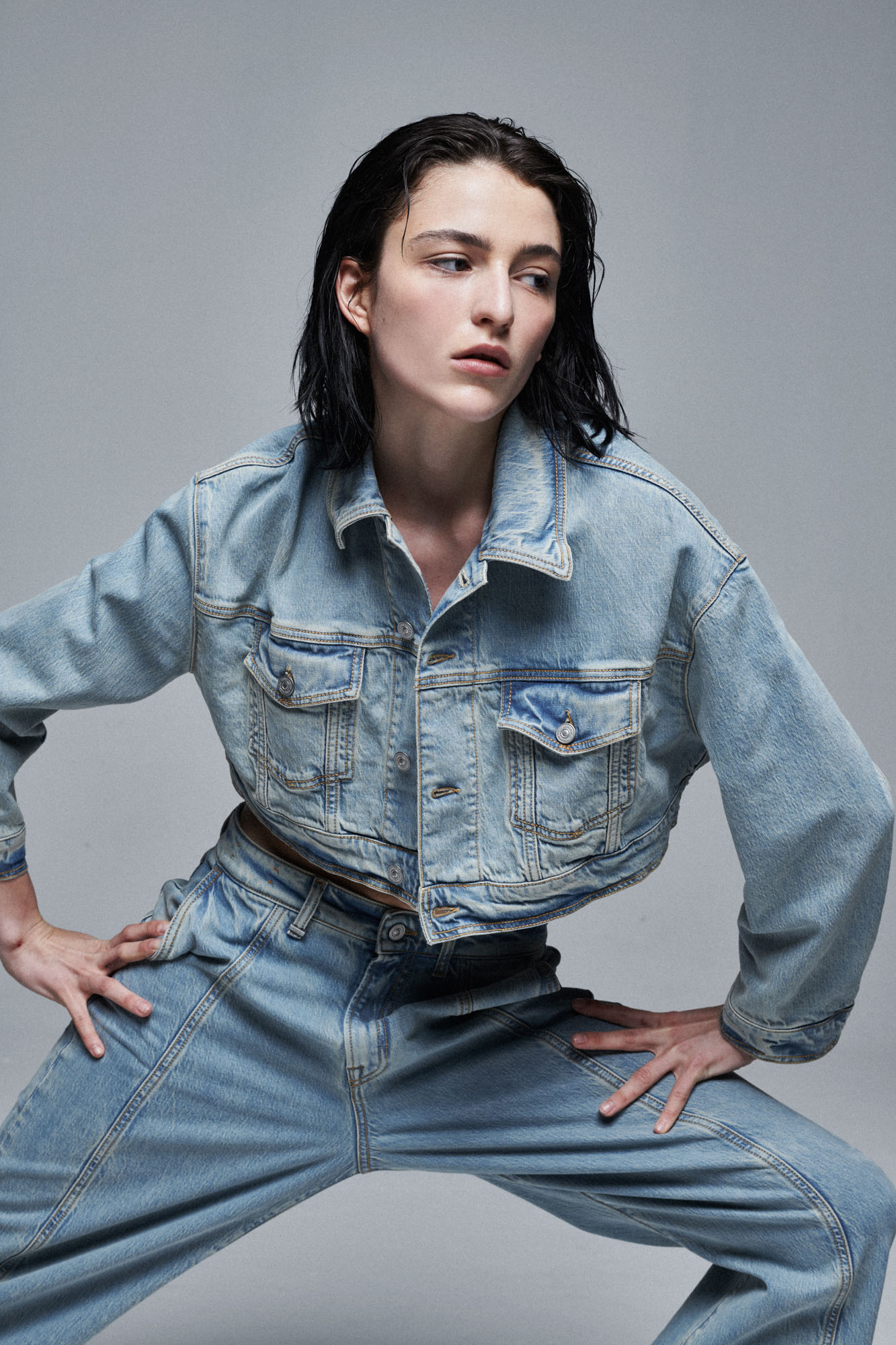
Stretch denim was introduced to the denim industry in the late 1970s and quickly became a must-have for women worldwide in the following decade. Since then, stretch denim fabrics have maintained a significant market share due to their numerous advantages. These fabrics allow for the creation of flattering silhouettes and feminine designs that enhance the body’s shape while providing comfort from day one. Their versatility offers a wide variety of fits that accommodate different body types and styles. Let’s explore these fabrics further.
How stretch denim works
Before elastane was introduced to the industry, denim was entirely rigid. While this term may have a negative connotation—suggesting discomfort and inflexibility—it simply refers to fabrics that do not contain elastic fibers and are typically made from 100% cotton.
In stretch denim, elastane usually forms the core of the yarn, with cotton wrapped around it. Although cotton has a slight natural elasticity, it is generally insufficient for achieving slim or skinny fits. This is why the success of stretch denim has been largely driven by the women’s market. Data shows that stretch denim still accounts for about 80% of women’s jeans today.
Most stretch denim fabrics contain between 1% and 5% elastane and 95% to 99% cotton. Based on their elasticity, these fabrics can be categorized as comfort-stretch, stretch, or super-stretch, proving their incredible versatility. Comfort-stretch fabrics typically provide about 20% elasticity, which is more than double the natural level found in cotton. They are popular for creating garments that are both comfortable and soft, and are also commonly used in men’s clothing. Stretch fabrics typically have around 30% elasticity, while power or super-stretch fabrics offer the highest elasticity in the industry. These are ideal for the tightest styles primarily used in women’s jeans.
Elastane in denim
Elastane, also known as Lycra or spandex, is a synthetic fiber made from polyurethane. It is widely used in the fashion industry for its elastic properties. Elastane is often blended with other fibers in snug garments that require flexibility and comfort, as it can stretch up to five times its original length and easily return to its shape without losing elasticity.
The use of elastane in the denim industry began in the 1970s to create form-fitting and comfortable jeans that catered to a more feminine silhouette, although its origins go back further. Polyurethane was developed by Otto Bayer in 1937 as a synthetic alternative to rubber, which was crucial for Germany’s rearmament but had to be imported. The first polyurethane textile fiber was produced in 1951 by W. Brenschede, but it was the U.S. multinational DuPont that made significant investments in the same decade to develop an elastic fiber. This effort resulted in the market launch of the first true polyurethane-based textile fiber under the trade name Lycra in 1962.
Peter Golding and Elio Fiorucci were among the first denim designers to see the potential of this new material. Prior to this, jeans typically had a standard design: five pockets, raw 100% cotton fabric, a medium-to-high waist, and a straight fit. However, the introduction of elastane enabled a completely new range of fits and a brand-new market. In 1978, Golding launched the first stretch jeans at his store in Chelsea, London, where famous trendsetters such as Twiggy, Bianca Jagger, Rod Stewart, and David Bowie usually hung out. Around the same time, Fiorucci was inspired to create tight jeans after seeing girls in Ibiza emerge from the water wearing wet flare jeans that clung perfectly to their bodies. He collaborated with designer Mario Morelli to adjust the crotch fit and utilize stretch denim, resulting in a new style of jeans. These designs quickly became must-haves for women in the 1980s, marking the start of a new era for jeans.
Comfort vs durability
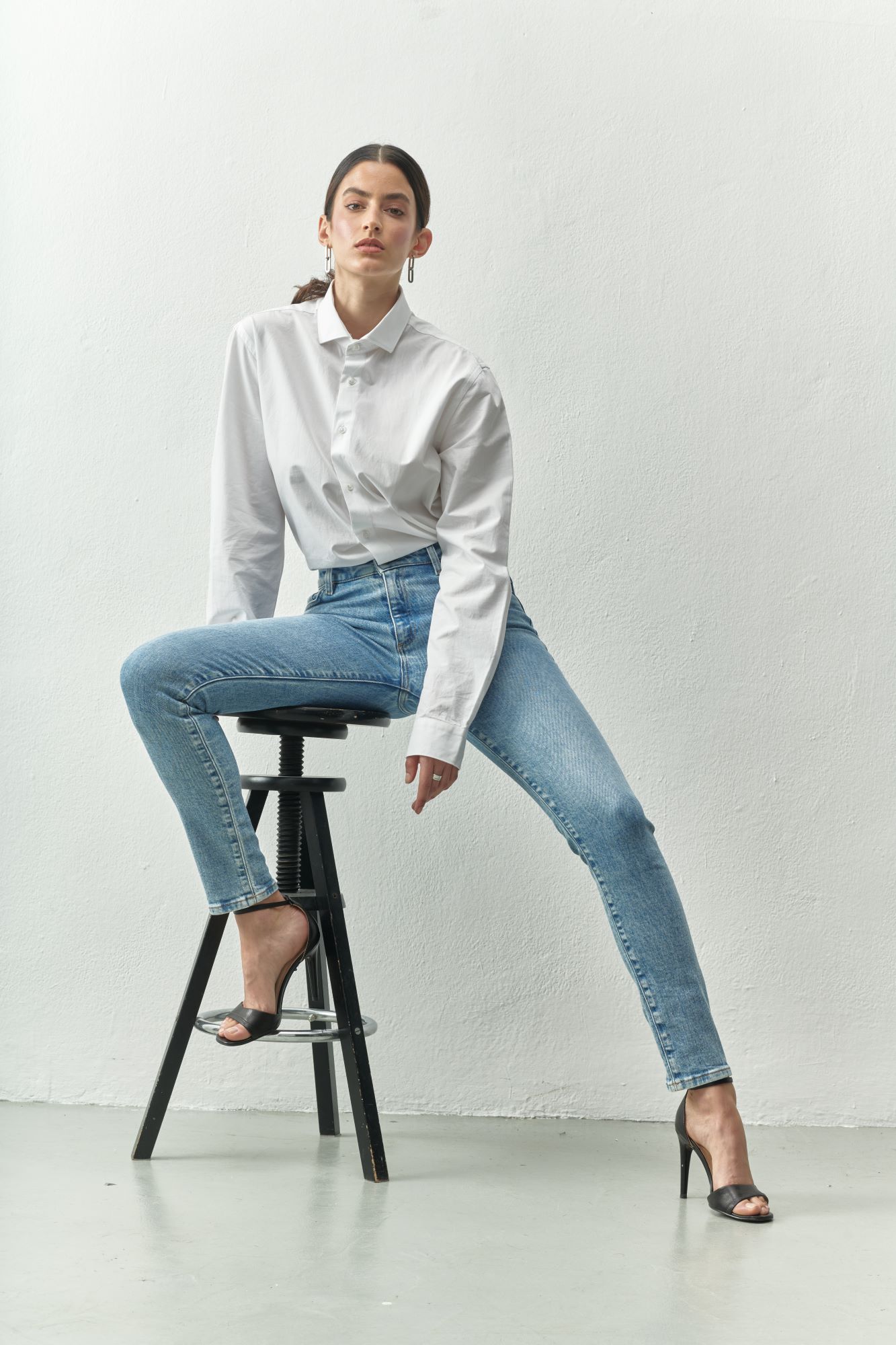
Stretch denim offers two primary benefits: enhanced comfort from day one and a form-fitting style that lasts over time. While rigid denim often requires a break-in period and gradually conforms to the wearer’s body, stretch denim is generally softer and more comfortable from the very first wear, allowing for greater freedom of movement right away.
Additionally, stretch denim is valued for its ability to retain shape over time and recover easily after use and washing. However, it’s important to note that synthetic fibers are often weaker than natural materials like cotton and can degrade more quickly when of low quality, which may lead to overstretching. Therefore, investing in high-quality stretch denim is crucial for durability and shape retention even after multiple wears and washes. Selecting long-lasting stretch denim is also an environmentally conscious decision, considering the impact of synthetic fibers on the planet.
Sustainable stretch technologies
While elastane and other synthetic materials dominate the apparel market, with around 60% of all clothing made from these materials according to the United Nations Environment Programme (UNEP), they present significant environmental concerns.
The manufacturing process of elastane requires a large amount of energy and chemicals. However, the main issue is that it can remain in the environment for centuries. Discarded garments often end up in landfills or abandoned areas, where they release harmful substances as they decompose. Have you ever seen photos of clothes dumped in the Atacama Desert or along the shores of Ghana? That’s the reality we are facing. Moreover, elastane is commonly blended with other materials, and these blends are difficult to recycle with current technologies. According to data also shared by official sources of the European Union, only 1% of clothing material is recycled into new textiles.
Additionally, elastane can shed microplastics during wear and washing. UNEP estimates that approximately 9% of the microplastics found in oceans each year come from microfibers released by textiles.
To mitigate the environmental impact of conventional stretch denim fabrics, the industry is developing alternatives, including recycled elastomers from leftover elastane and bio-based elastic fibers. Both methods support circular economy models by aiming to reuse materials as much as possible before disposal or allowing them to return to nature, without causing negative environmental impacts.