
 Log into your account
 Register



The textile industry is experiencing a significant transformation, prioritizing innovation and sustainability over traditional creative design. The future of denim is no exception to this trend. Growing environmental and social challenges, along with technological advancements and shifting consumer demands, are driving the sector to reevaluate its purpose and impact across all stages—from design and raw materials to manufacturing and garment finishing. Let’s explore how this evolution is taking shape.
Circular economy
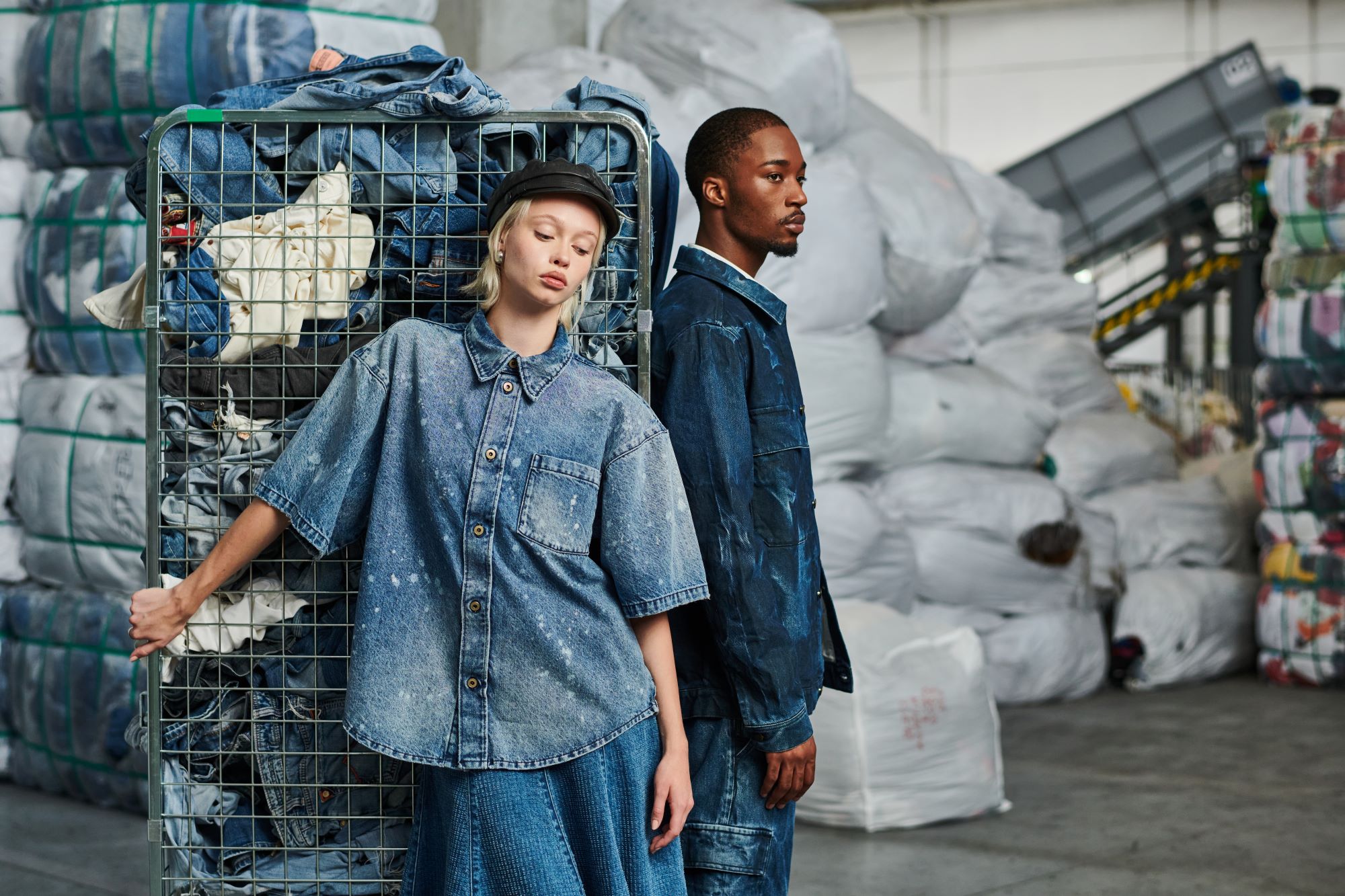
Our current economic model is primarily linear, following a take-make-consume-discard pattern that relies heavily on cheap, readily available materials and energy, as well as on planned obsolescence. This linear approach has led to significant daily waste, including a large portion from textiles. In 2022, the European Environment Agency reported that each EU citizen generated an average of 16 kg of textile waste per year. This figure has remained quite stable since 2016. Alarmingly, only about 4.6 kg of this textile waste was collected for reuse or recycling, underscoring the urgent need for circular-economy models to reduce our environmental impact.
The circular economy emphasizes the efficient use of raw materials, minimizing waste, and extending product lifecycles. It encourages practices such as sharing, leasing, reusing, repairing, refurbishing, upcycling, and recycling. Specifically, for denim, this means wearing our jeans as long as possible, repairing them when needed, selling them on the second-hand market if we can no longer use them, and recycling them at the end of their lifespan.
Textile and denim recycling can be post-industrial or post-consumer. Post-industrial recycling involves remnants from the manufacturing process, which are easier to recycle because they have not been contaminated by other materials or subjected to wear and tear. However, the majority of textile waste comes from post-consumer sources. As a result, the percentage of recycled fibers available in the market remains low; according to Textile Exchange, it was only 7.6% in 2024. Most of this recycling involved polyester made from plastic bottles, accounting for 6.9% of all fiber produced worldwide. Overall, less than 1% of the global fiber market consisted of textile-to-textile recycling.
Additionally, the circular economy can be enhanced by using compostable materials. These materials biodegrade into nutrient-rich compost under the right conditions, posing no harmful environmental effects and potentially benefiting the ecosystem. When their lifecycle is complete, compostable materials can return to nature and be used in agriculture to grow new raw materials, effectively closing the loop.
New fibers
Denim innovation trends show that the interest from consumers and producers in preferred fibers is rising. People are becoming more aware of the negative consequences of conventional agriculture and are seeking materials that have lower environmental and social impacts. Examples of such materials include regenerative and organic fibers.
Although various fibers are entering the denim industry, cotton remains the primary material used in jeans. According to Textile Exchange, 34% of the total cotton produced in 2024 was grown under preferred programs, an increase from 31% in 2023. This shift indicates that efforts are being made to reduce the harmful effects of industrial farming. However, there is still significant room for improvement.
In contrast, the market share of recycled cotton has remained low at around 1%, with an estimated volume of only 0.3 million tons, compared to 24.1 million tons of virgin cotton. This figure pertains to mechanically recycled cotton, which is still considered a natural fiber; chemically recycled cotton, on the other hand, is classified as a manmade cellulosic fiber. Technological advancements are also enabling the production of recycled elastic fibers—used in stretch jeans—derived from leftover materials, as well as biodegradable and compostable options.
Lastly, natural fiber blends are gaining popularity due to their added benefits. Linen is a noteworthy example, offering an alternative to cotton for producing lightweight denim, especially as rising temperatures prompt the industry to reconsider the attributes of traditional denim fabrics, which can feel heavy, stiff, and uncomfortable in hot weather. Flax is a lightweight yet strong and durable fiber that offers a natural shine and a soft hand feel. It is biodegradable and produced with no waste and minimal irrigation. Additionally, flax is ideal for sensitive skin because it is breathable, hypoallergenic, and odor-resistant. Wool and cashmere are also valuable choices for winter denim collections. Still, they can be incorporated into summer lines as well for their thermal comfort, moisture management, stain and odor resistance, flexibility, and softness.

Water reduction technologies
The evolving legislation and rising consumer demand for a more sustainable denim future are prompting the industry to adopt new, lower-impact technologies. One of the most critical challenges facing the textile sector—and the planet as a whole—is water consumption.
Water usage in denim production occurs at every stage of a pair of jeans’ lifecycle, from cotton cultivation to domestic washing. According to “The Life Cycle of a Jean” by Levi Strauss & Co., the average total water consumption for producing and consuming a single pair of jeans is 3,781 liters.
The dyeing, finishing, and garment-finishing processes—which are typically handled in specialized laundries after the jeans are cut and sewn—have come under scrutiny. These processes use large volumes of water and chemicals, which can be harmful to people and the environment if wastewater is not properly managed. The European Parliament estimates that textile production accounts for about 20% of global water pollution.
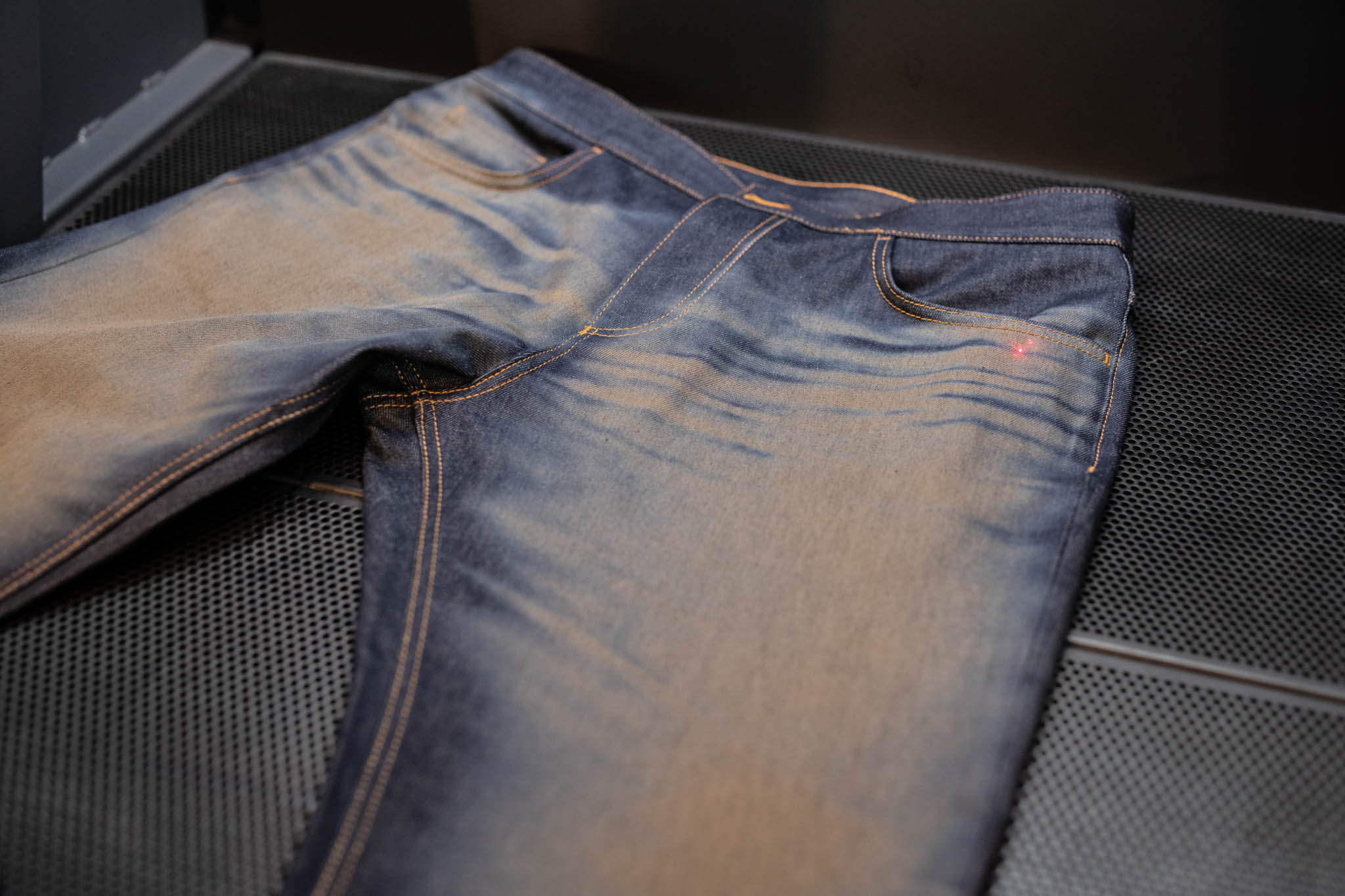
While innovative processes using alternative techniques, such as ozone or laser technologies, are revolutionizing garment finishing, it is also crucial to select the appropriate dyeing method to achieve the desired final aesthetic of the jeans. Recently, we developed no-fading dyeing techniques that enable indigo to penetrate deeper into the yarn, making them ideal for dark jeans that are not intended to fade significantly over time. Conversely, some technologies cause the color to sit more superficially on the yarn, allowing for easier removal during the garment-finishing process, creating light-washed jeans with whiskers and other worn-in effects.

Digital manufacturing
Digital technologies are significantly transforming various key aspects of textile manufacturing, particularly through the use of Artificial Intelligence (AI). One of the main advantages of AI is that it accelerates innovation. This process has traditionally required lengthy experimentation and complex trial-and-error. By predicting material performance, optimizing properties for specific objectives, and automating experimentation, AI can substantially shorten these timelines and reduce innovation costs.
Moreover, AI offers new tools for predicting future fashion trends, managing inventory, personalizing customer experiences, creating innovative patterns and cuts, optimizing supply chains, and determining pricing strategies.
AI also speeds up material development and explores new possibilities for sustainable, high-performance materials that can meet future demands. In the context of climate challenges, geopolitical tensions, and global uncertainty, diversifying fibers is crucial for mitigating risks and conserving natural resources. Digital technologies can facilitate the development of green chemistry and next-generation bio-based materials and synthetics.
However, implementing AI entails potential risks that warrant careful consideration. It may reflect societal biases, be misused in cyberattacks, violate privacy and intellectual property rights, or be exploited to spread misinformation and manipulate people’s decisions. Additionally, it raises ethical and existential concerns and is often accompanied by a lack of accountability and transparency. Environmentally, it can rely on energy-intensive processes and consume large amounts of water, contributing to a significant carbon footprint. Lastly, there are fears that it could disrupt the job market.