 Log into your account
 Register



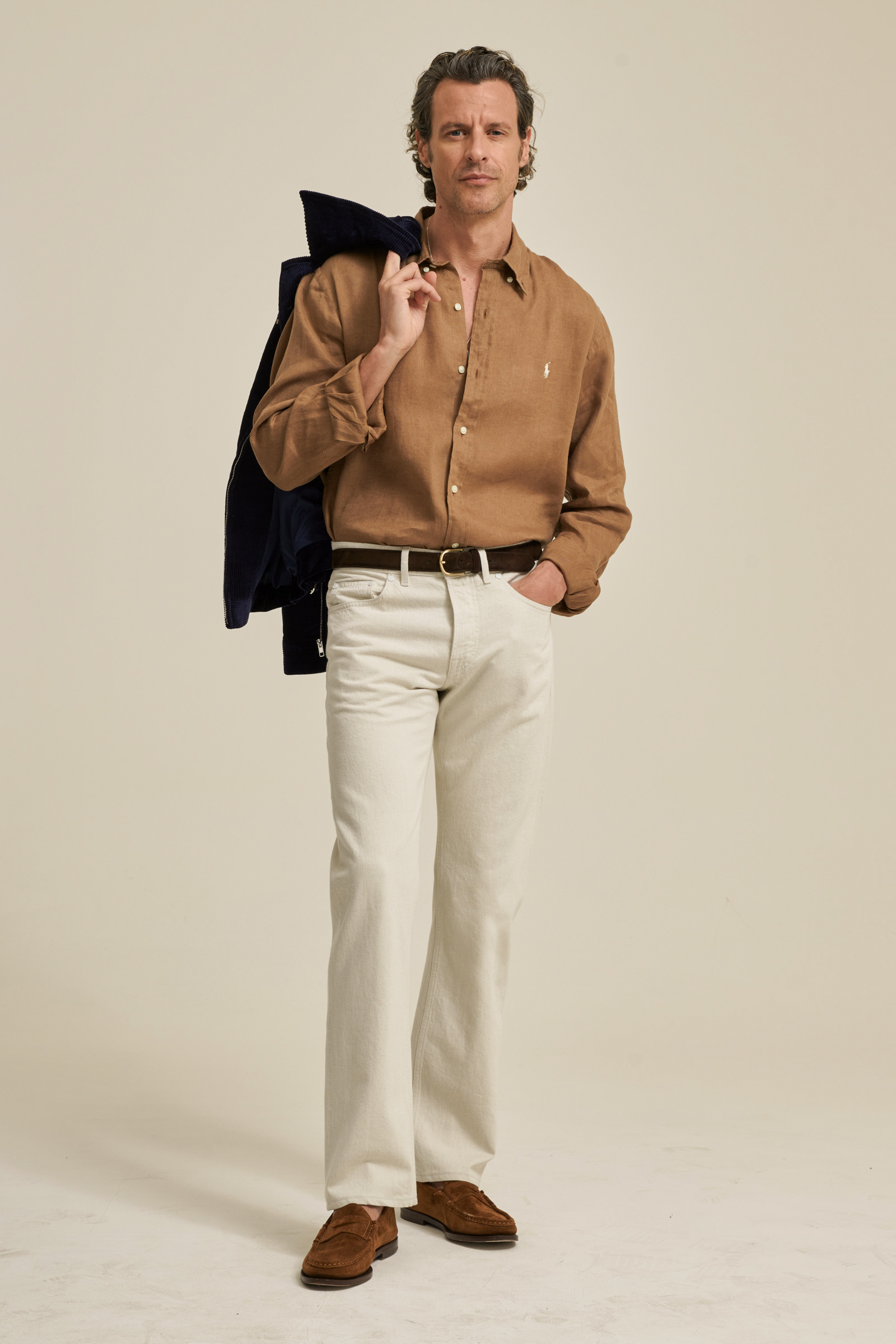
Summer is just around the corner, and as temperatures rise, we’ve decided it’s time to refresh our denim collection with something lighter and more breathable. Linen, being the quintessential summer fabric, is our go-to choice. We’re excited to introduce our linen-blended denim line, available both online and in-store, designed for maximum comfort during those hot months. Check it out!
Check out The Primo Jean in linen-blended denim
This season, we have introduced The Primo Jean in a special, limited-edition linen-blended denim collection, perfect for spring and summer, available on our website. We designed these fabrics to offer a lighter, more comfortable alternative for the warmer months, especially since traditional denim can feel a bit heavy as temperatures rise. Our linen-blended denim keeps the classic look and durability of regular denim while offering a refreshing level of comfort and softness, ideal for those sunny days.
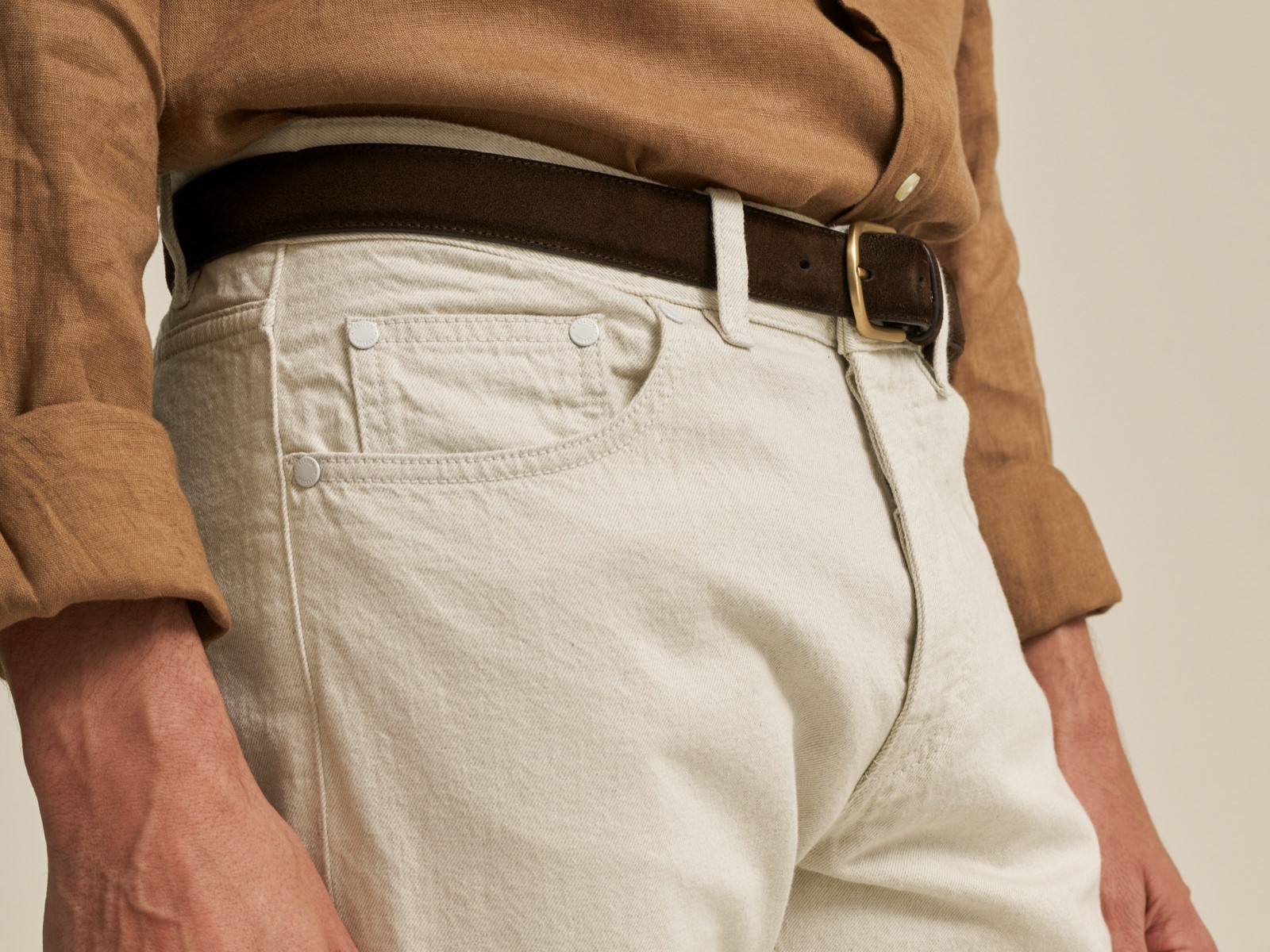
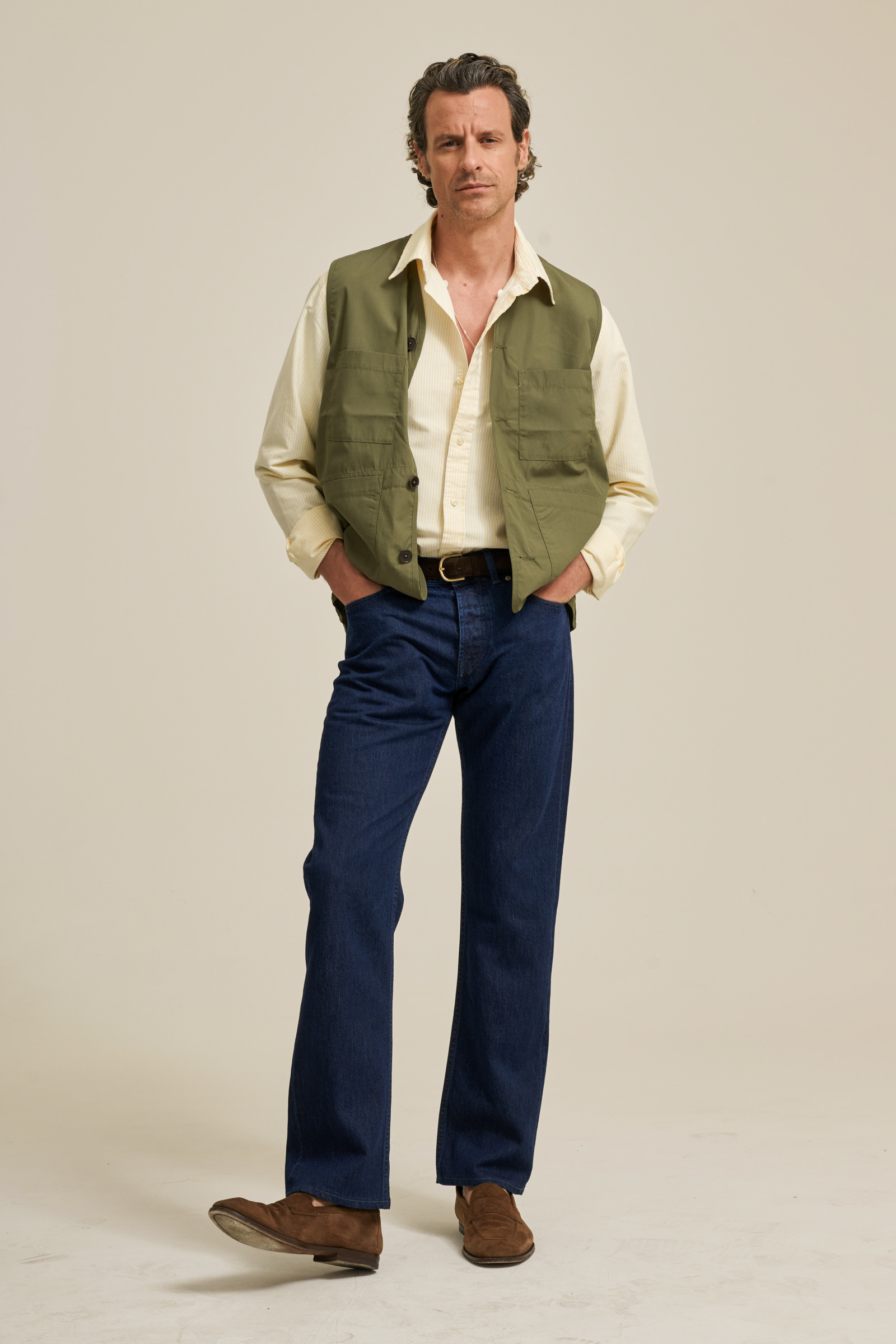
You have three great options to choose from, made from 78% cotton and 22% linen in a 3x1 right-hand twill. These come in dark blue, ecru, and beige, and each weighs around 10 oz.
The 3x1 construction is the most common in denim, as it provides a strong yet comfortable fabric by using three warp threads for every weft thread. Generally, denim is considered lightweight if it weighs under 12 oz. Historically, Levi’s® established a standard of around 14 oz for workers’ jeans, balancing toughness for labor with comfort for all-day wear. Nowadays, many people prefer jeans in the range of 12 to 13 oz for everyday use.
While we’ve introduced these exciting new fabrics, the fit remains unchanged. The Primo Jean retains the timeless 5-pocket regular fit that’s always in style. The straight-leg design ensures comfort and freedom of movement, making this style a versatile wardrobe essential. However, please keep in mind that cotton-linen fabrics may feel a bit different from traditional 100% cotton when worn. They are lighter and softer from the very first day, so they may feel smoother around the waist and legs. You won’t want to miss adding these to your collection!
Find out more about the fibers in our linen-blended denim fabrics
Did you know that combining cotton and linen kind of takes us back to medieval Italy’s favorite fabric—fustian? This is the very first fabric that Genoese sailors relied on for their durable workwear, which we now consider an early version of denim, as it later evolved into 100% cotton. In traditional Italian fustian, linen was used for the warp, while in our modern blend, we use it with cotton in the weft.
Our linen-blended denim collection further celebrates the European textile industry by featuring European regenerative cotton sourced from Spain and Greece, blended with French flax. By maintaining a short supply chain, we effectively reduce our environmental impact and can easily trace the origins of our materials.
Linen fibers are not only biodegradable, but they also require very little water to grow and are produced without waste. Plus, linen has a naturally soft and bright texture that actually improves with each wash. It’s also a great option for those with sensitive skin, as it’s hypoallergenic, odor-resistant, and highly breathable. Linen indeed helps regulate temperature and wicks away excess moisture, which helps eliminate bacteria and promote healthier fabric overall.
Regenerative cotton is cultivated using methods that differ by region’s soil, biology, and climate. The goal is to enhance soil health, restore natural processes, and bring balance back to ecosystems. This approach to agriculture boosts biodiversity both on the surface and in the soil, increases profitability for farmers, cuts down on greenhouse gas emissions, helps combat climate change, and improves the cycles of important elements like hydrogen, carbon, and nutrients.

Is our linen-blended denim collection available in-store?
Yes, you can find our cotton-linen jeans at our store located at Piazza Mentana 3 in Milan. We offer these fabrics to create both made-to-measure jeans and two customizable options.
The main difference between these two types is that made-to-measure jeans are crafted entirely based on your measurements. You can personalize everything, from the fabric to the final embroidery. On the other hand, our custom jeans come in pre-produced fabrics and sizes, but you can still select details such as hem length, rivets, buttons, back patch, and embroidery.
As summer calls for something airy and comfortable, our customizable jeans are available in the same regular fit that you’ll find online and in our chinos. Chinos are a great choice for both formal and casual outings—they’re versatile and stylish. They were originally inspired by military trousers worn by British soldiers in India around 1840 and later adopted by the U.S. Army in the Philippines during the late 19th century and throughout World War II.
Our linen-blended denim fabrics are sized with Kitotex®
Our linen-blended denim fabrics go through an innovative treatment process using the patented Kitotex® technology during sizing. This step is essential for boosting the durability of the yarns as they go through the loom. Kitotex® relies on chitosan, a smart, non-toxic, and biodegradable material, making it a great alternative to traditional PVA.
PVA, or polyvinyl alcohol, is a plastic polymer made from petroleum. You’ll find it in many everyday items, like food packaging and dishwasher or laundry pods. Unfortunately, PVA has specific requirements for dissolving in water and breaking down naturally, which only a few treatment facilities can meet. As a result, research published in the International Journal of Environmental Research and Public Health indicates that 75% of PVA remains in the environment after use. On average, each person in the U.S. ends up consuming between 0.101 and 0.549 grams of PVA daily.
On the other hand, chitosan comes from chitin, which is the second most common natural polymer after cellulose. It’s sourced from renewable materials, including insects, crustaceans, algae, and fungi, with ours coming specifically from Aspergillus niger. Chitosan has a range of beneficial properties, particularly its ability to bind and form films, which is why it’s so widely used in industries like food, pharmaceuticals, cosmetics, and biotechnology.